John Dolan: Ghostly monks, a foxy lady... Cork’s most terrifying spirits
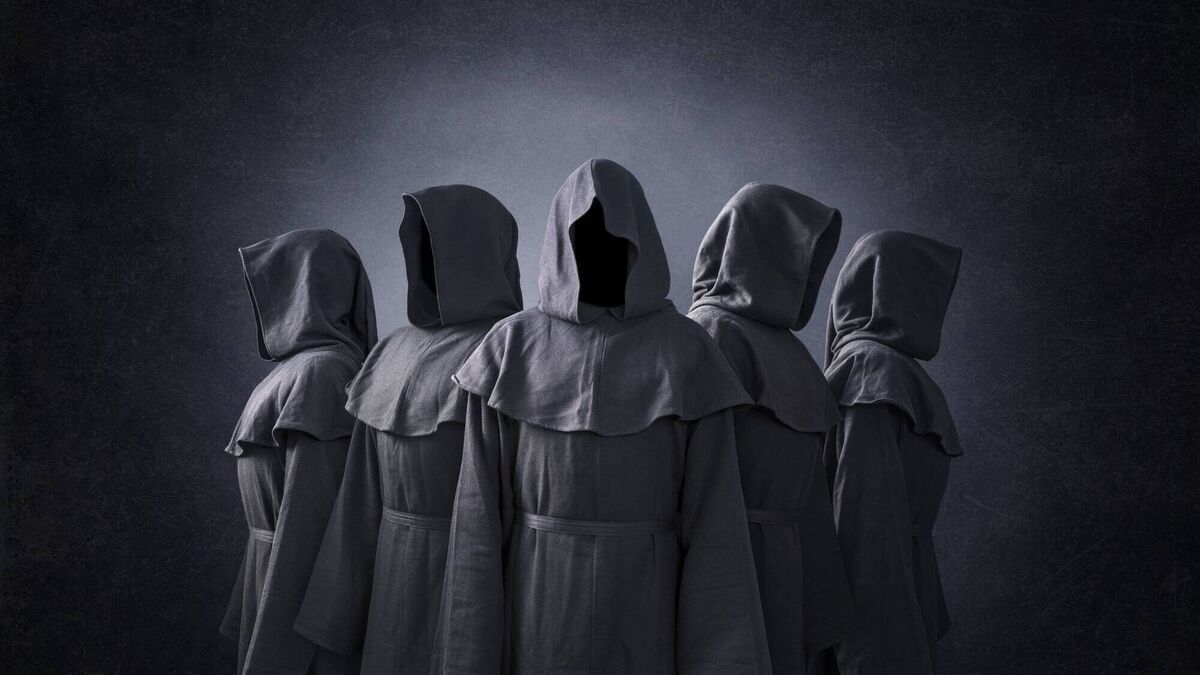
The woman swore she saw about 20 monks - cowled figures - “I felt a slight chill as they were passing” - and now they were indeed gone without a trace. iStock
The business completed, they started to head home just as evening shadows were falling, and reached the bridge that spans the Lee at Inniscarra at twilight.
Suddenly, the woman recalled many years later, the pony stopped dead, refusing to budge. A flick of the whip and a command had no effect
“Leave him be,” she told her son. “He is probably afraid of the monks. Let them go around the bend.”
Her son’s reply chilled her to the bones. “What monks? Don’t be daft, mother. There is nothing on the road. Go on.”
The woman swore she saw about 20 cowled figures - “I felt a slight chill as they were passing” - and now they were indeed gone without a trace.
Later, she related her story to a priest, and he told her: “You are not the first to meet the monks on that road. They are from Kilcrea Abbey travelling down to Inniscarra. From Elizabethan times they’ve been doing it.”
Do you believe in ghosts?
Since the darker evenings are now upon us, and Halloween is at hand, I decided to trawl through the archives to uncover the spookiest stories of Cork’s past.
And, as befitting a city and county with so much history, so much tragedy, and - some might add - so much imagination, there are plenty of them to share...
Take the ghost known as the Foxy Lady, who once haunted a place not far from where I’m sitting in our Blackpool office, writing this by candlelight (relax, health and safety, it’s actually a lightbulb - ed).
Female ghouls appear to have been a common sight in Cork, far more so than the males of the species. Two of the best-known are The White Lady of Kinsale and the spectre of Sarah Curran at the now demolished Woodhill House in the city.
The first tale relates to a bride whose soldier husband was killed at Charlesfort on their wedding night - the main legend states the shooter was her father-in-law who was in command of the fort, and mistook her husband for an intruder.
The anguished widow leapt from the fort walls to her death in her grief, and now her figure, clad in her wedding dress, stalks the fort and the streets of Kinsale where she was from.
The ghost story of Woodhill House at Tivoli relates to another grieving lover. Sarah Curran was born in Newmarket, Cork, in 1782, and entered a doomed secret engagement to her great love, the Irish revolutionary Robert Emmet.
He was executed for his beliefs, and Sarah’s father, upon discovering their affair, banished her to Woodhill House. She died soon after of a broken heart and legend has it that her ghost roamed the house after she died, clad in white and doomed to forever bemoan her lost love.
She claimed to hear the sound of a cradle being rocked in the room, and added: “My mother and other women could hear it from the street. ’Twas a kind of friendly sound. The poor mother had come back to rock the baby.”
A local priest is said to have blessed the house and the rocking ceased.
Curraghkippane graveyard, out beyond Blarney Street, was the scene of another spiritual encounter.
The story goes that a young lad and some companions had visited Blarney and were returning to their homes in the city late at night. They had an accordion and stopped at the cemetery gate “to play a tune for the residents”.
Immediately, “showers of earth and stones came over the walls from no human source. They came from high up in the air, like from the sky”.
The revellers beat a hasty retreat and got a severe reprimand from their parents for their disrespect to the dead.
Out in the county, the ghost of a girl used to often be seen at the bridge at Innishannon.
The story goes that when Oliver Cromwell blew up Downdaniel Castle a few miles miles east of Bandon on the main road to Cork, he killed a girl who was inside, and her restless spirit remained caught up in this world instead of the next.
Up in North Cork, two highway robbers held up a coach on the Cork to Dublin road, between Glanmire and Watergrasshill, and one was caught and hanged in a boreen, where his ghost was seen thereafter.
The Schools’ Collection - a vast national archive of folklore and local history compiled between 1937 and 1939 by primary school children across the 26 counties of the Irish Free State - contained many ghostly tales from feverish young minds.
There were several accounts of a female ghost who prowled the butter road between Kerry and Cork, stealing goods from the men on their carts. On the same road, in Clondrohid, a female ghost smoking a pipe was nicknamed Cailleac a Piopa, and was often confronted by a spectral man with a pike. A priest eventually banished both.
Out in West Cork, a child told a story of a man working in the mine at Allihies who walked home for several miles accompanied by a friendly ghost, who warned him that a crowd of people would soon be coming his way. “If they catch you out, you will pay for it,” it warned.
The man, now alone, walked on a quarter of a mile and heard a great noise heading his way. He threw himself into a thicket of brambles. He was not long hidden when a melee of ghostly men and women and horses thronged past. When they had passed, the man ran home and his wife told him the cock had been crowing all night.
Were any of the tales ever true?
I’ll leave you with this account of an alleged ghost that used to appear at the windows of The Distillery House, a historic building on the North Mall. Except this one has a grain of truth.
The whiskey business was owned by the wealthy Wise clan, one of whom decided to adapt a security system for when he was away.
He engaged a caretaker to move from room to room of the mansion house at various times throughout the night, appearing at the windows, dressed in a long, white nightshirt and - this being the days before electricity - carrying a lighted candle.
So effective was this security system that city people soon passed word around that the Distillery House was haunted - a belief that neither the Wise family nor the caretaker were keen to discourage, and which was still being spoken of right up the 21st century, by which time the site and buildings, including the iconic chimney stack, had been acquired by UCC and the Mercy University Hospital.
That one definitely wasn’t a ghost; as for the other stories here... I will leave it for you to decide.



 App?


