John Arnold: Napoleon, William of Orange... and my own take on ‘history’
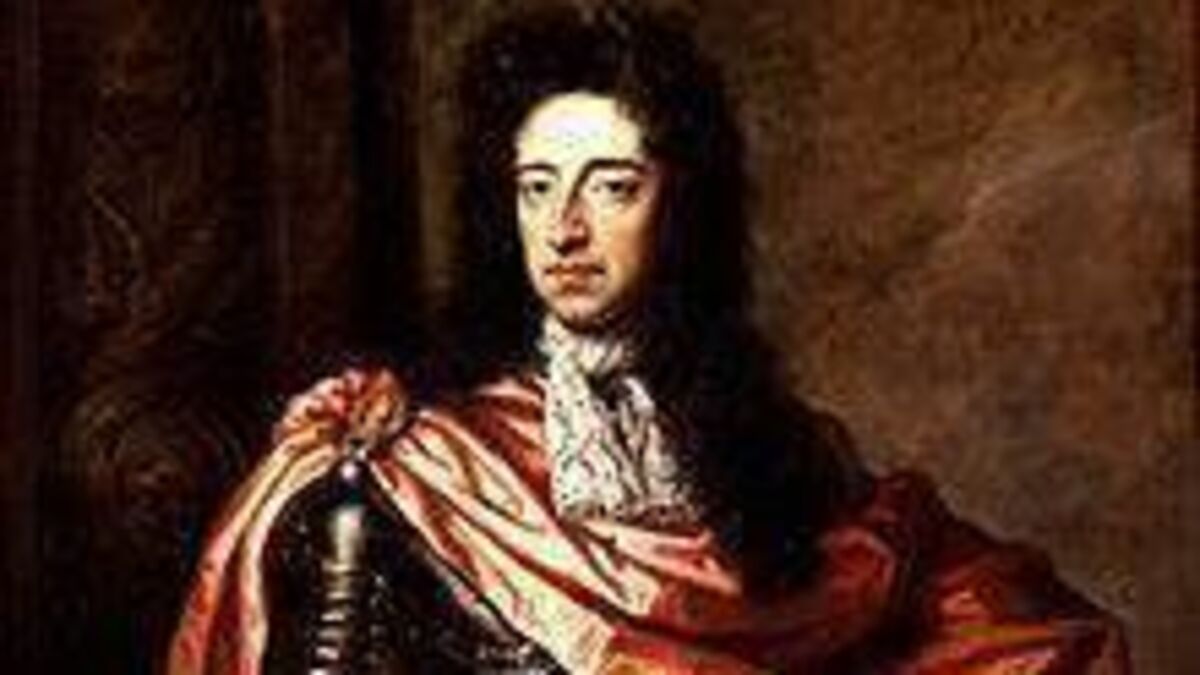
William of Orange, who defeated the deposed Catholic King James II at the Battle of the Boyne. John Arnold has a different version of events
Amazing, isn’t it, that decades - even centuries - after an event happening, the repercussions can still reverberate down the corridors of time.
Over the weekend, echoes of 1998, yes, and 1798, and even the 1600s dominated the news in this small country of ours.
The ‘will we, won’t we - yes ye can, no ye can’t’ stand-off at the Garvaghy Road in Armagh showed clearly how incidents, skirmishes, and battles of long, long ago can cast a long shadow.
As tension mounted, fears of sectarian conflict flaring up once more became a sobering reality.
Listening to voices from both sides, I thought to myself - oh, how lucky we are down here. What’s the value of peace - it’s a priceless jewel really!
They say the course of a river can change over thousands of years - look at the odd ‘turn’ in the Blackwater near Cappoquin. Lads, I do often surmise and peruse the what-ifs and maybes of times gone by.
I think it was Lord Acton who wrote the now famous words: “Power tends to corrupt and absolute power corrupts absolutely” - in fairness, the same man knew a thing or two about power and influence. His father, Richard, as they used to say, ‘married well’ when he wooed and wed a Miss Marie Louise Pelline, a daughter of no less a man than the 1st Duke of Dalberg in Frankfurt -they invented the sausage and did well out of it too.
The Duke worked for Napoleon Bonaparte as a soldier, ambassador, and bloodstock agent. I heard the very old people around here saying that they heard from their own ancestors that the Duke of Dalberg was actually the man who came over from France to Bartlemy Fair and bought a number of horses - one of whom became famous.
In regards the buying of the horse -he was named Marengo later and Napoleon won several what you might call ‘handicap hurdle races’, including one near the Prix de l’Arc de Triomphe, before he went to war.
Anyhow, what happened was Napoleon suffered a bit in the 1790s from very bad ear infections and he was half deaf half the time.
The beautiful Josephine hadn’t been to Ireland - never mind Bartlemy - but the same girl was, as they say in East Cork, ‘mad for road’. She was no slouch at the riding either - she actually invented the side-saddle.
Josephine wanted to come to the Emerald Isle for a visit and maybe buy a few hunters, cobs or horses for ploughing.
One evening, near the boudoir, she tenderly asked Napoleon, ‘Dearest, will we go to the Fair? - she knew from Old Moore’s Almanac that Bartlemy Fair was the following Saturday.
Napoleon was all blocked up with ear-wax and thought she had said, ‘Dearest, will we go on the tare’, to which he replied with the immortal phrase, ‘Not tonight, Josephine’.
Look, I’m not blaming Josephine or anything, but down the years women have influenced history in a far greater way than we give them credit for!
Remember the girl of Troy? With her ‘face that launched a thousand ships - she was kind of an ancient Miss World, in her own peculiar way - as the late, great Joe Dolan might say!
Then, what about your wan Mary that married her own first cousin, William? You may well say ‘that bate Banagher’ and you’d be right.
It wasn’t as if the ‘Royals’ in the 1500s and 1600s were short of ‘suitable’ potential spouses, with adequate dowries of parishes, counties, provinces and countries.
They say that one Christmas, young Willie was visiting his Uncle James. A big treat for children back then in that pre-video games/mobile apps era was a feed of toast and marmalade. William was a glutton for the stuff and ate so much his face and hair were covered in orange marmalade. His pretty first cousin, Mary, came in and was laughing mad at the sight. Well, there and then she called him ‘William of Orange’ and it stuck - the name, I mean!
Imagine two foreign wannabe kings of everywhere coming over to Ireland for a fight.
Sure, in today’s scenario that would be like playing the FA Cup final between Manchester United and Liverpool above in Croke Park -perish the thought; yes, and pigs might fly! On opposite sides of the River Boyne, the two men lined up for a final, Katie Taylor-like massive confrontation.
At one stage, it seemed like peace might break out, but no. Some of James’s followers had been on a camping/glamping break in Armagh the week before and had raided a few orchards and brought forty firkins of apples down to the proposed site of the Boyne battle.
After the men of the two armies - by now they were named Williamites and Jacobites (Jacobus being the Latin for James) - had lunch, didn’t some of the Jacobites start pelting the other crowd across the river with the apples?! William was hopping mad and was going to swim across to challenge James in a duel. If that had happened, they could all go home safe and sound. One major problem -William couldn’t swim!
He was incensed by the shower of apples and roared: ‘Apples, apples, and I am William the Orange, bleedin’ disgraceful,’ and so the Battle of the Boyne began. About 50,000 soldiers from Ireland, England, and a scatter from most other European states were also involved. The Williamites, or Orangemen as they were now called, won 3-2 on penalties.
The mascot of James’s army was a huge puck goat who’d been crowned King Puck in Killorglin in 1588. He was given as a present to James by the Kingdom of Kerry the year before.
Well, the goat nearly escaped the mayhem. He tried to swim the Boyne but failed. He was captured by the Williamites. They killed him, skinned him, cooked him and ate him.
From the skin of the goat, they made a drum, and that’s why to this very day the big drum is the favourite musical instrument of the men who follow the memory of the King who married his own first cousin and was very fond of Orange marmalade.
A lot of stories end with ‘And they all lived happily ever after’, hopefully that’ll be the outcome in Portadown too.







 App?
App?


