John Arnold: Mystery of life and death of a Cork emigrant is finally solved
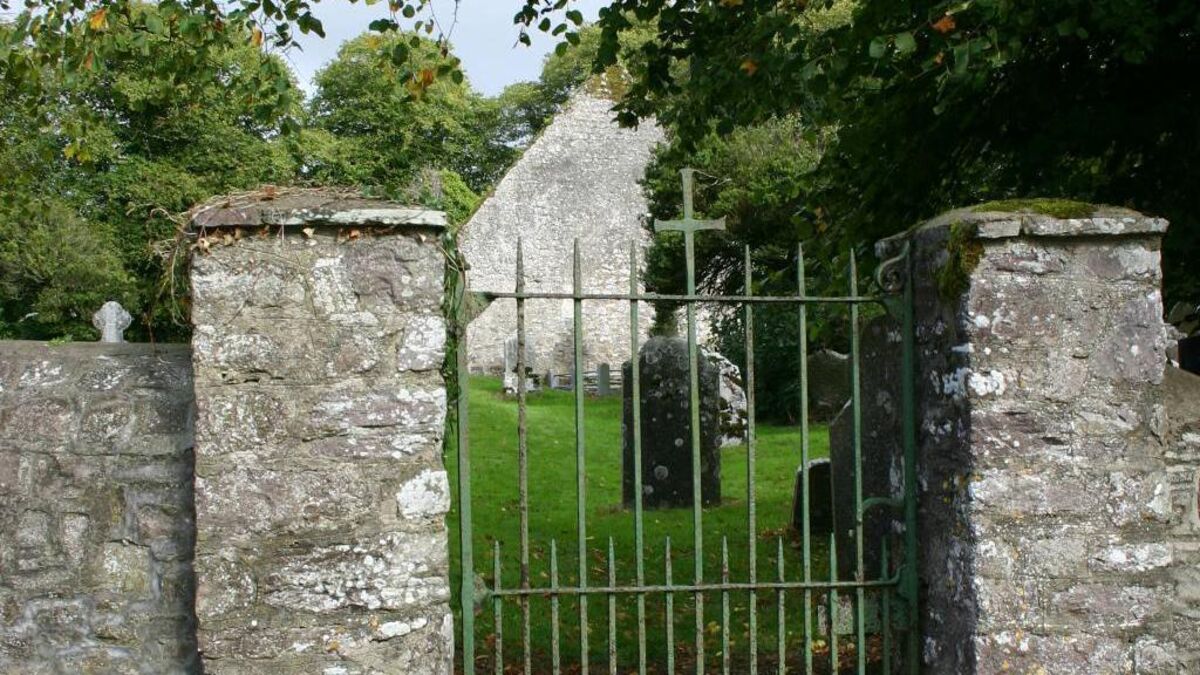
The entrance to Gortroe cemetery in Co Cork
Sixty-five years ago this week, my father died - I was just four years of age and in truth never really remember him.
That’s sad, of course, and yet maybe it was that lack of contact with or knowledge of my own father that gave me such an inquisitive and questioning outlook on life and everything else too!
They say that absence makes the heart grow fonder, but I think it can also create a longing for information or stories or knowledge about a person, place or thing, and that’s why I never stop asking questions like why? Where? And when?
So, to gather facts and figures and names and dates, one has to undertake research.
Ye may say I’ve been researching for years, correct; but in essence, what is research all about?
The Western Sydney University defined research as ‘creative and systematic work undertaken to increase the stock of human knowledge, ideas, and understanding’. Now there’s some ball of a definition and, in fairness, I agree with every syllable of it!
About the year 2003, I started research on a project to record all (or as many as possible) of the inscriptions on the headstones in Gortroe cemetery in my own parish.
Inscriptions on headstones yield names, ages, dates and, sometimes, addresses.
I was inspired by a great friend from Cork city, Richard Henchion. An amazing man, he spent his spare time for many decades recording, transcribing, and mapping over 600 cemeteries in Cork city and County. His work is invaluable and, as well as the ‘bare lettering’ recorded, Richard has done extensive research into the seed, breed and generation of the families of those whose names are inscribed in stone.
When I got the idea of trying to record the Gortroe headstone names, I told Richard of my plans. He fully supported me in my endeavours.
I eventually got the book published 20 years ago. Back then, so much of the research work was done by letter, phone call or personal visits to relations whose family plots were in Gortroe.
Though I’m no computer whizz kid, I can now navigate different research ‘portals’ fairly well. The information on the 1901, ’11 and ’26 Censuses is invaluable as is the Irish Genealogy site and other sources such as newspaper archives, Tithe Applotment Books, and Griffith’s Valuation.
If ever I bring out a ‘second edition’ of the book, there will be corrections, but especially additional information that I’ve gleaned over the past two decades.
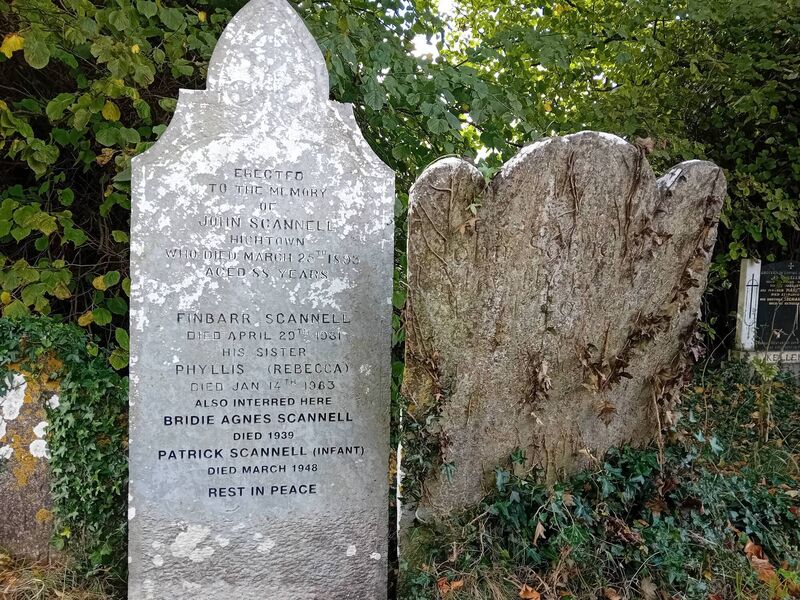
Just this week, a fascinating story came to light.
If one goes in the gate of Gortroe cemetery and goes over to the right hand corner, you’ll find a group of Scannell headstones. The name of John Scanel, who died in 1775, is the oldest inscription, and the most recent burials there were in 1983 when Phylis, James and May Scannell were all interred here.
The Scannell name was to be found in several townlands in Bartlemy, Rathcormac and Kilworth.
In 1904, Patrick Scannell married Margaret Condon in Glanworth. At the time, he was employed as a Land Steward for James Robert Bury Barry of Ballyclough - the landlord of much of this area.
Patrick and Margaret had eight children, including Martin, born in 1906 at Ballyclough.
Martin was interested in science and engineering. He went to England and became an electrical engineer. He got employment in a major cinema in the city of London in the early 1920s, the first ‘Golden Era’ of the big screen.
Obviously very intelligent and progressive, his career was on an upwards curve. When the cinema was demolished and a bigger one erected, Martin Scannell was one of the VIPs in tops and tails on the gala reopening night.
He visited home frequently. On one such visit home in 1928, he was assisting his father Patrick in dehorning a bullock. There was no anaesthetic back then - for humans or animals - or no ‘cattle crush’ to hold the animal.
The bullock was probably tied with a rope as Patrick Scannell used the hacksaw. Things went wrong, and Patrick Scannell was literally ‘stabbed’ in the stomach by the remaining horn on the bullock’s head.
He had terrible internal injuries. Sent to a Dublin Hospital initially, Patrick died at a nursing home at 26, Upper Pembroke Street, Dublin, on November 20, 1928.
Three days later, on Friday, November 23, Patrick was buried with his ancestors in Gortroe. Martin Scannell returned to England and never subsequently came back home to Ireland.
The 1930s were tough times in Ireland, with the disastrous Economic War practically destroying farming. Maybe Martin just ‘drifted away’ from contact with his homeland, no-one knows.
His name cropped up in 2004 when I was researching the cemetery book. On page 102, I wrote: “A brother of Humphrey, Phylis and Finbarr Scannell’s was Martin. He emigrated to England. He served in the British Army and was killed while defusing mines.”
This was the story or news that had come back from England - maybe in the 1940s or ’50s.
Then, a few weeks back, the mystery was solved. Through social media the breakthrough came.
For some reason, Martin Scannell changed his name by Deed Poll to Martin Scammell. He stayed on in England and met a West End actress. The couple had 11 children - all Scammells!
Martin lived on until 1984 and is buried in Newcastle.
His children, in looking up their father’s background and heritage, discovered the name change. They learnt of his Irish ancestry and they too went on the research trail, which led them to Ireland and to Cork.
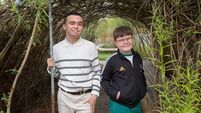
So, this week, a son and a grandson of Martin Scannell/Scammell are back in Ireland, visiting Ballyclough in Kilworth, Bartlemy, and Rathcormac and the cemetery in Gortroe where generations of their ancestors are buried.
The story goes on - more research to be done, with further pages to be added to the book.




 App?
App?


