Cork Views: We must prioritise the frustrated 50% in our society in Budget 2027
“Political parties do not deliver a vision for a better society that offers hope to the less well-off”
Budget 2027 will happen on October 6. There is no sense that anybody in the struggling 50% is talking about it or believes that anything much will change.
There will be an increase in public spending of €7 billion - €5.9 billion current and €1.1 billion capital - just enough to keep things ticking over. There will be a personal tax package of €1.5 billion, with an increase in tax bands, a possible cut in the marginal rate, and maybe a cut in inheritance tax for those without children. In the meantime, the fuel tax cuts are due to end on September 1 and further ratchet-up the cost of living.
The gains from income tax changes and the usual minimal social welfare increases will pale into insignificance compared to the cost of living ‘crisis’, which has now been reduced to a whimper, with the Dáil in summer recess.
In recent years, Irish people have become desensitized to the homeless crisis and are similarly desensitised to 500-600 waiting daily on hospital trolleys. Increasingly, the belief political parties or government can be trusted to fix anything is evaporating: The CSO Trust Survey (2025) shows only 27% trust political parties, and 44% trust national government or local government. Only 46% trust the media.
The percentage of people practising ‘news avoidance’ in 2026 is at an all-time high of 47%, according to a report by Reuters for Coimisiún na Meán.
The cost-of-living, housing, health, and social care crises are only crises for those on low incomes, the homeless, those paying exorbitant rents, the sick/disabled, and those who can’t afford health insurance - the 50% living on the brink.
Understandably, it is that 50% who are most likely to feel frustrated with the ‘system’ and venting their frustration towards immigrants - though racism cuts across all Irish social classes. A large share of the 50% living on the brink is likely to view immigrants as a “greater perceived resource threat”, according to the ESRI.
In addition, the ESRI’s Changing Social and Political Attitudes (2023) report recognised the level of pessimism among the least educated groups is now as low as what it was during the last recession. The same report pointed to a deterioration in social cohesion ,which we are now facing and which erupted in such dramatic fashion in the Dublin riots in November, 2023.
The growing frustration and anger haven’t gone away, and far right groups are busy stoking up hatred, using frustration and anger as leverage.
Some of this is vented on daily talk shows. Most of it is channelled into social media. In this context, Cyberspace becomes a turbo- charged breeding ground for falsehoods, ignorance, frustration, false narratives, blame culture, and twisted logic.
Hate crimes rose 13% from 2023 to 2024, according to Garda Síochána reports, with 50% of it connected to race. There has been a rise in racist attacks in the past 18 months.
Increasingly, discontentment and anger are becoming divorced from mainstream politics. It’s clear political parties, party leaders, and politicians in general, do not deliver a vision for a better society that might offer hope to those not well-off.
Last year, a survey by the Life Insurance Association found 48% of people were struggling financially in not being able to provide for the future, 43% were struggling to make ends meet and had no savings, with 81% reporting that worrying over money was having a negative effect on their mental health.
Read More
Government policies are displaying no clear policy priorities to reduce the discontentment and anger. Looking at the occupational structure in Ireland, many of the most important occupations are underpaid.
Baristas, working flat out serving your coffee, are mostly on the minimum wage of €14.15 per hour and are not paid overtime. A friend of mine who has worked for 15 years for a large national waste management company received 87 cent an hour of an increase last year.
The newly elected UK Prime Minister Andy Burnham said social care workers should be ‘the best paid people in society, not the worst’. But a care assistant here typically earns €16 per hour.
Bin truck drivers who start at 4am and work 12-hour shifts to ensure cleanliness, the disposal of refuse, and the protection of public hygiene, are also undervalued.
There are dozens more occupations which populate the 50% of people underpaid doing pivotally important work and who are living on the brink. Their importance was highlighted during covid, they were the essential services.
These people are bound to be discontented and angry. Meanwhile, those who are not essential, and who extract income in wealth from national income, such as hedge fund managers and property speculators, are grossly financially over-rewarded.
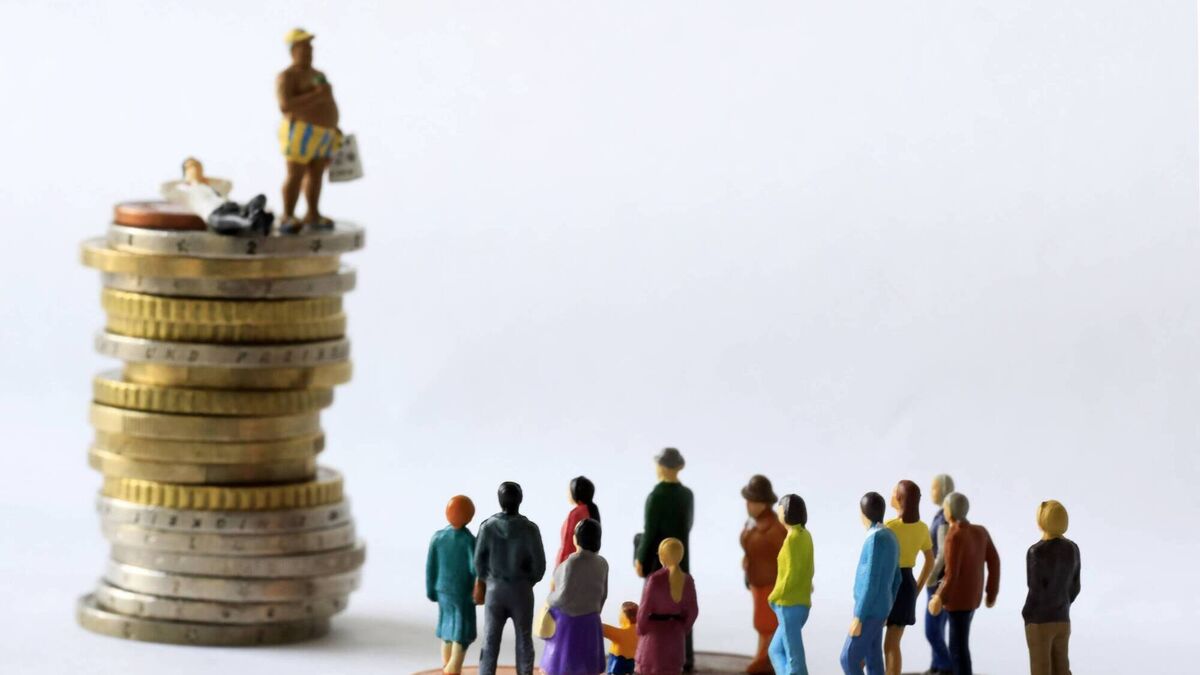
There is little evidence government parties possess any central vision for a better, more equal society in a country where 11 billionaires own more combined wealth than 85% of the population.
Similarly, opposition parties seem more focused on political point scoring on specific issues than presenting any coherent overall economic and social vision or plan which would offer hope.
Apart from election campaigns, the Taoiseach, Tánaiste, and government ministers, who have the power to make things better, do not go out and meet people in large groups.
The current model of disengaged politics and indifference to people, if left continue, will drive further distrust of politicians and government. Ignorance will further prosper. Social divisions will increase. Trump-inspired political parties and groups will prosper.

App?