How trees can help Cork city cope with more heat
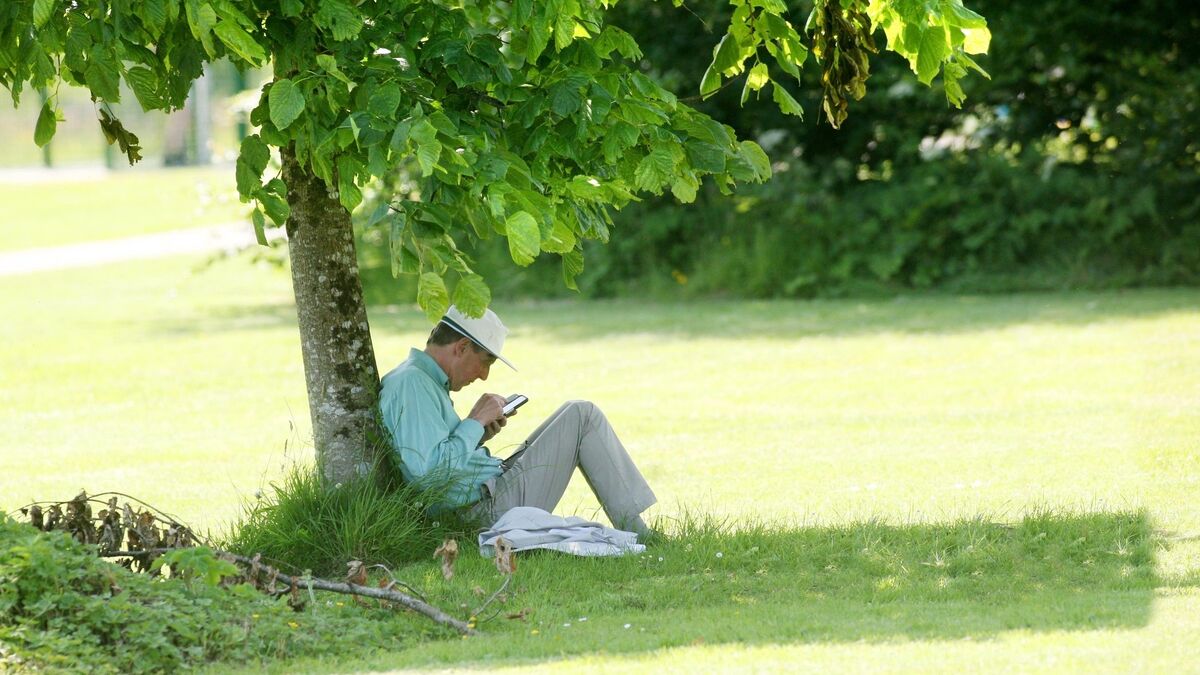
Trees provide shade, reducing heat absorption, but they must be designed correctly to work for cities
As cities across Europe broiled under repeated heatwaves and devastating wildfires this summer, it is now blatantly obvious that they need climate-smart green spaces to remain liveable as temperatures rise.
Europe is heating at more than twice the global average. London has seen the number of days where temperatures breach 30C more than quadruple in decades, while heatwaves across England and Wales have been responsible for almost 3,000 deaths to date this year.
Irish cities are not spared. New research has shown parts of Cork reached up to 15C hotter than others during a heatwave, prompting calls from the Climate and Health Alliance, incorporating experts from UCC, Cork Healthy Cities, the Royal College of Surgeons, the Irish Heart Foundation and the HSE, for the development of heat-health action plans.
A key aspect of that plan must include trees. Cities around the world are planting more to cope with the accelerating threat of urban heat. However, in Nature and Cities, Nurturing Cities (2026), the authors describe how trees alone are not enough. In some cases, the wrong kind of greening can even make streets feel less comfortable on a hot day.
Academics described how field measurements from Melbourne, Munich and Hong Kong were used to test how different kinds of urban planting changed the heat people experience outdoors. The results showed layered vegetation – where trees are combined with shrubs and ground cover – often cooled cities more effectively than trees alone.
As cities spend billions adapting to extreme heat, planting design may matter as much as planting quality. Cities trap heat, absorbing it by day into its concrete and asphalt and releasing it at night. Trees provide shade, and reduce heat absorption. But humidity and airflow also matter.
To have a clear understanding of the impact of urban vegetation on heat stress, researchers compared three cities: temperate Melbourne, cooler Munich and humid sub- tropical Hong Kong – measuring real conditions in the streets and green spaces during summer.
Comparisons were made between open urban spaces with no green cover, sites with trees only, and layered planting with trees, shrubs and ground cover. The researchers measured ‘mean radiant temperature’ which captures heat radiation from roads, walls and other hard surfaces as well as air temperature.
Munich, the city with weather conditions closest to Ireland, showed the strongest benefit from layered planting. Streets and green spaces containing trees, shrubs and green cover reduced afternoon heat stress by almost 8C compared with more open spaces.
However, in some streets that were densely vegetated, the green cover reduced airflow through narrow streets, trapping warm air and slowing the movement of vehicle pollution away from pedestrians.
In Melbourne, street trees reduced radiant heat by more than 18C, compared with open streets. Even when air temperatures reduced only slightly, streets felt much cooler.
The impact of trees and layered vegetation was more mixed in Hong Kong because of the impact of vegetation on humidity. This sometimes increased humidity enough to reduce the cooling effect. Extra moisture released by vegetation through transpiration can make an already sticky outdoor space even stickier because sweat evaporates less efficiently.
The researchers highlighted how climate, street width and airflow all shape whether vegetation improves overall comfort or creates unintended side effects.
In parks and open green spaces, layered vegetation can provide strong cooling while also supporting biodiversity. In dense streets, vegetation may balance the dual impacts on shade and ventilation.
One city, Gemeente Leeuwarden in the northern Netherlands, took the investigation of the impact of greenery on urban areas to the next level, over three months in summer, 2022.
The BOSK project was a temporary, moving ‘walking forest’ art installation consisting of 1,200 trees in 800 containers that travelled 3.5km through the city over one summer from May 7 to August 14, 2022. Featuring 1,200 trees and 60 native species, the forest was carried by 4,000 volunteers across 11 different locations so that residents and visitors alike could see and feel what the greening of their urban space looked like and the difference it made. The project was resoundingly successful with all 11 areas wanting the forest back. The aim was to spark conversations about climate change, biodiversity, public health and our relationship with nature as concrete and asphalt was transformed into a vibrant lush forest.
Another Dutch city, Rotterdam, had a more pragmatic but no less ambitious approach to increasing green space. In 2022, it set the goal of creating 20 hectares of green space throughout the city by 2026. From street side gardens to nature based playgrounds, thousands of top down and bottom up projects of varying sizes have been realised. Subsidies have helped realise 140 resident’s projects at €10,000 each, 49 nature-based playgrounds at €80,000 each and 750 streets at €500 each. Community greenery has been addressed with 50 climate adaptive projects completed and a staggering six hectares of green roofs constructed.
Co- financing has raised €4.5 million for ‘climate squares’ intended to increase green and collect rainwater. Green routes along the water have been improved through the city, making them more attractive and rich in biodiversity. Six parks have been boosted to improve the diversity and quality of trees and other planting. Across the city, 40 hectares of bee- friendly landscape was established.
Pascal Lansink-Bastemeijer, Deputy Mayor of Public Space and Amenity, said the most important quality of greening is it improves quality of life. “Greenery gives every resident of Rotterdam the same beauty and sense of lightness. Every tree is a beacon of peace in the hustle and bustle of everyday life.”
It is now blatantly obvious that cities need climate-smart green spaces to remain liveable as temperatures rise. Imagine Irish cities with ambitious goals to increase green space in cities between now and 2030.
What a difference that would make to the city and the lives of the people who live in it.




 App?
App?


