Heatwave 2026: Forget face fans and air-con... I need a bedroom mosquito net
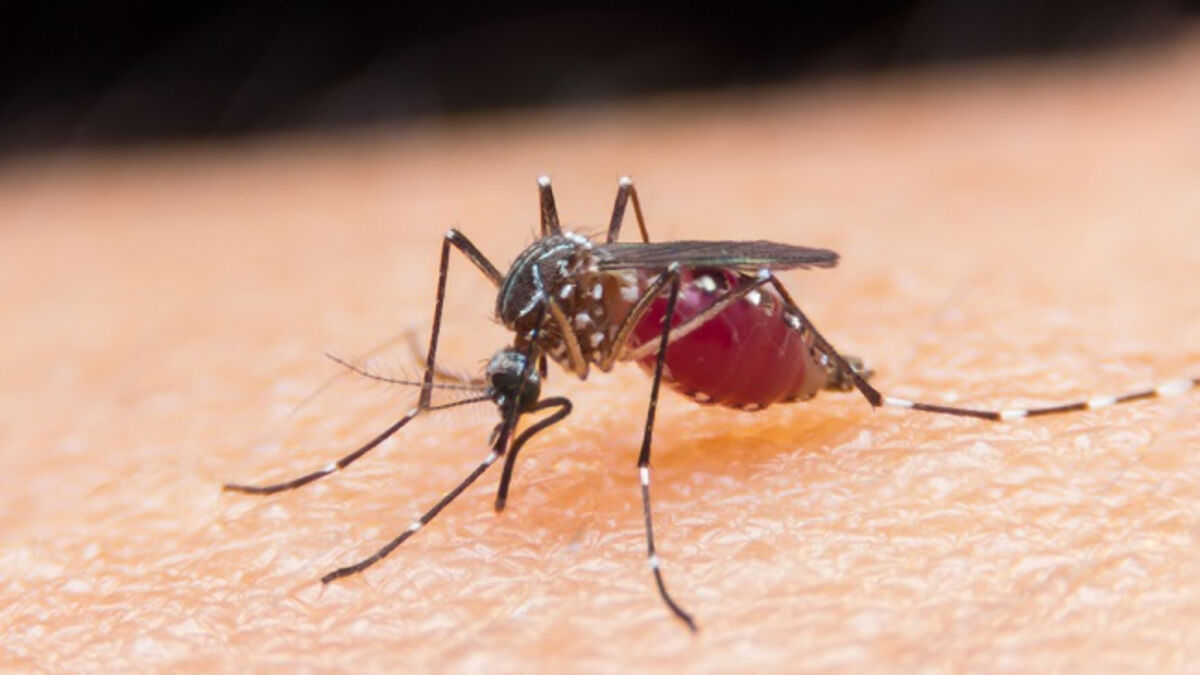
Mosquito numbers could increase in Ireland under global warming, and the threat from the diseases they bring is also greater
Sure, the winter will be along soon enough, we say - and the evenings are already starting to shorten. Then again, we do love a good gripe too, and the heatwave has offered up plenty of opportunity on that front.
I get it, and I can understand why people may be in the market for an air-con if these long, hot summers keep on coming.
At the sweltering Marquee the other night, I sat next to a couple with face fans and envied their cool-headed forward-planning.
But I have another bugbear altogether that has arrived this summer, and one I have never noticed before.
Lads, I am being hounded by biting mosquitoes every night, so much so that I am seriously considering purchasing a heretofore exotic item we associate only with countries on the equator - a mosquito net for the bed. (I note they are as cheap as €12.99 on Amazon).
It all started at the beginning of the first heat dome, when I was awoken at dawn by a high-pitched whine fluttering around my head. It was the sound of a blood-hungry mozzie beating its wings several hundred times a second, seeking out its next meal.
They got in the next night, too, and we itched and scratched for days until we realised the only way to combat them was to close the windows before dusk, then open them again when all the lights were out. Even then, a few snuck in to grab a tasty snack.
Out in the country, we’re used to midges, which hunt in packs outdoors and tend to congregate above hedges as night falls. I’ve also suffered a personal vendetta from a horse fly who dines on my blood every summer when I am out on my daily walk.
These are the slings and arrows of a normal summer - but the introduction of mosquitoes is slightly more worrying. It’s not just their annoying whine and bite, it’s their association with nasty diseases in the public imagination.
Malaria, which can be spread by mosquitoes, is one of the oldest known diseases, and has been a threat in Ireland intermittently down the centuries.
One archaeologist even linked early Bronze Age Irish people to the disease - tests on a cemetery site revealed that their bodies had widespread iron-anaemia deficiency associated with malaria victims.
However, global warming may well see the return of malaria to Ireland in the future - and here in Cork, we are particularly vulnerable.
After all, Cork city was built on marshland, while we have plenty of rivers such as the Lee, the Blackwater, and the Bandon where such insects may flourish.
For my own part, our home overlooks a floodplain of the Lee controlled by the two dams, and since April, it has been unusually high - perhaps creating a better environment for the mosquitoes which have plagued us this summer.
Cork is also milder and damper than most counties, and we know historically that malaria has been a problem associated with the county. It wasn’t given the nickname of ‘Cork Fever’ for nothing in olden times.
The most profile victim of it in previous centuries was someone who will get little sympathy in these parts: Oliver Cromwell.
It is thought he contacted malaria while based in Youghal during his ruthless army campaign in Munster in 1649. The story goes he refused to take quinine, the only effective anti-malarial drug known at the time, because it was ‘the Jesuit powder’.Oh dear, never mind.
Cromwell died nine years later from complications of the recurring malaria, at the time referred to as a ‘tertian ague’ or ‘bastard tertian ague’ in some quarters. It is a phrase I often feel like using when one whines above my head in bed.
Two centuries after Cromwell, in the 1850s, soldiers returning from the Crimean War brought plasmodium, the parasite causing malaria, to Cork’s mosquito population. Almost 1,000 cases of the disease had been reported by the time the outbreak ended a decade later.
We sill have a dozen or so species of mosquito in Ireland, but none which at present cause malaria or other illnesses spread by them, such as dengue fever, zika, and chikungunya.
We can only hope that situation doesn’t change, although the news that mosquitoes had made it to Iceland recently makes you fear where this is heading. It’s not known how they got there but one theory is that they hitched a ride on a plane.
Cases of malaria have occurred near airports in the UK, and blamed on such stowaways.
This has been highlighted in France, where there were more cases of mosquito-borne diseases in 2022 than the previous 20 years combined.
The current spell of hot weather accelerated the mosquito breeding cycle, meaning larger numbers of the pests could emerge, many of them in my bedroom. The females, needing blood to produce their frequent eggs, thus bite even more often.
Experts are keeping a close eye on the arrival of invasive species, such as the Asian tiger mosquito, whose eggs have been detected in the UK.
Professor Gerry Killeen, who holds the AXA Research Chair in Applied Pathogen Ecology at UCC, and spent almost two decades living in east Africa, studying the behavioural ecology of mosquitoes, was asked if the Asian tiger mosquito could come to Ireland in a radio interview last summer.
“It wouldn’t surprise me,” he replied. “One of the things that will turn these particular mosquitoes into a global problem is that their eggs are very robust.”
“A lot of these diseases are considered primarily tropical diseases, but, of course, that’s changing as the climate changes,” said Prof Killeen.
As for advice on how to combat mozzies, the experts say mosquito repellent is number one,
Covering up at dawn and in the evenings is also good practice, as mosquitoes are most prevalent at these times. Wearing colourful clothes and perfumes can also attract the insects, so opt for long garments and fragrance-free products.
Avoid areas with stagnant water - even something as small as a flower pot will attract mosquitoes - and try to seek out colder rooms as the insects favour heat.








 App?
App?


