John Arnold: Remarkable women never met... though families lived a mile apart
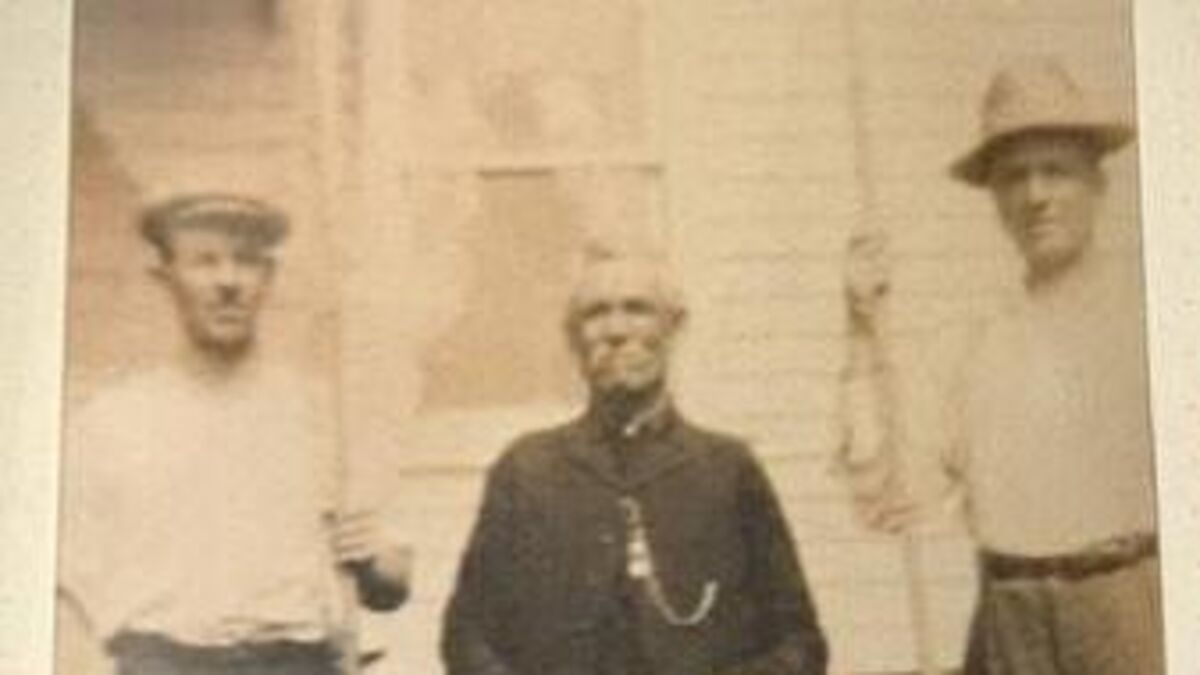
Michael Farrell (centre, dressed in black) 1843-1920. He was born in Boherbue and baptised in Rathcormac.
Published in 1859, the book was all about the period of the French Revolution and set in London and Paris.
‘The best of times, and the worst of times’ has oft been used to describe different eras and epochs in history all over the world. The Ireland of 1859 was such a time; the Famine was over with a million people dead, and another million left these shores in emigrant boats. Hunger no longer stalked the countryside, so for middle aged people- born in the 1820s, it was a far better situation than the Black Famine years of the 1840s. Yet, for so many, it must have still been a period of pain and heartbreak with family members buried in pits and mass-graves. Families had endured death, starvation and heart-rending wakes as they bade farewell to the starved and diseased corpses of loved ones.
Then came the ‘American Wakes’. True there was no ‘body’ to mourn, but as the hundreds of thousands left the country, aged parents and younger siblings knew that their farewell was indeed a final one. Yes, indeed some returned to visit maybe 30 or 40 years later, but most of those who went never again saw the green Isle of Erin.
Memories of those times, and that era of mass emigration, came back before me in recent weeks. One might describe it as a tale of two women. Two people back ‘home’ in Ireland, on different missions but both seeking information about ‘that spot in dear old Ireland’ where their ancestors had come from. Circumstances dictated that I met neither of them but having had conversations with them I feel a bond of friendship has developed. Two weeks ago, I took a phone call from the Post Office in Rathcormac. The caller was Sr. Grace Remington from the Hawkeye State – Iowa, in the USA. A Cistercian nun. Sr. Grace was en route to St Mary’s Abbey in Glencairn, between Tallow and Lismore in Waterford. Her brief sojourn in the Village by the Bride was to try and trace some ancestral links in the area. She told me her family name way back was Barry. Now from a point of view of ‘tracing’ if the family name was McDonnell, Hawkins, Dinan or even Arnold, the task mightn’t be too difficult around here. But Barrys -or Cotters, Murphys or Collins, well they are and were literally, all over the place. Undaunted, Sr. Grace had some good information and when she got to Glencairn was able to email on material her family had accumulated down the decades. Her great, great, great grandparents were Edmond Barry and Julia Dunlea -they married in Rathcormac Church in 1829, the year Catholic Emancipation was granted. One vital piece of information Sr Grace had was that her family were originally from the townland of Curraghprevin -between Rathcormac and Watergrasshill. It’s a townland of 496 acres.
By 1852, they were still there but none then held land. Sr Grace thought her family story was that her ancestors had moved to Cork City around Famine times 1845- 1847. Then in 1877, the family left Cork, lock, stock and barrel on board ‘The City of Chester’ -arriving in Ellis Island on April 30 1877. They moved on to Minnesota and became farmers under Kilkenny-born Bishop John Ireland’s ‘Irish Catholic Colonization Association’. This organisation bought land in rural areas to the west and south and helped resettle Irish Catholics from the urban slums.
William Barry stayed in Boston but the family lost contact with him. In 1905, they placed an ad in a Boston newspaper seeking information on William and importantly, mentioned the family connection with Curraghprevin and Rathcormac. Land ownership changed very often down the years. The Curtin family once held land in Curraghprevin then the Buttimores, then Jennings and then Coughlans. Sr. Grace Remington is now back in Our Lady of Mississippi Abbey where the nuns specialise in making candy. We are still trying to untangle the many branches and roots on the different Barry ‘trees’ that abound in this area.
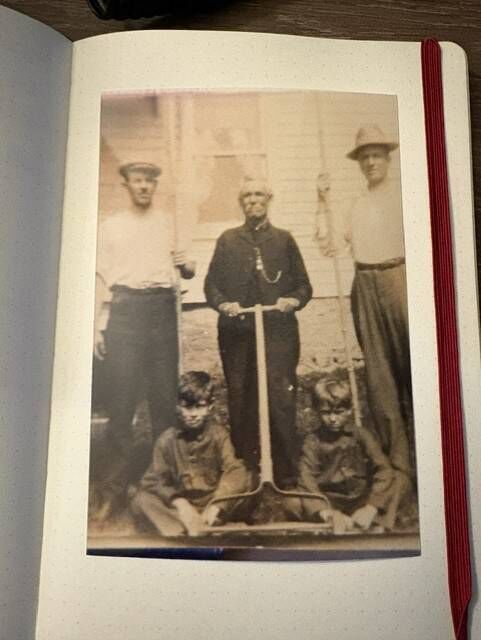
Not very far ‘down the road’ towards Rathcormac village is the small (70 acres) townland of Gneeves. An old road running through this area was called the Bothair Bui- the Yellow Road (maybe because of an abundance of yellow furze or ragwort -or both) People often use the term Gneeves and Kilshannig in the same breath -though they are separate townlands and only the older generation -including me, still refer to the place as Boherbue. Back in 1843, when Patrick Farrell and his wife Margaret nee English gave birth to a son Michael he was baptised in Rathcormac Church with the address ‘Boherbee, Rathcormac’. Like the Barrys ‘up the road’ in Curraghprevin, the Farrells also took the emigrant ship. Initially, they went to Arthur in Canada’s Ontario. Later it was ‘destination America’ for the Farrells and they settled in Wisconsin.
Just over a week ago I was contacted by an Elizabeth Ramseyer. Like Sr Grace she was in Ireland but on a guided bus tour. She came very briefly to Rathcormac but felt confused. On her Google Maps she was told that Boherbue was 41 miles away. She got in contact with me and I tried to explain the difference between Boherbue -the townland and Boherbue -the town. By then she was on the way to Dublin, then Waterford, then Kinsale and then to Blarney where she was staying on the night of the Munster Hurling Final. She arranged to get a taxi from Blarney to Bartlemy on that Sunday evening. Her cousins had done some research over the years and held the tradition that in the 1840s the Farrells were associated with horses -either as farriers or grooms or coachmen. Where they lived in Boherbue was next door to Kilshannig House where a pack of hounds were kept and hunting with horses was a weekly pastime.
On the evening we were to meet, Elizabeth contacted me to say her 95-year-old father, William Anthony Farrell, had died unexpectedly that day. She had been talking to him on her Irish trip -he was so excited about Elizabeth visiting Rathcormac and trying to find the missing pieces on the Farrell jigsaw. Elizabeth returned to America last Thursday.
Sr Grace Remington and Elizabeth Ramseyer are two remarkable women who have never met, though their ancestors were born and raised just a mile apart in the Ireland of the 1840s. The Barry and Farrell children were baptised in the same Church. They are not strangers, just friends who have not yet met. I know they’ll both be back here again.






 App?
App?


