Catherine Conlon: 'I took a break from the hectic Christmas build-up and went to Glenstal'
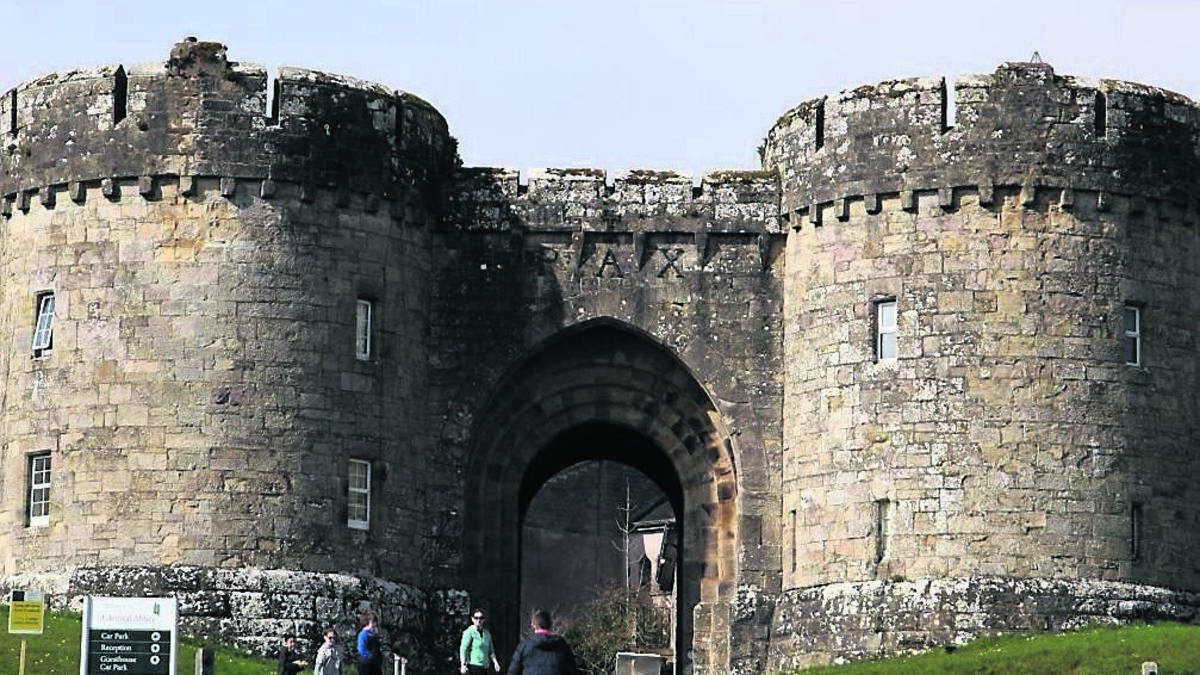
People walking in Glenstal Abbey in Murroe, County Limerick. Picture: Brendan Gleeson
As the news fills with articles about ‘surviving Christmas’. I took a different route this year and spent five days in Glenstal.
I moved away from media feeds about toxic family dinners and gift-giving anxiety; and replaced it with early morning Lauds, 10,000 steps in the woods, fasting between home-cooked meals, the glorious voices of the school choir, nights filled with stars and evening Vespers, and long nights of undisturbed, dream-filled sleep.
As we progress through December, the anticipatory anxiety continues to mount as the entire country seemingly prepares for holiday stress, fractious family gatherings, overworked hosts, wrangling children, emotional outbursts, and general Christmas mêlées, fuelled by too many late nights, mince pies, mulled wine and fear of not matching up to the unachievable heights we have set to make this Christmas ‘just perfect’.
All this is aggravated by a consumer industry that keeps pushing us to do more. Three Christmas trees, not one. Scented candles on every surface. Christmas pyjamas for the whole family. An entire new set of bedlinen. Lapland, pantomimes, ballets, concerts, followed by a trip to Lanzarote to ‘get over it all’.
Tired of the noise, and hectic pace of day-to-day life, I was drawn into the rhythm of days spent in prayer, regular mealtimes, whole-cooked food, fresh air and exercise, writing, reading, rest, and sleep. Perhaps even time to listen to that inner voice asking who you are.
It did not disappoint.
Glenstal has been home to a community of Benedictine monks for almost a century, when it was established from Maredsous Abbey in Belgium by its Irish abbot, Columba Marmion. It was the first male Benedictine monastery in Ireland since the dissolution of the monasteries in the 16th century.
The primary purpose of a monastery is the praise and worship of God. Consequently, the daily celebration of the Eucharist and the Liturgy of the Hours lies at the heart of day-to-day life. Everything else flows from this - education, the reception of guests, or the myriad ways the monks put down a day.
Arriving at the entrance gate in the tiny village of Murroe, the winding driveway passes acres of broadleaf woods and pine trees, reed-filled lakes, before the castle itself looms into view. A wooden bench to the side of the entrance is engraved with the words “Reverence, Respect, Responsibility”.
The car travels through a stone archway, inscribed with the word PAX, that divides the 200-year-old castle designed as Norman stronghold – with its imposing drum towers on either side. It was owned by the Barrington family before being handed over to the monks in 1927. The castle building is reputed to be haunted by Winnifred Barrington, the only daughter of the household, who was tragically killed in an IRA ambush in 1921.
Monasteries have traditionally been a place where the arts can flourish, and Glenstal is no exception. One of Ireland’s finest woodturners was a monk in Glenstal, Br Ciarán passed away in 2022. The Glenstal woods provided abundant raw material for his craft.
Bookbinding, candle making, beekeeping, breadmaking, and wood tending are other skills that continue to be cherished.
Anyone who visits Glenstal cannot ignore the magnificent paintings that have surfaced in the last decade by newly-professed Br Emmaus. His painting of the Woman at the Well, displayed at the entrance to the church, epitomises the humanity and empathy of Jesus when he meets a woman universally scorned – a message that rings true in the way we continue to live our lives over 2,000 years later.
The Benedictines pride themselves on their hospitality and Glenstal is no exception. The guesthouse, tucked away behind the church, surrounded by whispering pines, is cosy and comfortable with 12 bedrooms. The Guestmaster, Fr Christopher makes a staple porridge every morning, with the addition of muesli, seeds, walnuts and sultanas soaked overnight with something alcoholic. He hosts 10-12 guests after Lauds (6.30am) in the chapel and regales guests with tales of Glenstal and an offer of a visit to the Icon Chapel.
The chapel, hidden in the crypt of the abbey church, contains a collection of Greek and Russian Orthodox icons that is a spiritual oasis and has become an important place of healing and comfort for many.
I was at Glenstal on December 8 – the Feast of the Immaculate Conception. Mid-day mass was attended by the full school and enhanced by the church choir under the watchful baton of the abbot, Fr Columba. The young voices raised in harmony - boy soprano combining with the low timbre of the older boys would return any jaded spirit to something akin to joy.
The boarding school is akin to Harry Potter – all dim lights, gothic arches, huge stairwells and doorways. There are walks to the woods, with stone bridges over gushing rivers, ancient walled gardens, ringed by a stand of white birch trees, each commemorating one of those executed in the wake of the 1916 rising.
Winter in Glenstal marks both an end and a beginning. The burnished colours of autumn have been replaced by the first storms and the grounds are bereft and silent. The days shorten, the nights lengthen and grow cold as the world turns in on itself.
Days spent here revolve around the rhythm of the time of year, broken by church services – early morning Matins, mid-day Mass, evening Vespers and finally, night- time Compline. Then the organ stops playing and the Gregorian chant ceases.
The incense whispers in the air as I cross from the church toward the guesthouse – the light of a thousand stars above me and the trees whispering in the wind.
Advent at Glenstal is a time of anticipation and mental preparation for a feast. A particular kind of listening is a key to this place - what St Benedict called a listening with the ear of the heart. It is a space where the visitor can enter and stay and simply be.
It is not a space that seeks to change and conform from the outside but rather allows growth from the inside. A space that is often hard to find in the day-to-day clutter and noise and demands of modern living. A time to remind of us of how much of our lives we spend in restless pursuit of the pointless.
A space to rest and be replenished and perhaps discover something of the person we were meant to be.






 App?
App?


