An extra tax on SUVs would reduce deaths on our roads
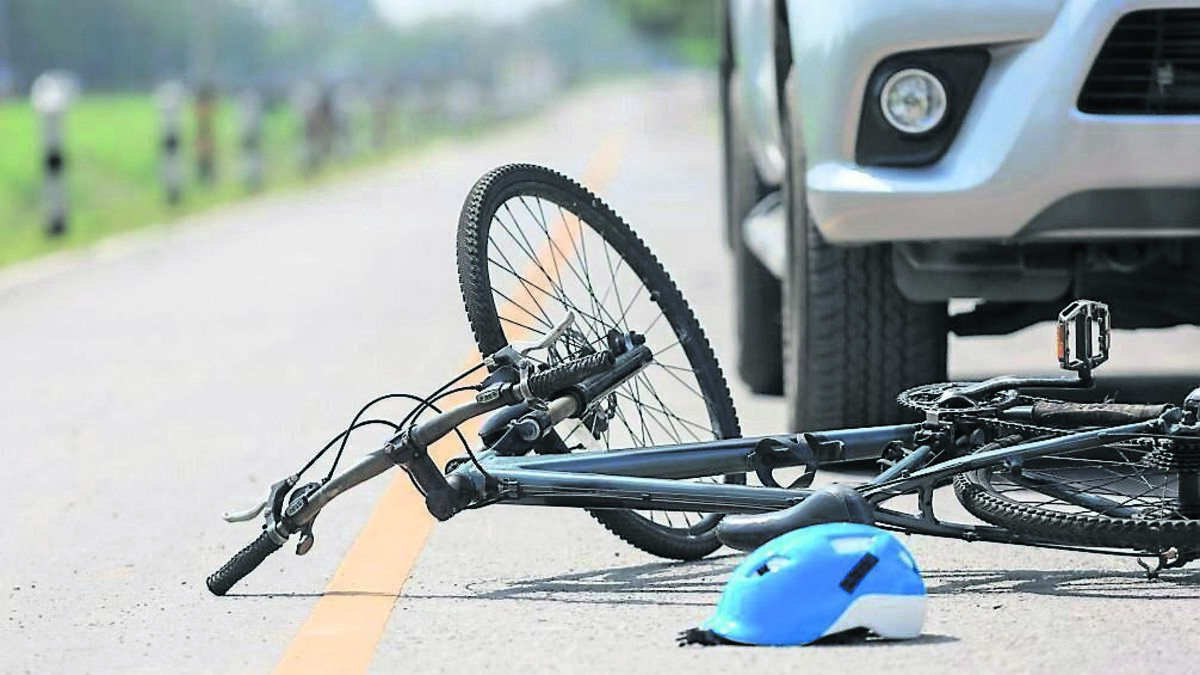
Large cars can make travel more dangerous for vulnerable road users, like cyclists and pedestrians
Over the last decade, big bulky sports utility vehicles (SUVs) have become the most popular cars on Irish roads.
Whatever about the need for a car that has improved off-road ability on country back roads - is this great lumbering vehicle really necessary on city streets?
Now, the government is considering a tax on SUVs among a number of options ahead of Budget 2026. A weighty penalty, similar to one already in place in France, was flagged in the tax strategy papers published in July.
This tax has the potential to cause the Irish consumer to ditch their weighty love affair with SUVs, and not before time.
A shift in the market away from SUVs would reduce road deaths among pedestrians and cyclists, provide cleaner air, roomier streets, less ‘car brain’, and improved wellbeing for city citizens – especially children.
Road deaths
There have been more than 100 deaths on our roads this year to date, well over half of them being vulnerable road users - pedestrians and pedal cyclists. Data from the European Transport Safety Council showed that in 2024, Ireland ranked seventh in Europe for the number of road deaths per million population.
Two countries that have taken a proactive approach to road deaths that has proved highly effective are Sweden and Japan.
The Swedish approach has been adopted by the EU, the UN, more than half the U.S states, and several European countries including Ireland. Vision Zero accepts that bad driving is part of being human and shifts away from accidents being the problem to one of kinetic energy, and the tolerance of the human body to impact as the real cause of deaths and injuries.
The approach focuses on low urban speed limits, pedestrian zones, separated cycle lanes, safer crossing, pedestrian bridges, pedestrian crossings with lights and speed bumps – all of which are estimated to have halved the number of pedestrian deaths in Sweden between 2009 and 2014.
Kei cars
Japan’s approach focuses on really good public transport, so people don’t need to use cars; very limited availability of on-street parking; and the type of cars that are available for sale. It is this last point that I want to focus on.
The best-selling car in Japan weighs about 2,400 pounds and is 130 inches long, compared to the best-selling car in U.S at 6,400 pounds and 230 inches.
Japanese mini-cars, known as Kei cars, have been designed for navigating narrow streets and tight parking spaces in urban environments, They’re also affordable (costing $10,000-20,000), and even cheaper with government subsidies. And they’re popular, making up a third of new cars sold in Japan.
From a safety perspective, Kei cars have less force in collisions, have reduced driver blind spots, and are less likely to kill upon impact. Occupants are equally as safe as those in heavier cars, and those outside are much safer.
A study in the Journal of Safety Research notes that children are eight times more likely to be killed in a collision with an SUV or pick-up truck than they are in a crash with a standard car. Researchers looked at the weight of these cars as well as their driver’s highly restricted vision, especially towards children.
In How Not to Die (Too Soon) (2025), Professor and Chair of Global Public Health at the University of Edinburgh, Devi Sridhar suggests we don’t have enough public discussion about the type of cars being driven. She adds that while Japan recognises the hazards of SUVs in terms of child safety, other places are starting to shift away from SUVs.
Since 2020, the number of SUVs on Paris streets increased by 60%, making up 15% of the 1.15 private vehicles parked in the city. “The deputy mayor reflected on the absurdity of driving an SUV in Paris,” Sridhar writes. “There are no dirt paths, no mountain roads… SUVs are absolutely useless in Paris. Worse, they are dangerous, cumbersome, and use too many resources to manufacture.”
In May, 2023, Paris councillors voted unanimously to approve a measure to change the price of paid parking to make it progressive according to the weight and size of the vehicle. The bigger the car, the higher the parking fee. This is not just about road safety. It improves air quality, slices carbon emissions, and improves social and community wellbeing.
Child safety
Sridhar outlines how children are probably the most vulnerable road users, especially when going to school. They’re shorter so less easy to see their surroundings in traffic and for other road users to see them. They’re also more likely to be hit in the chest and head, resulting in serious injury, compared to adults who are more likely to be hit on the legs.
“Children also have a less developed perception of depth, so they struggle to assess the trajectory and speed of cars, which is essential to crossing roads safely. As anyone who’s been around kids will recognise, they’re often easily distracted and impulsive, which can lead to them suddenly running into the road without realising the consequences”.
What is the solution?
We have the evidence for what works. Speed limits supported by speed bumps and other physical measures to curtail speed. Legislation to ban drink driving and enforcement. Continuous footpaths, protected cycle lanes, effective lighting, zebra crossings with traffic lights. Pedestrian bridges, adequate public transport. Traffic calming measures and patrols near schools. Mandatory seatbelts and car seats.
All these have been introduced in Ireland, to a greater or lesser degree. Implementation is patchy in some areas, particularly around protected pedestrian and cycle lanes. What is needed now is robust implementation of all these measures along with incentivising people to use smaller, safer cars.
Sridhar suggests that the reason for patchy implementation revolves around politics and economics. The poor are vulnerable, and the wealthy are powerful and protected. Solutions cost money. Political solutions have to prevail against the weight of a hugely powerful motor industry.
The U.S motor industry suggested the solution to risk of injury on the roads is to buy an even bigger car for added protection. The result is more people buying bigger cars to feel safer, and in doing so making everyone else feel less safe.
The answer to preventing road deaths and injuries is pretty simple. If governments are committed to road safety and implementing the proven interventions, tens of thousands of people would live longer, free of life-changing injuries. Let’s start with a weighty road tax and look to Japan for Kei cars to complement lower speed limits -with road design geared towards lower speeds and protected lanes for pedestrians and cyclists.
All of us should have a right to travel freely in our cities without risk of life-long injury or death that is almost entirely preventable.






 App?
App?


