It’s OK to say ‘No’ to noisy phones in shared spaces
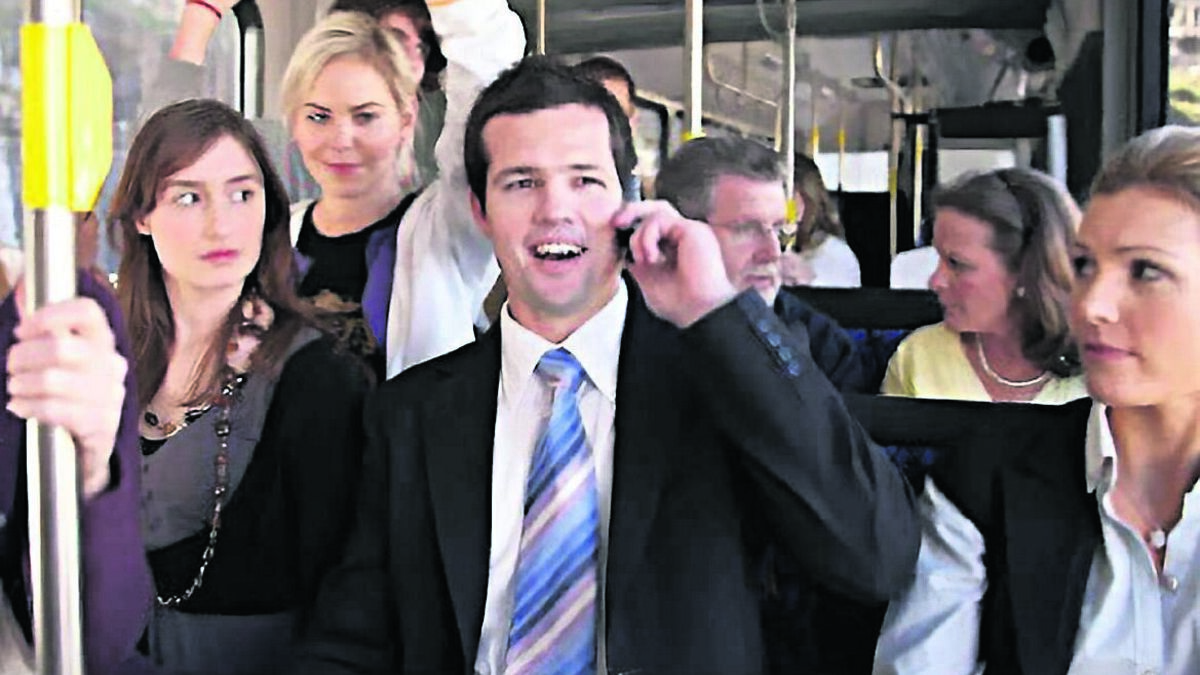
Loud phone conversations and playing noisy videos in public are a bane of modern life. Picture iStock
The other day, I was sitting in a coffee shop on Barrack Street, chatting with a friend over a cappuccino.
Nearby, a young man in his early twenties was watching videos on his phone, the volume turned up high.
As I tried to focus on the conversation, I found myself struggling - being blind, I rely heavily on my hearing to stay present.
Eventually, I leaned over and said: “Excuse me, would you mind lowering the volume?”
To my relief, the man apologised and turned it down. It was a small exchange, but it stayed with me.
This moment brought me back to a piece of digital art I created called ‘No is OK’ that hangs framed in my front room.
The image depicts a figure, human yet slightly alien, with wide eyes and hands raised, palms outward. Behind them is Cork’s Southgate Bridge, near Barrack Street. Above it all, a white cockatoo soars - a bird not native to Ireland, symbolising both alienation and freedom. The figure’s hands seem to say, ‘No, this is my boundary’, while the bird’s flight represents the liberation that comes from honouring one’s needs.
Respect and boundaries are at the heart of this image, and the more I thought about it, the more I saw their relevance in everyday life.
Boundaries aren’t just about saying no; they’re about affirming life - acknowledging the value of our needs and the needs of others.
But there’s a distinction between personal boundaries and the shared responsibility that comes with public spaces.
What we do in private affects only ourselves, but when we enter a shared space, there are other considerations.
A city is not just a collection of individuals; it is a community of people navigating a common space, where respect becomes a bridge between personal freedom and collective wellbeing.
Take the swimming pool, for example.
The changing area has cubicles for people to change in, and lockers for storing belongings. Yet, it’s not uncommon to find cubicles occupied by clothes instead of people.
It’s a small thing, but when you’re standing there with nowhere to change, it’s frustrating.
In the pool itself, lane swimming is meant to ensure everyone has space to enjoy their time, yet when someone ignores the rules, it can create unnecessary tension.
These moments aren’t just about rules - they’re about fairness and respect for shared spaces and for each other.
And fairness is something deeply woven into Irish culture. Perhaps it’s because of our history, our collective memory of struggle and hardship. Or maybe it’s just because we are humans.
Fairness is an instinct, a sense that things should be just, and that everyone should have a fair chance.
It’s why people queue properly at bus stops, why there’s a quiet understanding that you don’t take up more space than you need, and why a gentle reminder - “Sorry, you’re in the wrong swimming lane” - is usually met with a nod and an adjustment.
And then there are moments of true respect and care that remind me of the best of our city.
Every Thursday, I cycle with a group called Cycling For All Cork. One of our members, an incredible woman who is both blind and deaf, takes the bus to meet us at Blackrock village. The bus drivers often go out of their way to help her disembark safely, ensuring she’s steady and ready for the next step.
As she arrives, the leaders of our cycling group are there to meet her, guiding her to her tandem bike and welcoming her into the fold.
It’s a small but deeply moving example of what respect can look like in practice.
When the bus driver takes that moment to assist her, and when our cycling leaders step in with kindness and care, it fills me with quiet pride for the good people of Cork city.
Respect, in this case, isn’t about drawing boundaries, but about honouring another person’s life and needs.
These moments remind me that having boundaries isn’t just about saying ‘no’; it’s also about saying ‘yes’ to filling our shared space with good things and looking out for one another. These acts of consideration, big or small, are what transform a city from a place to live into a place to love.
Whether it’s a coffee shop, a swimming pool, or a bus stop, the way we move through shared spaces speaks volumes about who we are and the city we want to create.







 App?
App?


