Trevor Laffan: My friend Pablo who was an eyewitness to bloody history
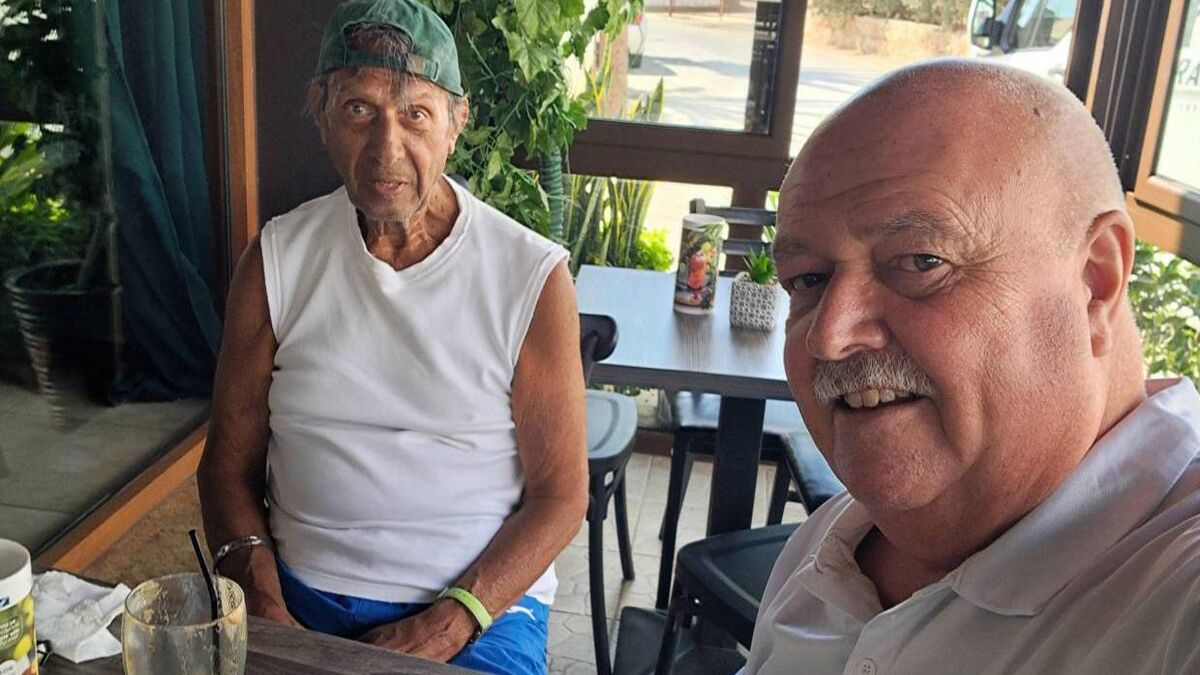
It has a population of about 4,500 these days, but that was much less when Pablo was growing up there.
He came from a large family and had a poor background. When he was a teenager in the 1950s, Cyprus was ruled by the English. There were few prospects of employment at that time, so he headed to the UK on a banana boat when he was 16 and spent his working life as a tailor in Manchester.
He returns regularly to Cyprus these days and we have become firm friends.
One day, while we were lounging around, he told me a story about what is now called ‘The Battle at the Barn’. It took place in Liopetri in 1958 where four local freedom-fighters were killed by the British armed forces who occupied the island.
I wanted to know more so he brought me to the village and gave me a tour of the area. He pointed out some of the places in the story, including a small chapel where he and other teenagers used to climb up to the bell tower to keep look-out for the British Army.
Pablo didn’t last long at that job though because he was accused of spending too much time just looking at the girls below.
He showed me his original home and told me how, in the summertime when it was really hot, he used to sleep outdoors on the roof or in the garden. It was during one of those nights when he was on the roof in September, 1958, that he witnessed history unfolding.
They were members of EOKA, a Greek Cypriot nationalist guerrilla organisation. In the 1950s, they were fighting a campaign to end British rule in Cyprus. Their ultimate aim was reunification with Greece, and this is their story as I got it from Pablo, supported by local historical literature.
In August, 1958, four freedom fighters went to Liopetri to train the local EOKA members in ambush tactics. All four were known to the British Army and there was a bounty on their heads.
At 2am on September 1, military vehicles approached the village. The fighters were alerted and made an attempt to leave.
The soldiers had them surrounded but they decided to try and drive through the blockade. After an exchange of gunfire with British soldiers, they were forced to return to the village.
At about 3am, they took refuge in a hay barn. While soldiers searched for them, a curfew was imposed, and villagers were rounded up and interrogated.
They looked everywhere, including the barn, but there was no sign of the men.
A 1am the next day, September 2, following information received, the British Army surrounded the barn and called on the fighters to surrender. There was no response.
The British sent for reinforcements while the shooting continued. The fighters were called upon to surrender, but after a short ceasefire, the shooting resumed with even greater intensity.
Several soldiers were wounded. The British threw hand grenades at the barn, and when one of the fighters ran out of the barn shooting, he was shot dead.
The remaining fighters continued to shoot, injuring a soldier and a captain, but a second rebel was also killed.
Soldiers climbed on to the roof of the barn, where they opened a hole and threw down lighted rags soaked in petrol, but they were soon put out.
While the battle continued, a helicopter dropped firebombs, and the barn was immediately set alight.
When the two remaining fighters could no longer tolerate the smoke, they ran out and were gunned down by the soldiers.
The deaths of the four EOKA fighters touched the entire Cypriot people and gained worldwide attention.
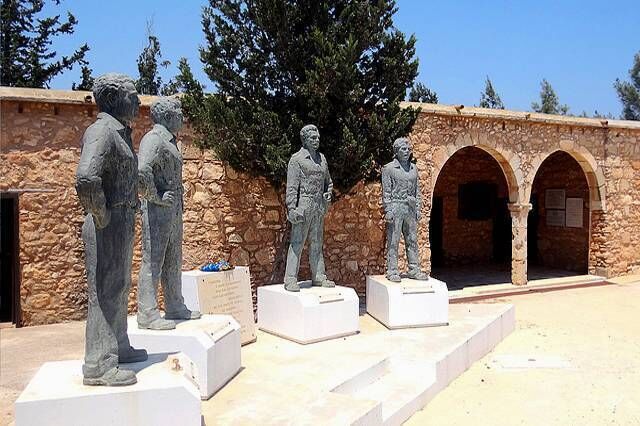
Immediately after Cyprus became independent, the barn became a shrine and statues were erected in honour of the four men.
Pablo later realised the significance of what he had seen from his rooftop. The attempted escape in the car had been the start of this story.
The men had been warned that the British Army were surrounding the village and had decided to make a run for it. The British wanted them captured alive, so they shot the tyres from under the car. The four men got out and ran for the barn.
In the aftermath of the gun battle, Pablo saw the blood-soaked bodies of the four men laying on the roadway outside the barn. He was only 15 years old at the time, but he remembers that one of the men had over 20 bullet wounds.
I spoke to Tassos, another Cypriot friend of mine, recently who was just five years old in 1958. He recited the names of the four men without hesitation because they were taught about them in school. The Cypriots still honour them.




 App?
App?


