Christy O'Connor on Cork v Galway: Match-ups and going long will suit Leinster champions at Croker
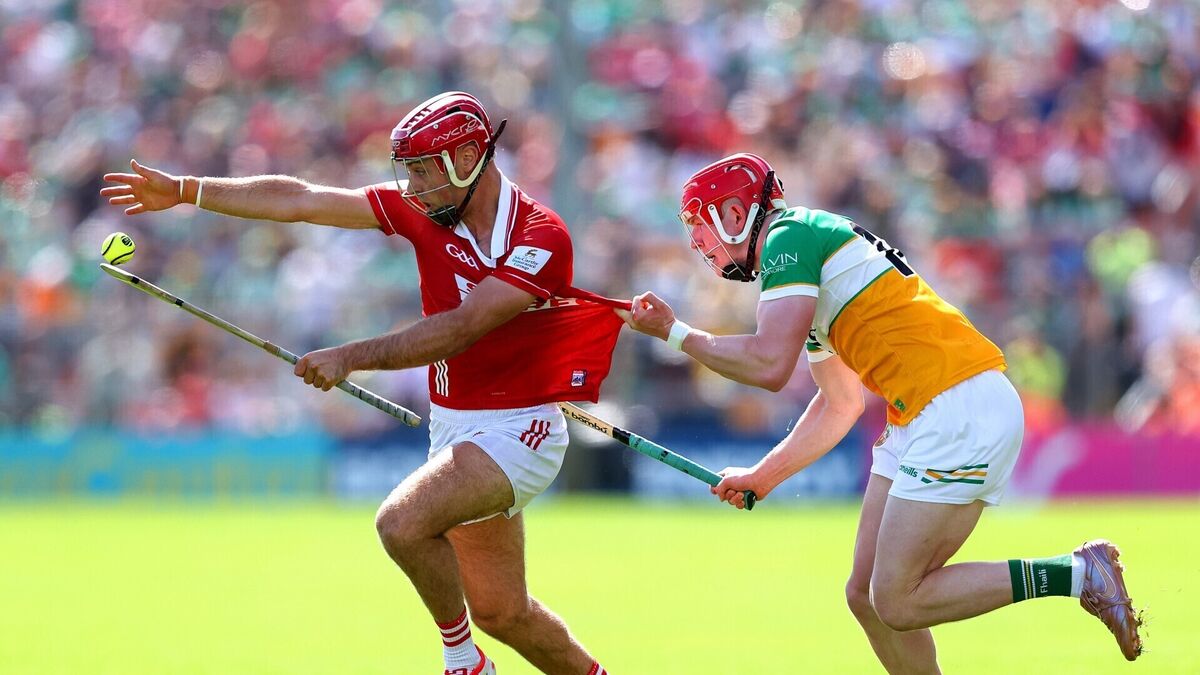
LIVEWIRE: Cork's William Buckley with Rúairí Kelly of Offaly. Picture: INPHO/Tom O'Hanlon
The day after Cork annihilated Offaly two weeks ago, three columnists – Anthony Daly, Patrick Horgan and Seánie McGrath – lauded Cork for the aerial authority close to goal.
Daly spoke about the impactful tactical tweak of pushing Alan Walsh into the full-forward line alongside Brian Hayes and Alan Connolly. Horgan echoed those sentiments. “He (Walsh) is such a good fielder that he can give Cork another outlet if they want to go more direct,” wrote Horgan.
McGrath praised Walsh for his two goals, which stemmed from good catches, before expanding that debate around Cork’s aerial prowess on the day.
Brian Hayes’ opening goal stemmed from another fine catch. Cork could have had another goal from the same aerial source if Hayes’ handpass to Alan Connolly later in the half had been a legal one. McGrath also pointed out other examples of Cork scores that were created from impressive high fielding.
“We were aerially very strong,” wrote McGrath. “Going forward to the Galway game, I really would like to see this strength incorporated into the match approach to a greater extent.”
Read on Irish Examiner
Walsh does give Cork more of a ball-winning option – and goalscoring threat – close to goal. It also gives Cork – as Horgan suggested – another option if they want to go more direct. Yet is that the best approach with how Galway set up?
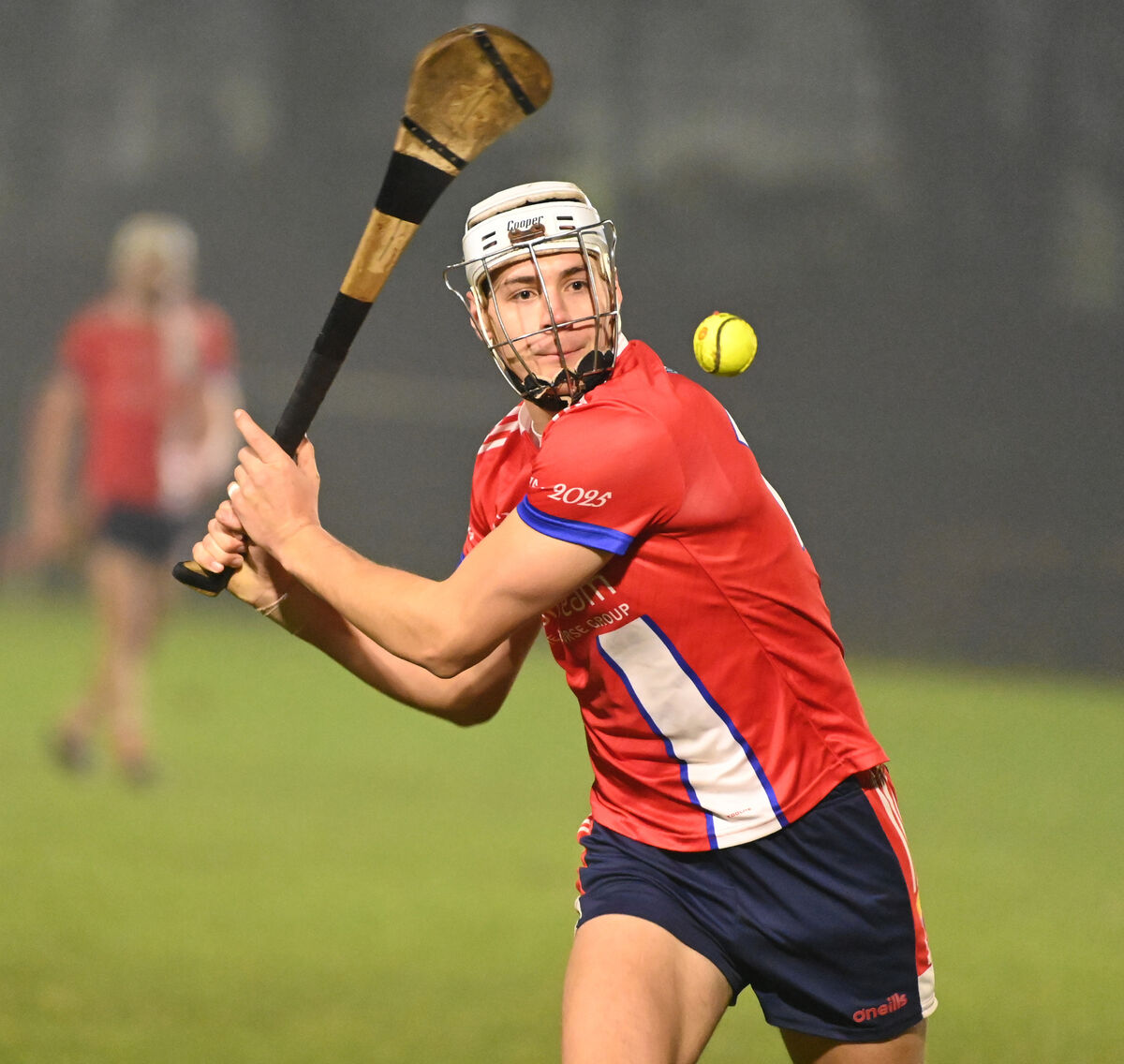
If Cork now start with Walsh, Hayes and Alan Connolly close to goal, that is a far more static full-forward line than it would be with William Buckley in that line.
Cork will have a greater ball-winning capacity from long deliveries but they won’t have the same capacity for movement. And particularly when Galway set up so deep and get so many bodies back in front of their goal.
With Daithí Burke expected to pick up Hayes, and Darren Morrissey likely to mark Connolly, Cork may have initially targeted Walsh as a good match-up on Ronan Glennon.
However, Glennon played wing-back in the Leinster final, with Cillian Trayers in the full-back line. And physically, Trayers is more suited to Walsh.
Glennon was more known as a midfielder but he is central to Galway’s gameplan with how his athleticism enables him to support the attack and get on the end of counter-attacking moves from deep; Glennon scored 0-2 in the Leinster final and was involved in the creation of a number of other scores.
Playing Buckley would pose a different headache for Galway because Trayers or Morrissey would have to follow him out the pitch. Trayers is more comfortable close to goal. Morrisey would manage out the field but he’d still prefer to be closer to goal.
Dublin did raise four green flags in the Leinster final but one of those was from a harsh penalty while two were scored in garbage time when the game was long over.
It did in the Leinster final when Dublin were far too direct. Having John Hetherton on the edge of the square was a weapon that detonated in Salthill three weeks earlier but Galway decommissioned that threat in Croke Park through Daithí Burke.
Ronan Hayes, who was also pivotal in that win in Salthill, did show flashes when introduced in the Leinster final but he was eventually swallowed up the phalanx of bodies Galway were able to get inside the scoring zone when the Dubs were chasing the match.
In total, Dublin hit 29 long balls into their full-forward line. That possession did lead to 2-6 but Dublin lost far more possession from that tactic than they gained.
Most of that long ball was aimed at Hetherton and, while Dublin did mine some scores from breaking ball off him, Hetherton had only five possessions in total, which amounted to one point and one direct assist.
Just as crucially, Galway killed Dublin off turnovers from possession they won from those long deliveries. In total, Galway mined a colossal 4-15 off turnovers. Dublin turned over the ball a staggering 42 times in total.
Read More
In such an unstructured match, Galway managed possession, and the patterns, far better. Cork will be far more equipped to deal with those challenges but they’ll still have to work their way through the defensive structure that Galway construct.
Jason Rabbitte is the spearhead of an attack that gets a huge amount of bodies back the field. Conor Whelan, who made his name as an inside forward, had one of his best games in an age in the Leinster final as a foraging half-forward, ending with 0-5 and assists for 0-4.
Dublin’s performance aside, a heavily defensively structured team still got off 48 shots, and racked up 4-29, the highest score ever recorded in a Leinster final.
Cork have far more scoring weapons. They won’t make the mistake either of allowing Cathal Mannion the freedom to sit as an auxiliary centre-back and control the tone and tempo of the match.
If Cork’s goal threat is nullified, they still have enough quality to shoot from deep and outpoint Galway. Cork also showed in their league meeting how their pace and running power can cut through Galway’s rearguard.
Galway are set up to get out in front. Chasing a game poses a whole other set of challenges, especially when it would make Galway’s running game even harder to sustain.
Cork will win on Saturday. It just may not be as straightforward as expected.
And particularly if going more direct doesn’t yield the same scoring dividend as Cork think it might.






 App?
App?


