Christy O'Connor breaks down stats from Cork v Tipp: Some of the scores stemmed for loose, disjointed play
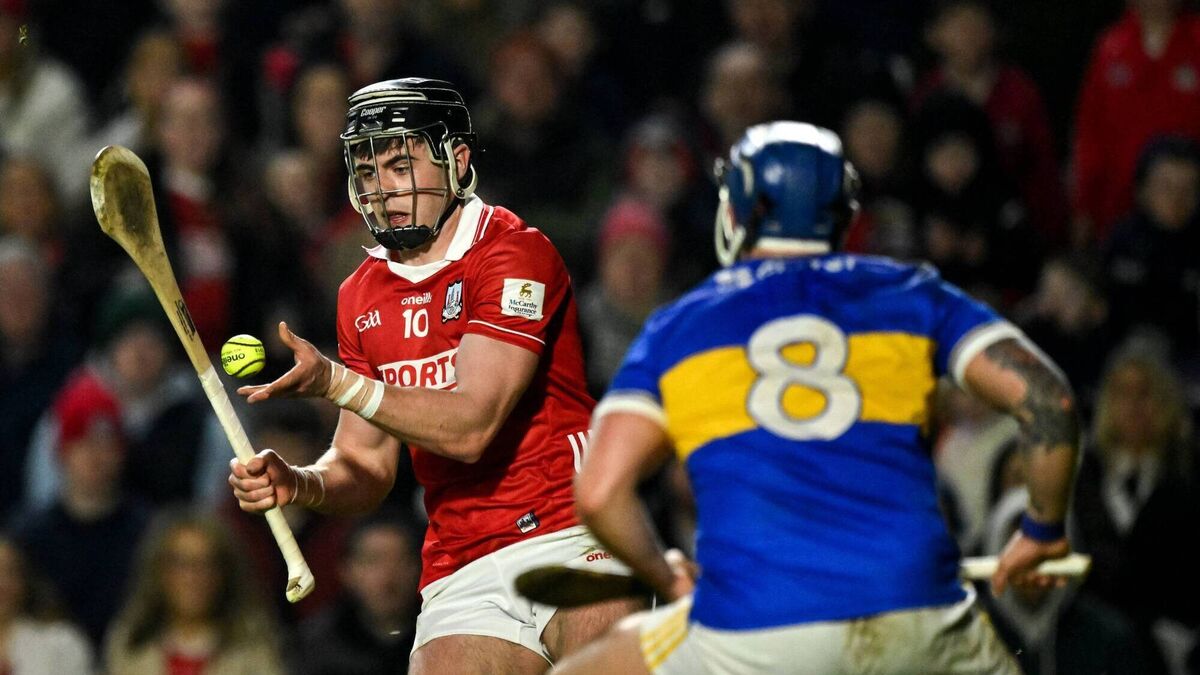
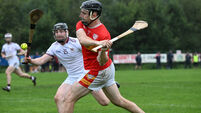
Darragh Fitzgibbon of Cork fires a point over Willie Connors of Tipperary at SuperValu Páirc Ui Chaoimh. Picture: Ray McManus/Sportsfile
In an excellent interview with Pat Ryan by Denis Walsh in The Irish Times last Saturday, Ryan tried to make some sense of the second-half collapse in last year’s All-Ireland final, and the helplessness he felt watching it develop on the sideline.
A manager has to trust the players and hope they can find solutions by problem-solving on the pitch. Yet when the tide turned that afternoon, Cork had no answers and were buried beneath Tipp’s incessant waves of momentum and scores.
Tipp had whipped up that tide early in the second half but Ryan felt Cork were cut adrift once John McGrath was fouled for a penalty and Eoin Downey was red-carded.
As soon as Darragh McCarthy buried the penalty, everybody in the ground could see that Cork were done. Having been outscored by 2-7 to 0-1 in that third quarter, it was clear that Cork’s heads were gone. With Tipp flying and Cork flagging, even with 20 minutes still left, the outcome was always going to be ugly for Cork.
“The minute they got the penalty to go six points up and we were down to 14 men it was lights out,” said Ryan. “People might say that’s defeatist, but that’s what it was. Tipp won an All-Ireland against Kilkenny in 2019 when they were a man up and they’re just too good to play against with 14 men.
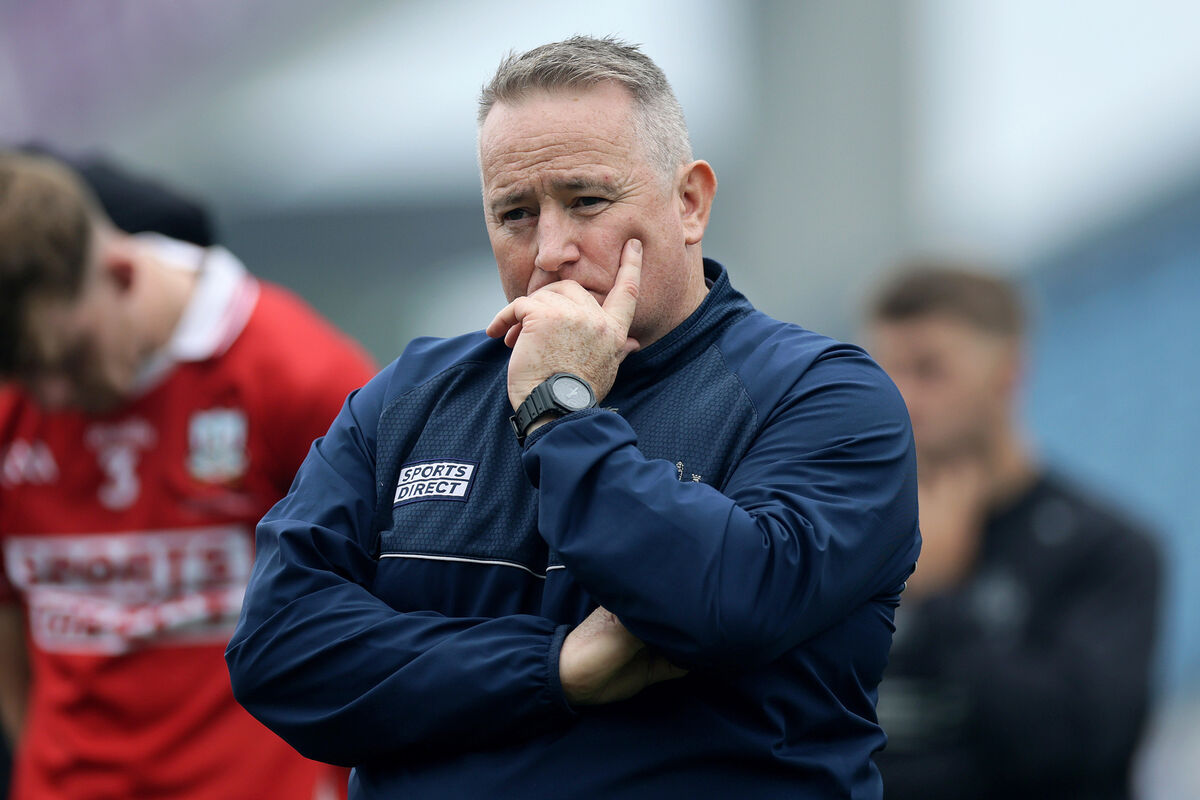
“The disappointing thing from our point of view is that instead of losing by six or seven points you lose by 16. But people need to be conscious as well, from a mental point of view, something you’ve dreamt of all your life is gone – you know it’s gone. That does creep into fella’s heads (on the pitch): this is gone now.”
That reality didn’t make it any easier for the Cork public to stomach when they were watching the horror show in the moment, but it was another insight into how and why Cork collapsed in the manner that they did. Ryan wasn’t offering it as an excuse but just seeing it for what it was; when the dream dies so early on the pitch and the sense of helplessness can be psychologically strangling, the horror show is inevitable.
Of course there are always caveats. Other teams have been in similar type positions in big games – albeit rarely in an All-Ireland finals - and, while they’ve still lost heavily, they’ve at least died with their boots on.
The Cork players know that better than anyone but Ryan’s comments are just another example of how Cork have tried everything to rationalise something that seemed so irrational at the time that it was almost unfathomable.
Cork are still trying to work their way through that process. Saturday evening was another positive step in that direction but Cork won’t be getting carried away with the outcome in the second week of February.
The players from both camps will accept the game for what it was but it was still extremely satisfying for the huge Cork crowd in another landmark occasion in Páirc Uí Chaoimh.
The melee which erupted before half-time was unsavoury and unnecessary and both teams being reduced to 14 men for the second half naturally saw the match lose some of its shape and drift for periods of that half.
Still, Cork will take all the positives going. After only nailing two of their first seven shots at the outset of the fourth quarter, which included five wides, Cork converted five of their last six shots, which included the last four points of the match.
Cork had some excellent defensive performances, especially from Rob Downey, but Cork’s attack was far slicker. That was evident with the Tipp starting defence and midfield scoring more from play (0-7) than Tipp’s starting attack (0-5).
For the second week in succession, Cork’s starting Cork half-forward line cut loose, with Darragh Fitzgibbon, Shane Barrett and Diarmuid Healy scoring 0-12 from play from 16 shots.
Despite shooting three wides, Fitzgibbon was very productive again, scoring 0-6 from play, having two assists and playing a deadly pass to Declan Dalton that almost resulted in a goal.
With Cork deploying a two-man full-forward line, William Buckley was effective as the roving inside forward, especially when his pace enables him to attack space in front of him with real intent. From 10 possessions, Buckley scored 0-3, had two assists and played the pass to Shane Barrett before he was fouled for the penalty.
From his first four possessions, Connolly scored 0-3 and had an assist. He ended the match with 0-8, 0-4 from play, and four assists.
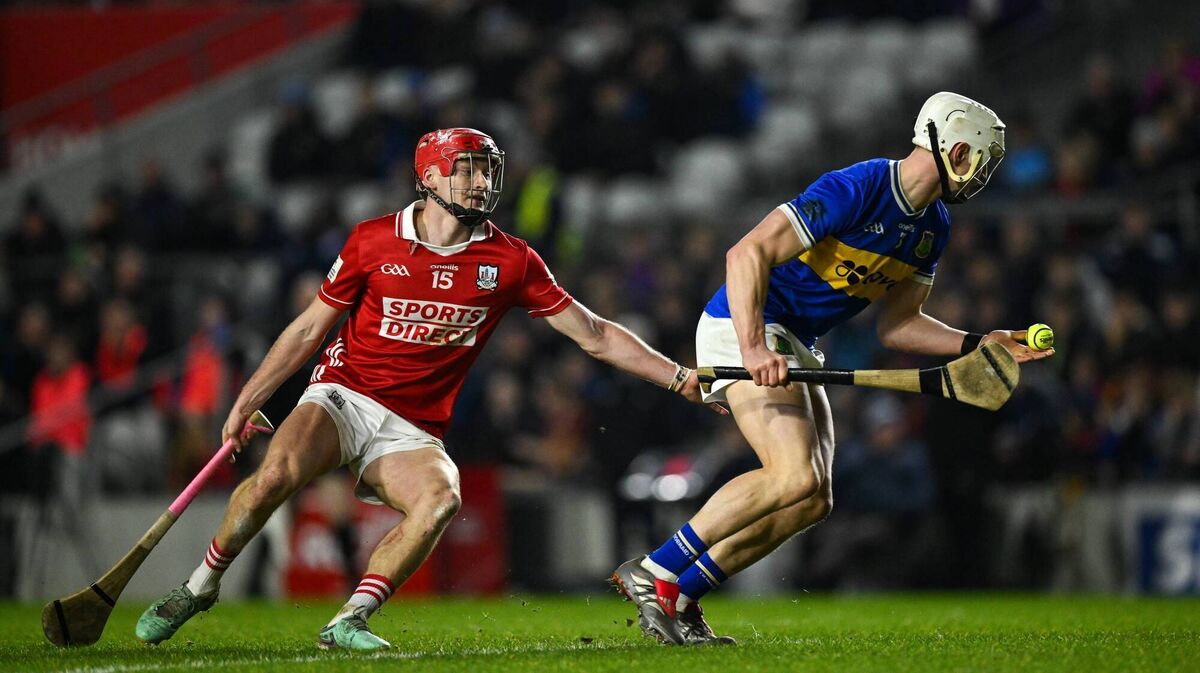
Cork mined 0-11 from their own restart and 0-11 from turnovers. They won 15 of the 25 long stick passes played into their forward line and got 0-6 from that possession. That could have been 2-6 with Fitzgibbon’s laser pass to Declan Dalton, who just missed the target, while the penalty Dalton missed originated from a long ball won by Buckley.
But they still got off 43 shots and bagged 0-24 from play.
Some of those scores stemmed from loose and disjointed play, but it was still another positive night’s work for Cork. And another step along the way in the process of being a better and more mentally resilient team after last year’s All-Ireland final.



 App?
App?


