Both sides favour control as puckouts stay short in Salthill
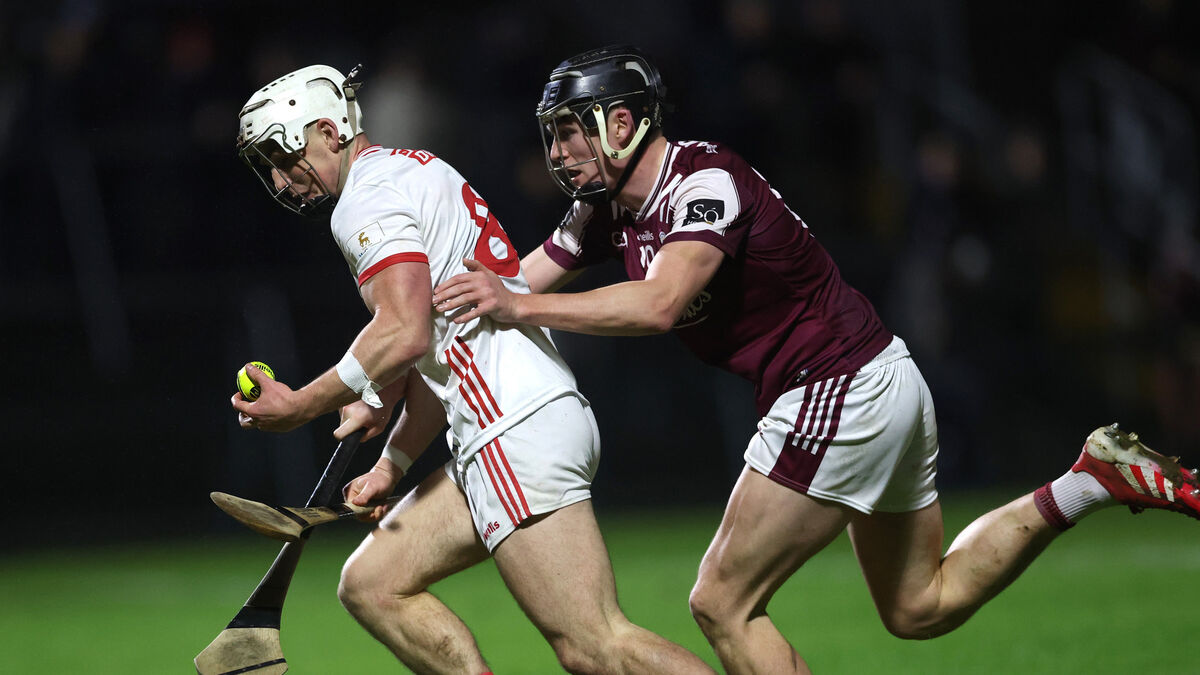
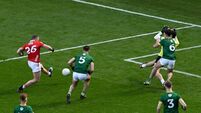
Cork’s Tommy O’Connell breaks away from Darragh Neary of Galway. Picture: ©Inpho/James Crombie
Saturday night’s clash in Salthill was a fascinating one, not only for the strong second half turnaround from Cork, but for how the battle on the puckout front transpired.
Both sides chose to manage puckouts in a similar manner. Conservative for much of the game, but increasingly more ambitious as the time passed and the battle remained close.
Neither Cork nor Galway showed much appetite for gambling long off the restart, particularly early on. Patrick Collins, in particular, kept Cork’s deliveries close to home, only stretching the range once the pressure began to tell late on. Even then, the emphasis remained on control rather than distance.
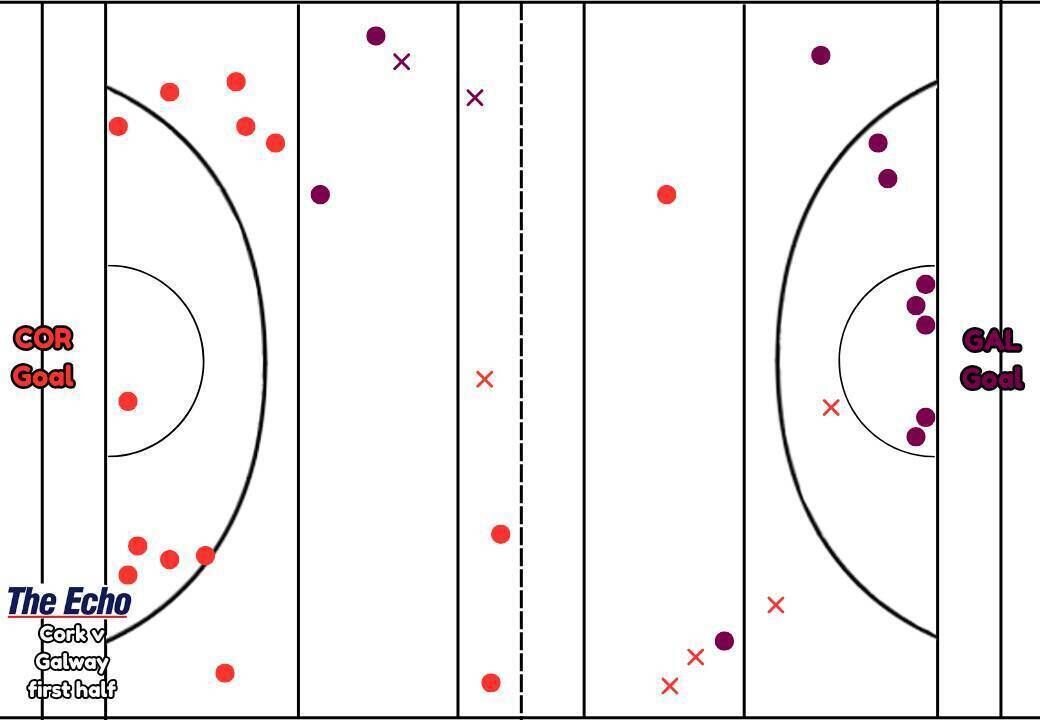
What distinguished Cork’s short puckouts, though, was their purpose. Unlike Waterford’s approach a week earlier – where Billy Nolan regularly pucked the ball to the nearest defender to manufacture an extended run-up – Collins was far more precise.
His preference was to pick out corner-backs and half-backs who had already pulled wide, popping the ball straight into space and allowing Cork to work their way out through possession, rather than with a “Hail Mary” ball into the opposing square. The puckout maps confirm that point.
Cork’s overall puckout return was predictably strong given that emphasis. They retained 78.4% (29/37) across the night, improving from 73.7% (14/19) in the opening half to 83.3% (15/18) after the break.
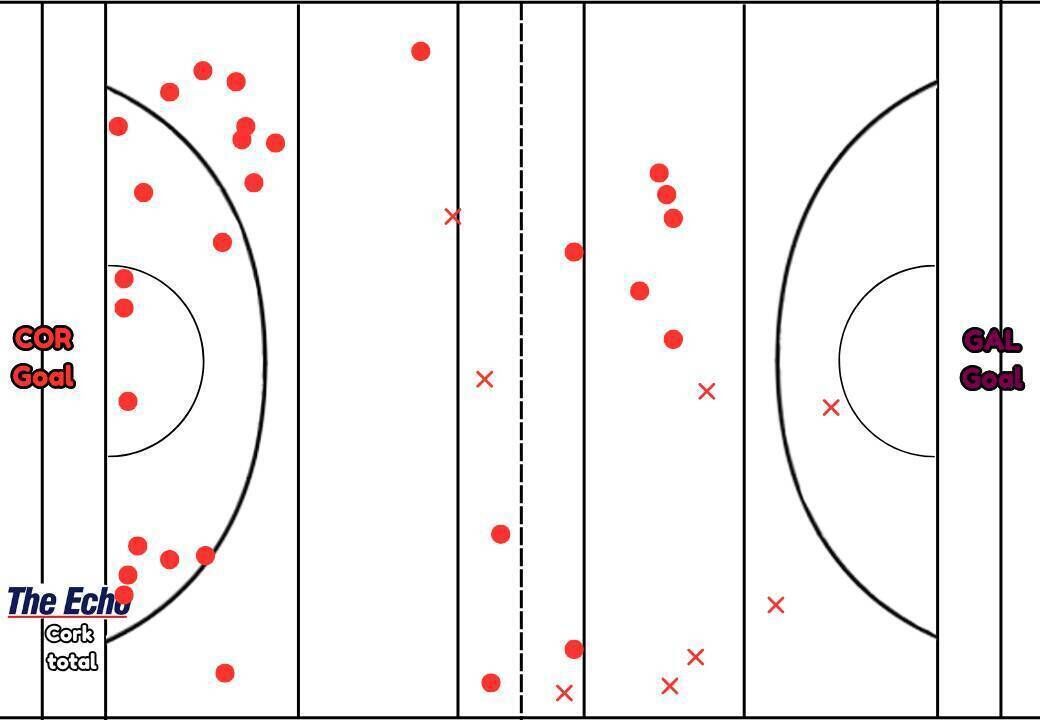
In the first half, Cork struggled badly when Collins did push the ball beyond his own 65, retaining just three of eight such restarts. Galway had the better of those exchanges.
That picture flipped completely in the second period, though, when Cork won six of eight longer puckouts, most of them coming in the final quarter as they began to assert themselves physically and territorially, with Brian Hayes creeping in for the two goals that sealed a red and white victory.
Crucially, Cork were immaculate where they had to be. The problem that comes with the shorter puckout strategy, is that any mistakes made are almost certainly fatal. If you’re turned over inside your own 45 you’re almost certain to concede a point, or worse. But, the defenders and goalkeeper were on point in that regard for the entire 70 minutes.
Eoin Downey, Mark Coleman and the full-back line were all involved, but it was Coleman and Daire O’Leary who were most frequently trusted, particularly during a first half dominated by short restarts. The composure there allowed Cork to persist with a strategy they have rarely leaned on in recent seasons.
Under Pat Ryan, restarts tended to skew longer, with the short option used sparingly. That was also the case against Waterford.
But, the ambition here was to clearly target the short range restarts, and Galway mirrored it.
Galway’s night followed the reverse arc. Their first-half return was excellent, before dipping as Cork started to apply the pressure in the second period. Like the visitors, they leaned heavily on short puckouts, retaining 16 of 17 at close range.
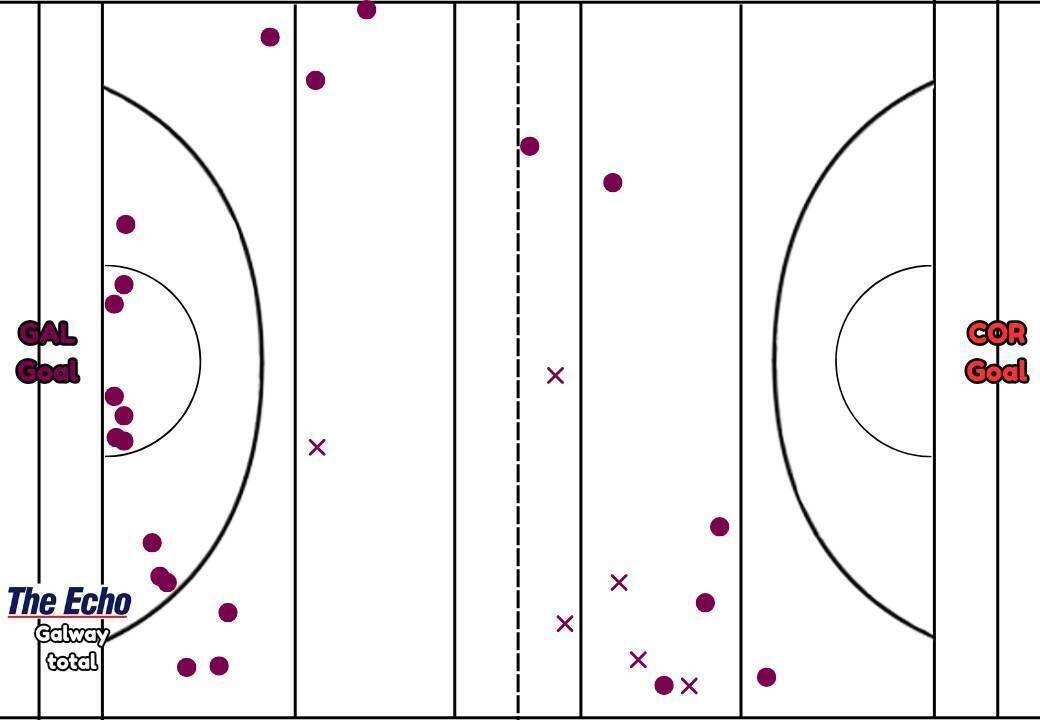
From distance, their numbers were respectable rather than dominant – six retained from 11 beyond halfway – but it was notable that Galway attempted just four long puckouts in the opening half. Those, it must be said, brought them more joy than Cork initially found from similar range.
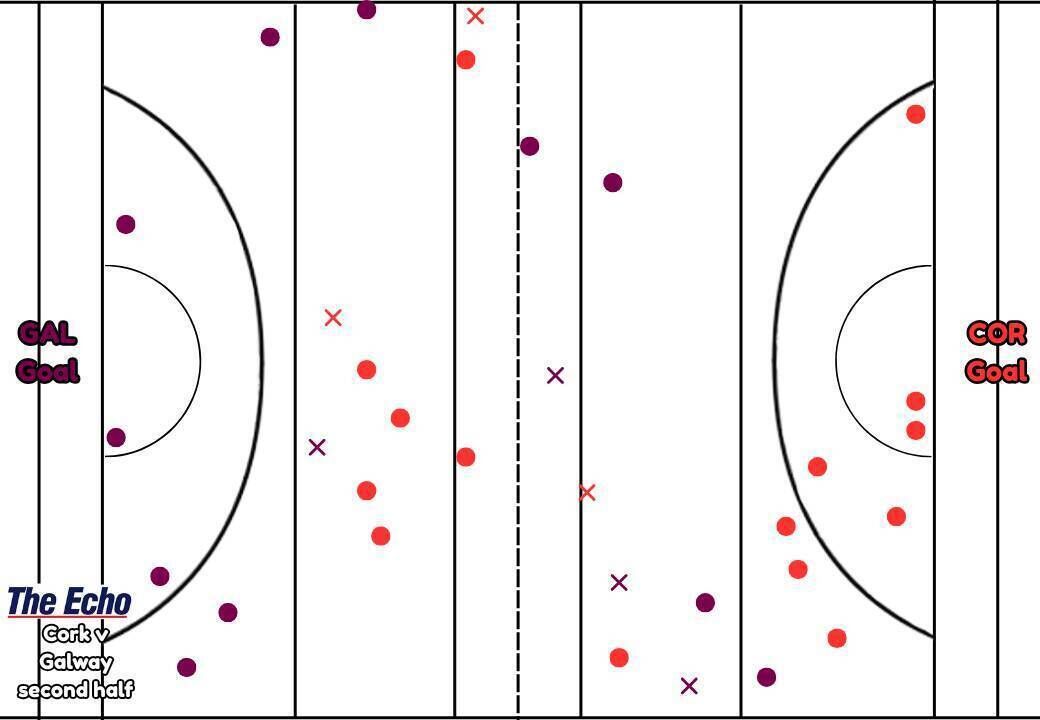
As the second half wore on, Galway increased the length of their restarts, almost in step with Cork. The difference was in the contests that followed. Where Cork began to win the half-back and half-forward duels, Galway did not.
Their retention slipped from an excellent 84.6% (11/13) in the first half to 73.3% (11/15) in the second, leaving them with an overall return of 78.6% (22/28).
Solid numbers on paper, but heavily inflated by the short restarts. Still, the maps showcase the erosion of Galway’s control in the second half and the point at which the contest began to turn towards Cork.





 App?
App?


