Christy O'Connor on Cork hurling: Late goals could be crucial to championship prospects
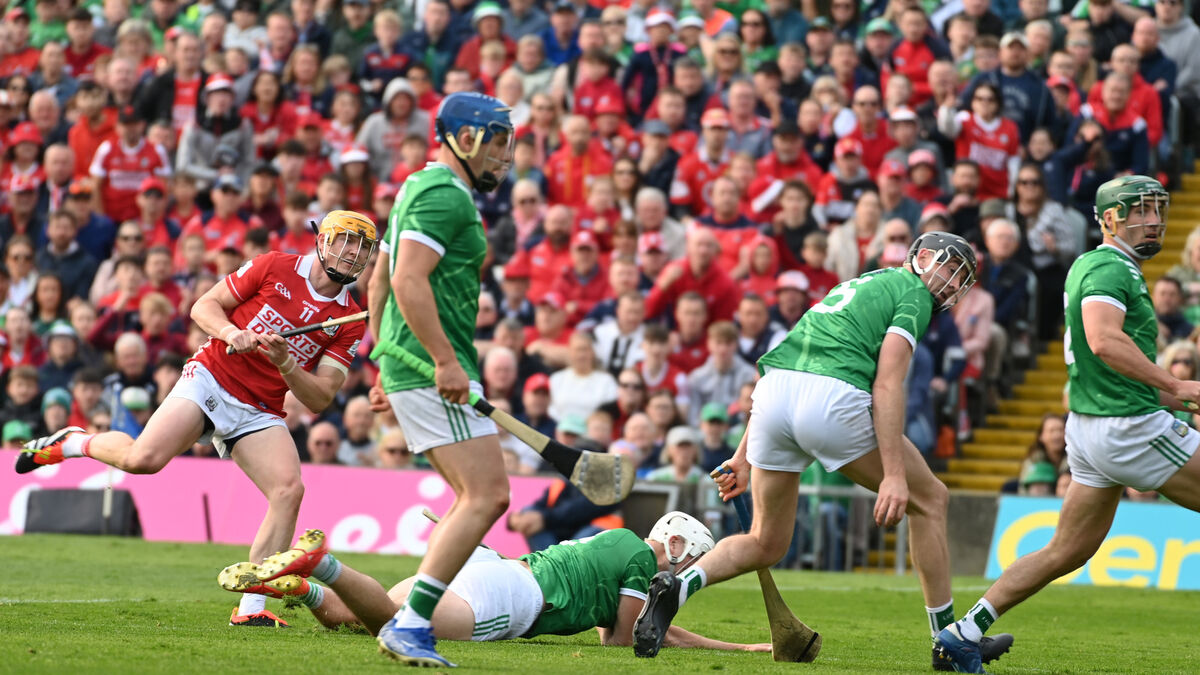
Cork's Shane Barrett hammers home his first-half goal against Limerick during the Munster SHC final at TUS Gaelic Grounds last summer. Picture: Eddie O'Hare
For a full six seconds before he took a puckout in the 60th minute of Saturday evening’s game in Salthill, Patrick Collins raised his hurley over his head and repeatedly waved it to his right, patiently persisting with the action for effect so that the majority of the Cork players in the middle third were aware of what he wanted them to do.
Collins took his time so that Cork could get enough bodies into that zone in front of the stand to create an advantage in the overload under his puckout. As soon as the ball landed, Cork had three bodies under it, and Darragh Fitzgibbon steaming into the zone for the offload.
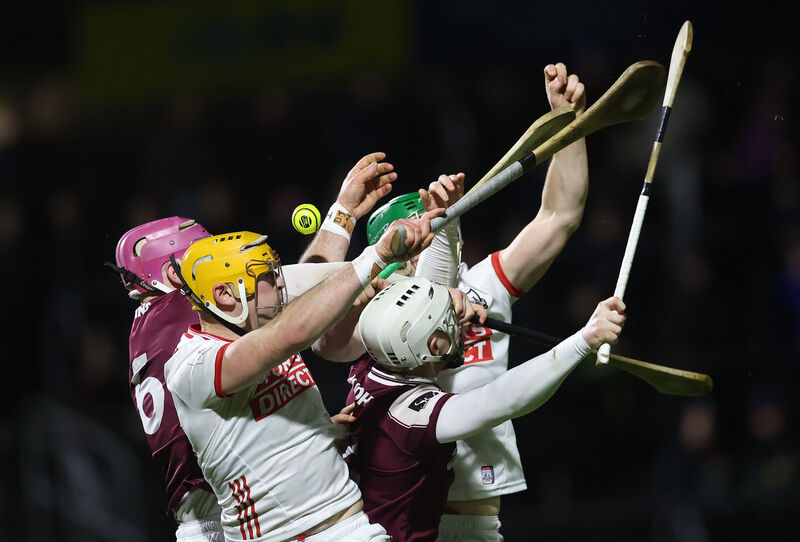
It worked to perfection because Cork’s best fetcher, Seamus Harnedy, grabbed the ball and handpassed it to Fitzgibbon. He still had plenty to do as he was only five metres from the sideline and had three Galway players closing in, but Galway’s shape across their half-back line had been ripped up when they had to commit so many bodies to that overload. And Fitzgibbon immediately exploited it.
Once his pace took him past the challenge of Daniel Loftus, Galway were scrambling. Cillian Trayers couldn’t go to Fitzgibbon because Brian Hayes was behind him but it was still a two-on-one scenario and Hayes was never going to miss from outside the square when Fitzgibbon passed him the ball.
The Cork half-forward line scored 0-13 from play while Cork’s second goal on Saturday came from a similar playbook as the first.
Collins drove a long-range free from just outside the goal into a similar overload in almost the exact same spot where Cork had five players within three metres of the ball once it landed.
As soon as Alan Connolly took off, Cork knew exactly what was on again when Galway were chasing back and Cork were charging forward. A quickfire handpassing sequence between Connolly, Shane Barrett and Fitzgibbon ended with the same result – Hayes in possession just outside the square and another goal.
Those goals were nothing new for Cork because no team is more devastating when they breach the cover in the half-back line and have bodies ahead of the ball.
The source of scores were different but there were similarities with Cork’s two goals on Saturday night to their two goals against Waterford in last year’s championship.
Just after the throw-in to the second half in Páirc Uí Chaoimh last May, Tim O’Mahony blocked down Paddy Leavey on the 45 metre line and was instantly thinking goal once he picked the ball and the Waterford defence was scrambling back.
As soon as O’Mahony secured possession, he popped the ball off to Fitzgibbon, who passed it into Hayes, who flicked it into the net one-handed.
Hayes set up the second goal not long afterwards when winning a high ball outside the D, taking off towards goal with three Waterford defenders chasing him before slipping the ball to Patrick Horgan, who blasted to the net.
Cork’s two goals that afternoon were almost a rarity when analysed against their goalscoring patterns, especially from round five of the 2025 league onwards when they started scoring goals for fun, particularly in quick-fire bursts.
The majority of those powerplays came early in the match, or in the first half. Outside of that Waterford game, of the 29 other goals Cork scored last year from round five of the league until the All-Ireland final, 21 came in the first half.
In most of those instances, the games were over by half-time when Cork had scored at least three goals in the first half; against Clare in the league, against Tipperary in the league final and in their round robin meeting, and versus Dublin in the All-Ireland semi-final.
There was no need for Cork to go hunting for green flags in the second halves of those games, although they did in some of those matches, especially against Dublin when they raised three more green flags.
On the other hand, there were a number of games when Cork could have done with a goal in the second half, but couldn’t get one; against Clare in the round robin, Limerick in the Munster final, and the All-Ireland final against Tipp.
Cork didn’t lose those games against Clare and Limerick, drawing with Clare and beating Limerick on penalties, but they were overran in the second half of the All-Ireland final. Scoring goals in that half was even more of a challenge when Cork were in a full-blown meltdown and couldn’t score full stop.
Before Hayes bagged his first goal, Cork hadn’t scored in over 11 minutes. They’d created six scoring chances across that timeframe, a couple of which were half goal chances, but didn’t take any.
Galway had hit three unanswered points to go ahead by one and the home crowd could smell blood. But it was Cork who went for the kill. Bang. Bang.
It’s only the league but the last time that Cork won a tight game in league or championship by getting two goals in the last quarter was against Westmeath in Mullingar in February 2020. And one of those goals was a fortuitous one as Bill Cooper’s shot from 45 metres squirmed through the goalkeeper’s hand. Cork’s second goal five minutes later that afternoon was from a Patrick Horgan penalty.
So two late goals to win the game when their backs were to the wall on Saturday was another big positive for Cork at the outset of this league.






 App?
App?


