Donegal v Meath: All that glitters need not be green and gold
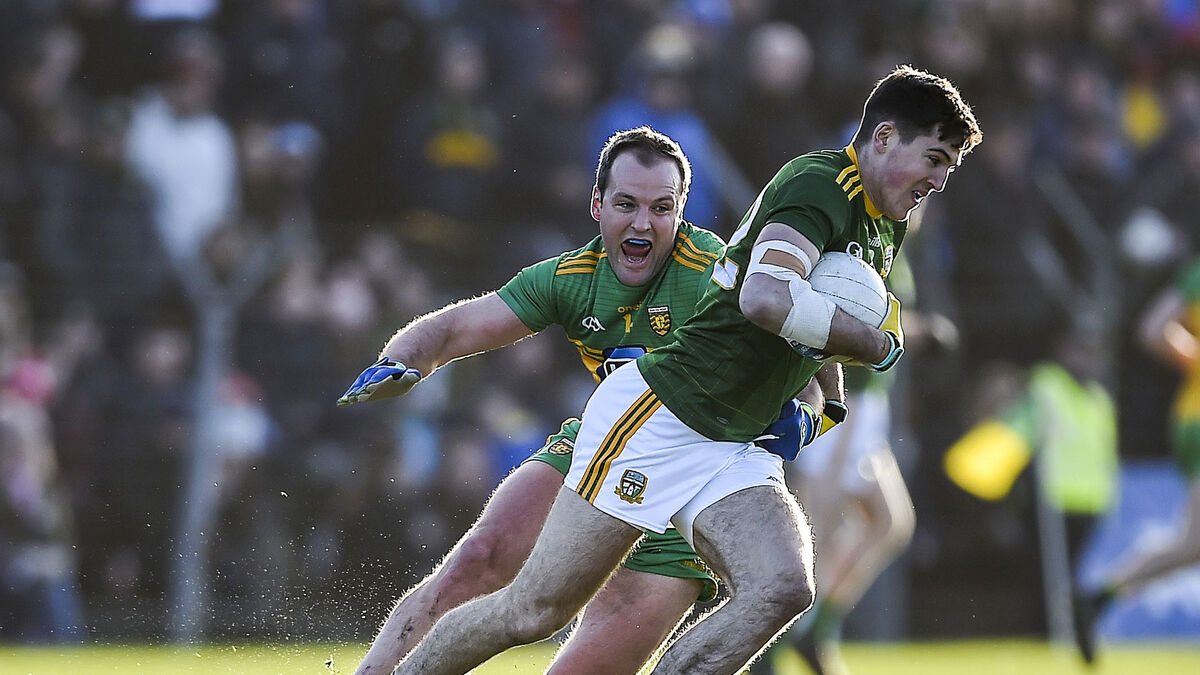
Ethan Devine of Meath gets away from Michael Murphy of Donegal in 2020, with both counties in their traditional kits. Picture: Inpho/Tommy Grealy
At the beginning of this week, news circulated that the footballers of Donegal and Meath would wear alternative jerseys in tomorrow’s All-Ireland SFC semi-final at Croke Park.
While the counties’ kits are not identical, they could be described as a ‘half-clash’ – Meath’s shirt is solid green with gold trim and white shorts; Donegal’s tops are primarily gold but the sleeves and shoulders are green and so are their shorts.
When the counties met in Division 2 of the Allianz Football League in Ballybofey last year, Donegal wore their white change jerseys and that was what they were expected to don in Croke Park this weekend. Meath’s registered ‘away kit’ is navy and they used that against Offaly in this year’s Leinster SFC; however, instead of that, the information was that the Royal County would play in bright yellow shirts trimmed with dark green, officially classed as their goalkeeper strip.
It was a strange choice of kit match-up – given the sunny conditions that are expected, there is a chance that the white and yellow could be confused, especially if Meath were to wear dark shorts.
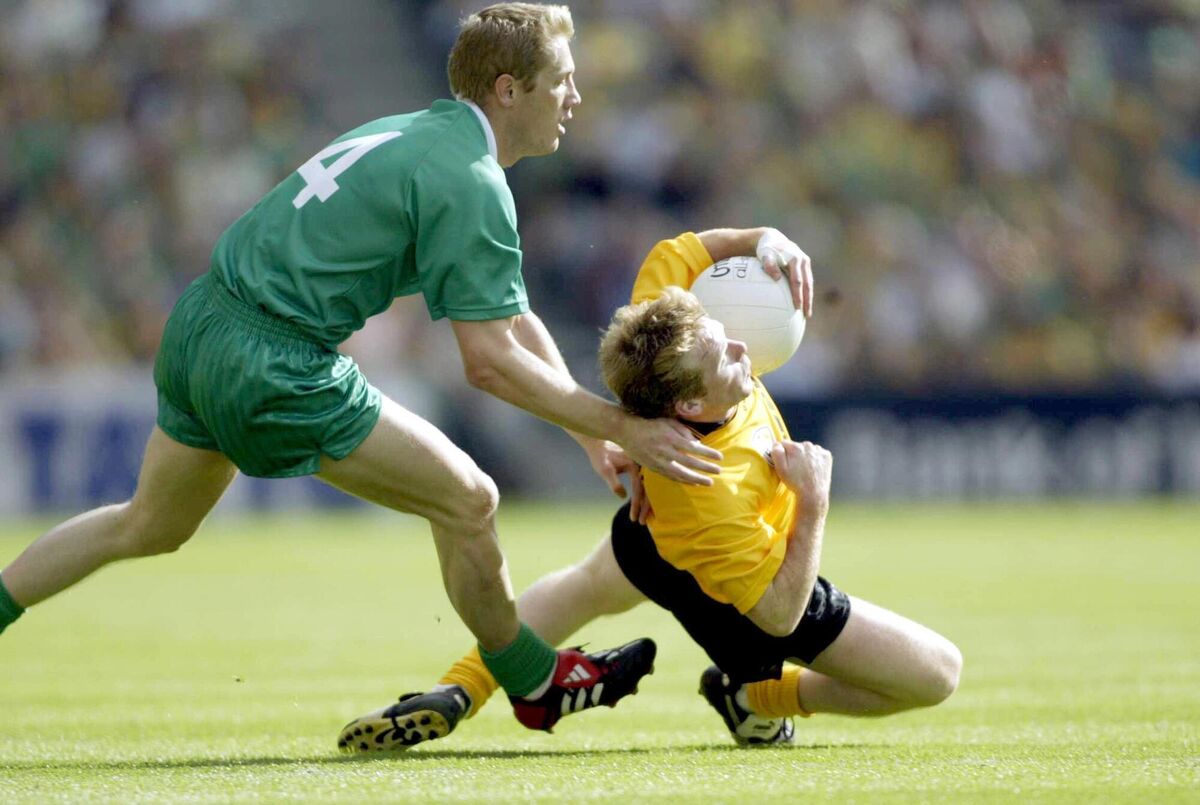
Part of the problem is that the GAA’s rules state that, in the event of a clash of colours, both teams should change. It’s rare that one party would volunteer to deviate from their first-choice outfit and let the opposition stay with what they are used to; Sligo against Kildare in 2001 are an example of that but that was because the management and players were keen to switch from white to black permanently and that allowed them to take the first steps.
Then, on Wednesday, there was a change of plan from the GAA’s Central Competitions Control Committee, based partly on a decision by referee Paul Faloon.
“Following discussions with both counties and the match referee, CCCC has directed both counties to wear their registered primary colours on Sunday, rather than their alternative colours.
“This is a change from the previous email, which is due to the match referee believing there is no clash of jerseys. The original decision was made before the referee was appointed, based on queries from the counties.” As is always the way with these things, there was a schism on social media a some decried the similarity while others poured scorn on the eyesight of anyone who felt that there was an issue in distinguishing the teams.
The referee may have no problem with telling the sides apart – or think before the game that he has no problem, at any rate – and perhaps it will be fine for the players, too, though it was interesting to hear former Dublin star Paul Flynn note how he found games against Laois tricky, seeing a flash of blue in his peripheral vision and not being sure whether it was a team-mate or an opponent.

However, it may not be fine for a chunk of those in attendance or watching on television and, all too often, colour-clashes in the GAA are dealt only if they are unavoidable rather than avoiding at all costs as the starting point.
Essentially, the GAA acknowledged there was a clash but then decided that there wasn't. But the options didn't have to be so divergent: in 2002, for instance, the counties wore provincial colours when they met - still Meath green and Donegal gold/saffron but with clear distinction.
Naturally, teams will prefer to wear what is familiar but surely it’s better to reduce the potential for a misplaced pass based on confusions. Cork’s All-Ireland wins of 1973 or 2010 certainly don’t count for less because they were achieved in white jerseys.
And, in any case, if Kerry beat Tyrone today, tomorrow’s winners would have to change for the final anyway – being used to wearing their alternative kit in Croke Park might even be an advantage.







 App?
App?


