Micko inflicted more pain on Cork than any Kerry manager but the respect was genuine
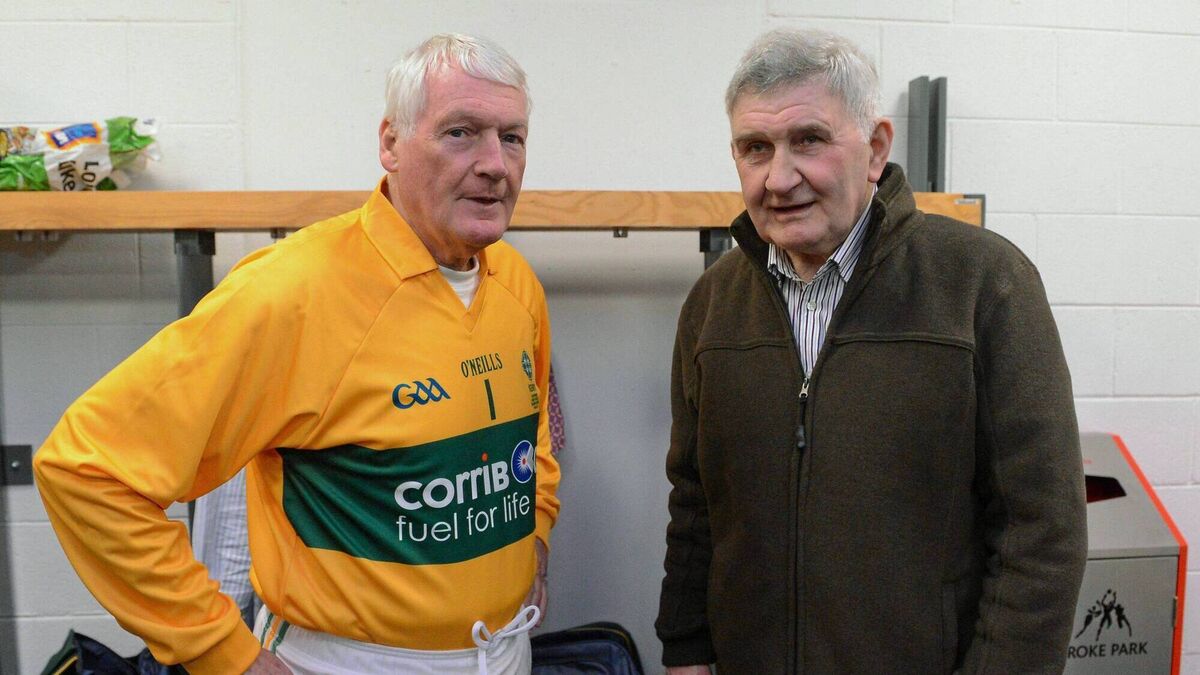
Former Cork football manager Billy Morgan with Kerry legend Mick O'Dwyer at the Alan Kerins GAA Challenge in 2013. Picture: Matt Browne / SPORTSFILE
"Munster final owes a lot to the proximity of Cork and Kerry. Culturally we are closer than the rest of the country. This adds to the excitement.
"But in the heel of the hunt, there is no room for sentiment or nostalgia when Cork and Kerry meet in a Munster final." – Mick O’Dwyer.
For too long while Mick O’Dwyer was Kerry manager, a Cork-Kerry Munster final was just a long drawn-out process of torture for the Cork players.
From 1975-'82, Cork lost eight successive Munster deciders. Between 1977 and 1981, the average deficit was 11 points. In 1977 it stretched to 15. In 1981, Cork managed just 0-3.
During one final, as Kerry continued to swamp Cork with wave after wave of attacks, Charlie Nelligan left his goal and started performing star jumps in front of the Kerry supporters. The Cork attacks were so infrequent, and Nelligan so redundant, that the Kerry keeper made himself busy to keep warm.
There were a few occasions when Cork pushed Kerry hard, especially in 1976 when Kerry won a replay after extra time in controversial circumstances.
In any case, it was always the same old story after every Kerry victory; O’Dwyer would annually make his way into the Cork dressing room and declare that they were the second-best team in Ireland.
At O’Dwyer’s funeral last Saturday, his long-time friend and well-known Cork property developer, Michael O’Flynn referred to that story during his eulogy at the mass in St Finian’s Church in Waterville.
“How many times did we in Cork have to endure his teasing of us?” asked O’Flynn. “All we heard was, ‘You’re definitely the second-best team in Ireland.’ Delivered with that signature grin after yet another triumph over us, I often challenged him on it.
"Did he truly mean it? And with that great roguish smile he’d concede, ‘Well, maybe just a few times.’”
That was just O’Dwyer’s way. He had a language all of his own, a way of doing things, a code that very few people could crack – especially Cork.
In 19 championship meetings, O’Dwyer oversaw 11 championship victories and three draws.
It would have been easy for Cork people to deem O’Dwyer’s annual contribution in their dressing room as patronising and condescending but O’Flynn’s description in the eulogy was probably accurate.
O’Dwyer only probably meant it when he believed it was true. Even if it only was true on a handful of occasions, Dr Con Murphy said that the Cork players never took O’Dwyer’s comments too seriously.
And anyway, if O’Dwyer did seem patronising, the Cork players couldn’t disagree with how O’Dwyer went about his business when he and his players had a psychological stranglehold over Cork at that time.
Even if Cork suffered at his hands for too long, that pain didn’t dilute the respect O’Dwyer had earned for what he achieved. O’Dwyer always had a good reputation in Cork.
In his column this week, Donal Lenihan recalled the fond admiration he always had for Micko, while Dr Con also told a story that neatly encapsulated that appreciation Cork people always had for O’Dwyer.
His father Weeshie had won an All-Ireland football medal with Cork in 1945 and was later chairperson of the Cork county board and Munster Council. Dr Con remembered a family trip to Waterville as a young boy and the first person his father looked up was O’Dwyer.
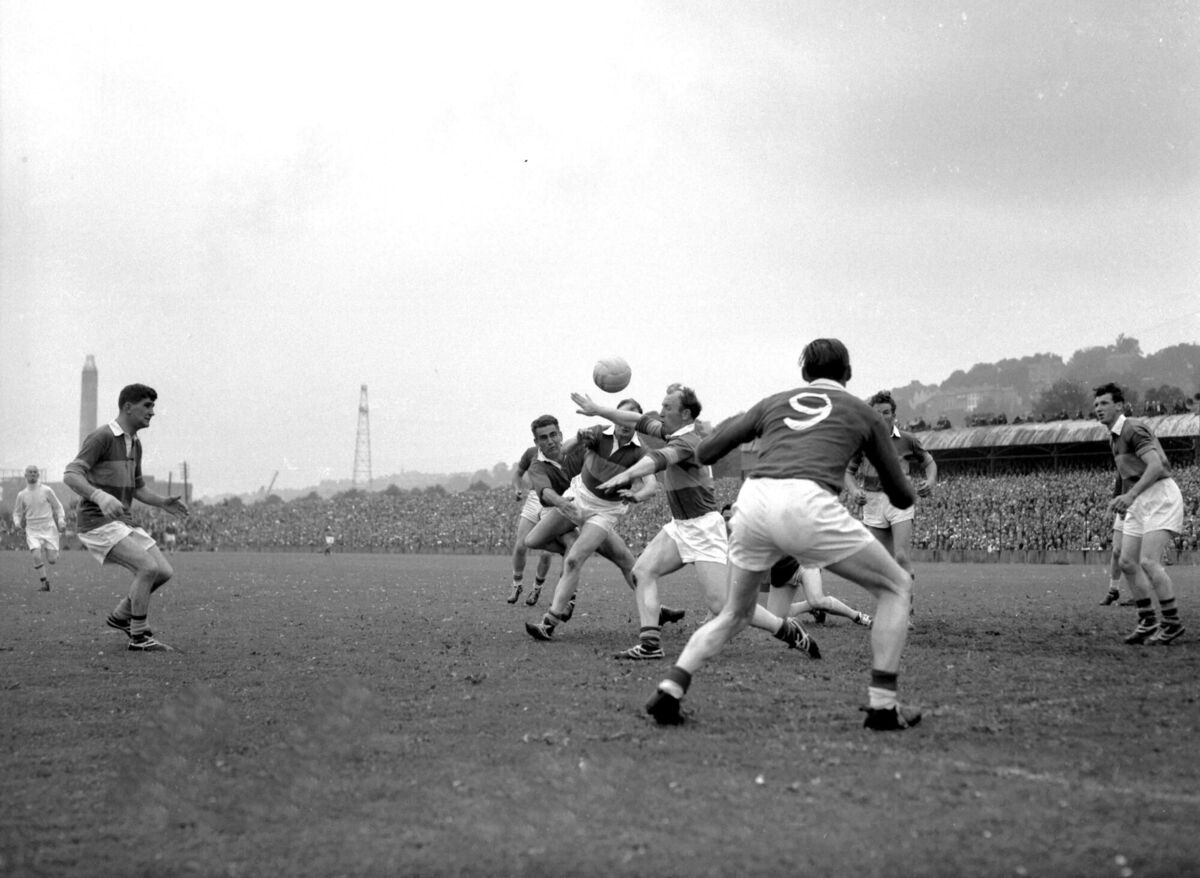
“That’s the respect people in Cork had for him,” recalled Dr Con.
Despite the rivalry, and the fact that Cork had finally beaten Kerry in the 1983 Munster final, O’Dwyer didn’t hesitate when asked later that year to coach the UCC Sigerson footballers.
O’Dwyer’s son, John, was on the team and his father put as much effort into training that team as he did with Kerry.
O’Dwyer got UCC to the 1984 Sigerson final but they were beaten by a really good UCG team that included John Maughan, Tommy Carr, Shay Fahy, Tomás Tierney, Padraig ‘Dandy’ Kelly and Anthony Finnerty.
Cork city wasn’t as far away from Waterville as Kildare, Laois, Wicklow and Clare but UCC was effectively O’Dwyer’s first project outside of Kerry.
It was more unique again considering he was still Kerry manager and O’Dwyer was in the process of constructing what many consider to be his greatest achievement; after losing the five-in-a-row to Offaly in 1982, and going down to Cork by a late Tadghie Murphy goal in the 1983 Munster final, O’Dwyer lifted Kerry off the ground and drove them to another three-in-a-row between 1984-‘86.
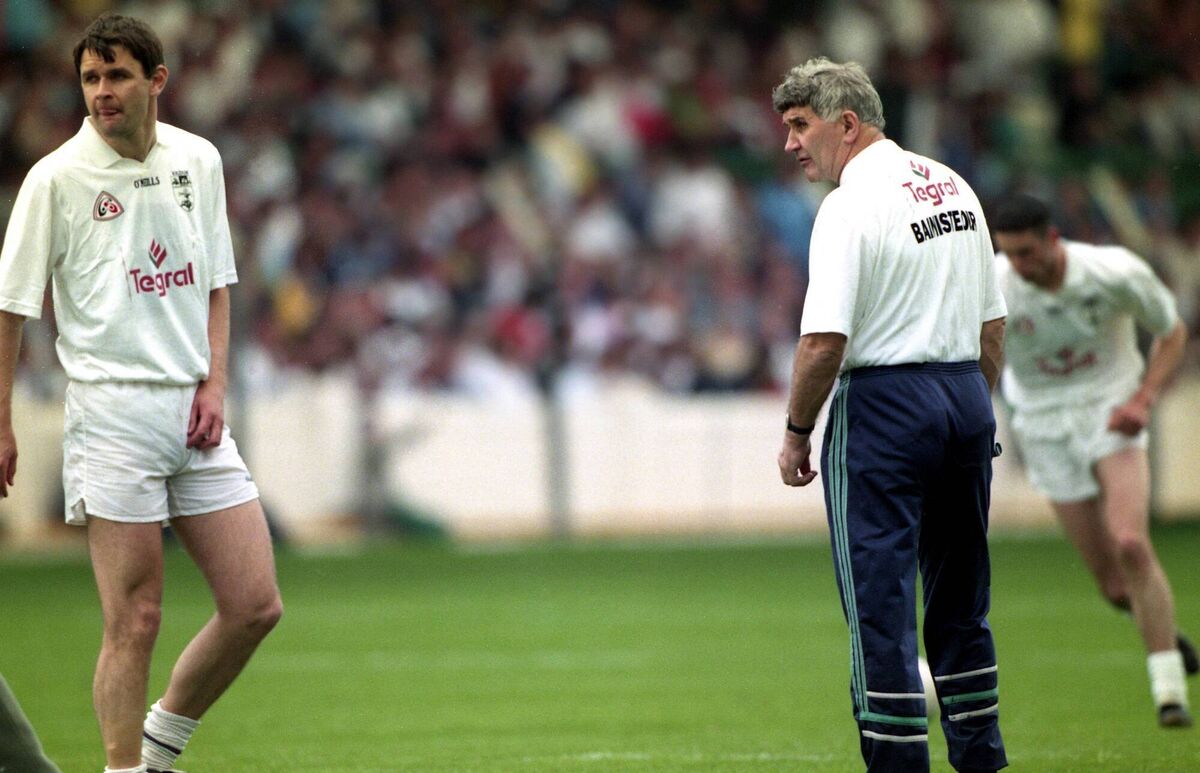
When O’Dwyer managed UCC, similar to when he managed Kildare, Laois, Wicklow and Clare, doing it, and almost needing to do it once he was asked, came from the core of him, and who he was as a person.
Whether his fanaticism for football exceeded his obsession for winning was irrelevant; one depended on the other. No matter where he went, O’Dwyer had an ability to reach players, and make them do more than they often believed was possible.
And for the opposition who came up against O’Dwyer, they couldn’t but respect him, and what he was able to achieve.
And that admiration was always sincere.
It had to be.



 App?
App?


