Red, white and blue: Cork v Waterford 2002-07 rivalry was compelling
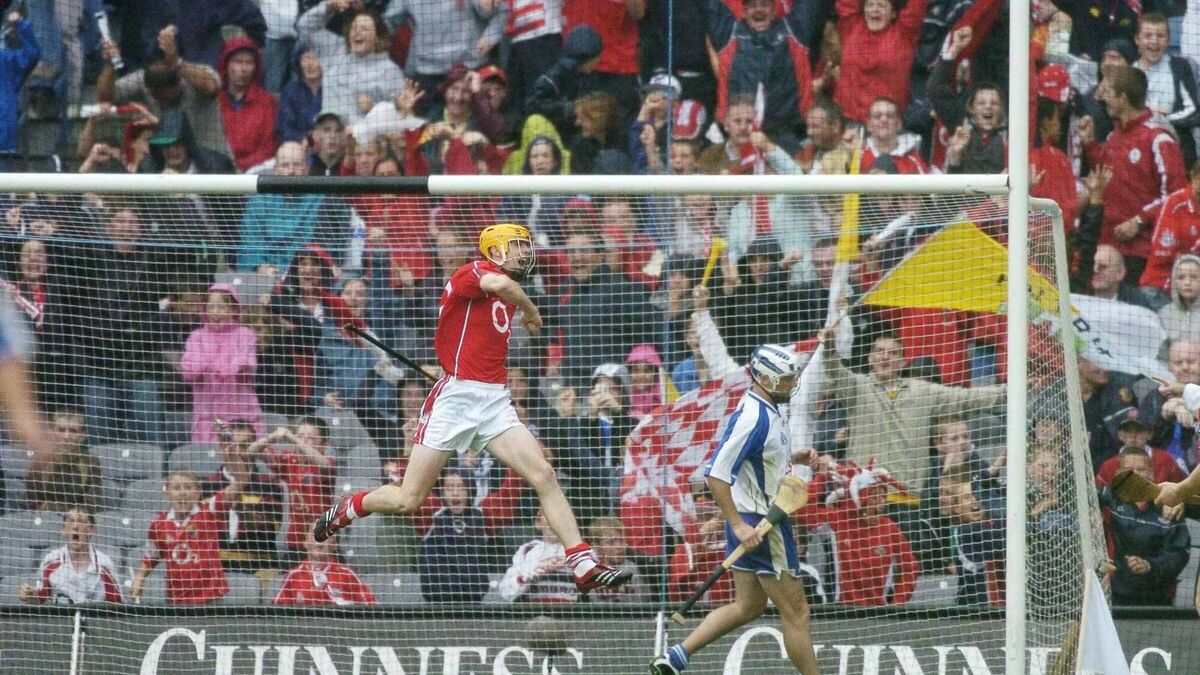
Cathal Naughton of Cork celebrates his goal against Waterford in 2006. Picture credit: David Maher/Sportsfile
The change from a knockout format in the Munster SHC to a round-robin system has had a mushroom effect in terms of the number of games.
Previously, there were five ties in a given season, six if Kerry were involved, though sometimes the number of matches would be increased due to replays. Since 2018, however – and excepting the Covid-impacted seasons of 2020 and 2021, when knockout returned, the provincial campaign involves 11 games, ten in the league system and the top two clashing in the final.
It is, on the whole, a good thing – players and managements are given a fair crack and luck is less of a determining factor. At the same time, there is a less of a chance for games to fully catch the imagination; whatever happens in Walsh Park on Sunday, Cork’s focus will be firmly on the visit of Clare a week later.
Given the current state of play in Munster, it’s also unlikely that the Waterford-Cork tie will be the start of the kind of rivalry that the counties engaged in two decades ago.
From the start of the 2002 campaign until the culmination of the 2007 season, they played each other nine times in the championship,. Four of those games were won by Cork, four by Waterford and one was drawn. The biggest margin of victory across any of those games was five points.
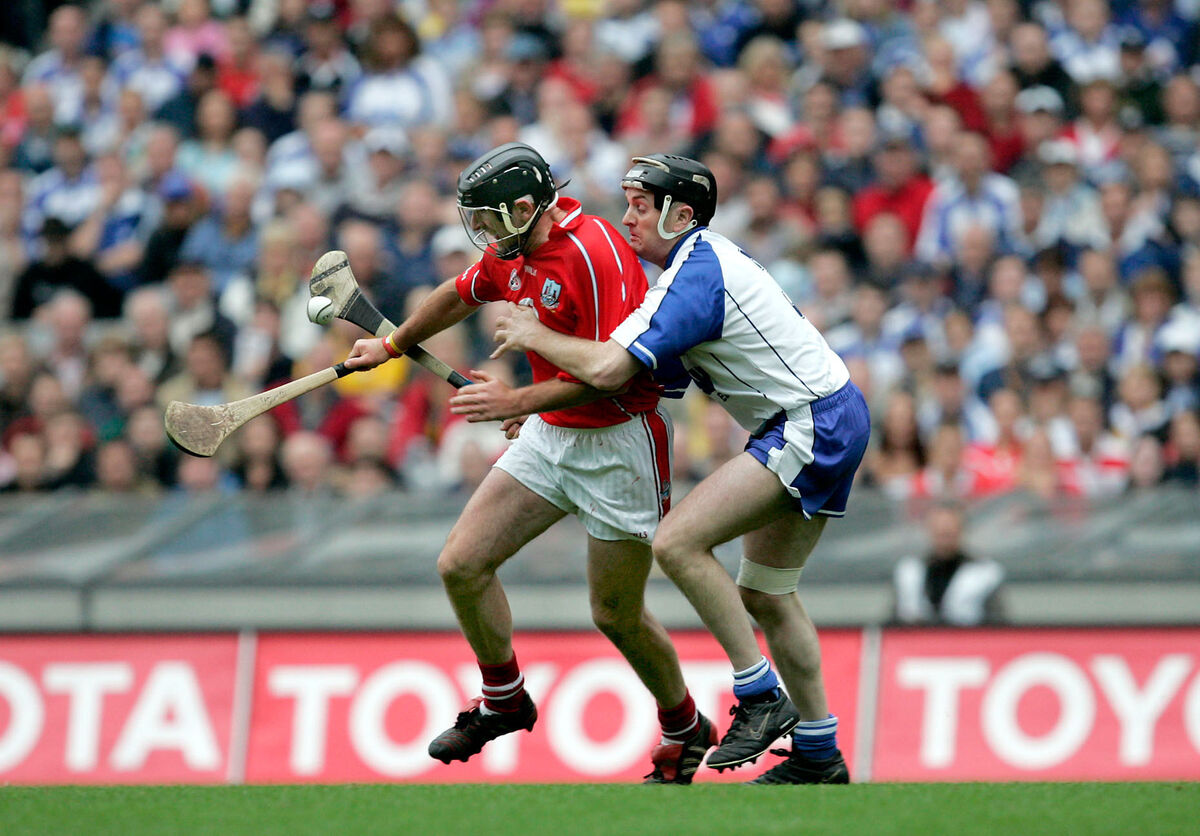
In total, Waterford scored 21-135, a total of 198 and an average of exactly 22 points per game. Impressive, but it was still slightly less than Cork’s 15-157, which amounted to 202 and an average of 22.44.
It was almost neck-and-neck, near-impossible to state definitively before a game between the two who would prevail.
The 2004 Munster final is regarded as the pièce de resistance. Despite being reduced to 14 men after the sending-off of John Mullane, Waterford came roaring back to win by 3-16 to 1-21 and Paul Flynn’s goal was arguably the catalyst.
Lining up a 20m free slightly to the right of the Cork goal as he looked at it, few present in Semple Stadium would have expected a shot at goal, even allowing for Flynn’s proficiency from the dead ball. He had little to aim for bar a slight gap inside the angle of post and crossbar, but even so, it needed a perfectly judged and then perfectly struck shot. Flynn did both.
Little over a year later, Brian Corcoran displayed split-second decision-making on a par with that in the All-Ireland quarter-final in Croke Park. The game had been on a knife-edge all through when Corcoran got a sniff of goal with about 10 minutes left. Calculating that a conventional shot was likely to be blocked, he allowed the sliothar to hit the turf and then produced a perfect half-volley. It swung the game irrevocably in Cork’s favour, with that game providing the five-point win which dwarfed all other winning margins in the 2002-07 period.
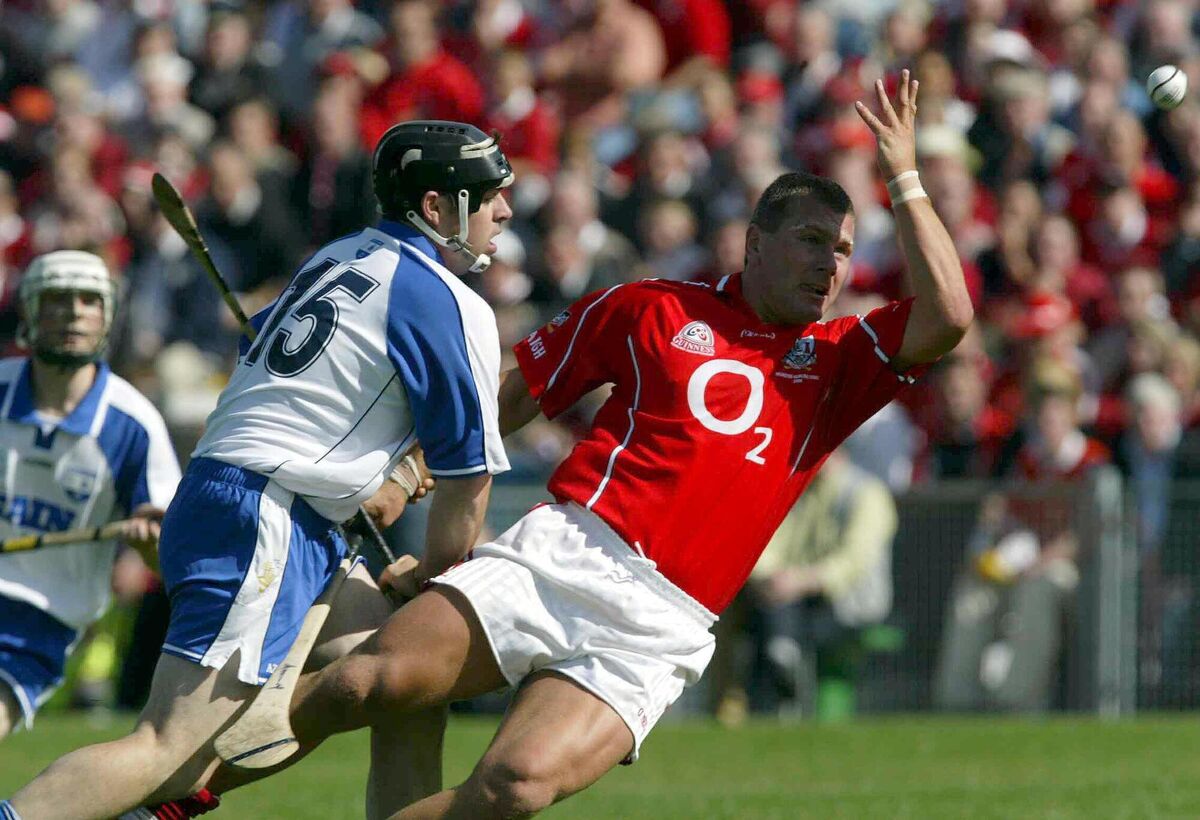
Cathal Naughton’s explosion onto the intercounty hurling scene, scoring 1-1 with almost his first two touches of the ball after being sprung from the bench in the 2006 All-Ireland semi-final, showed that careers could be made in this fixture, but they could just as easily be ended.
That’s something that Stephen Brenner knows all too well, never being fully trusted by Justin McCarthy after leaving in a soft goal from Garvan McCarthy in the aforementioned 2004 decider.
For the Munster SHC semi-final, Cork were without Dónal Óg Cusack, Seán Óg Ó hAilpín and Diarmuid O’Sullivan after ‘Semple-gate’ – Anthony Nash made his debut as Cusack’s replacement – but the Déise were still only run to three points and it would have been a draw if Cian O’Connor’s last-minute shot had gone just under the crossbar rather than hitting it.
The next meeting was in the All-Ireland quarter-final in Croke Park. Kieran ‘Fraggie’ Murphy’s early goal looked to have put Cork in control early but Waterford, as Munster champions, were never going to let their opponents slip away. Even so, Cork held on to a narrow lead as the game moved into injury time but Cusack was adjudged to be stopping the ball from being played and Eoin Kelly tapped over the equaliser.
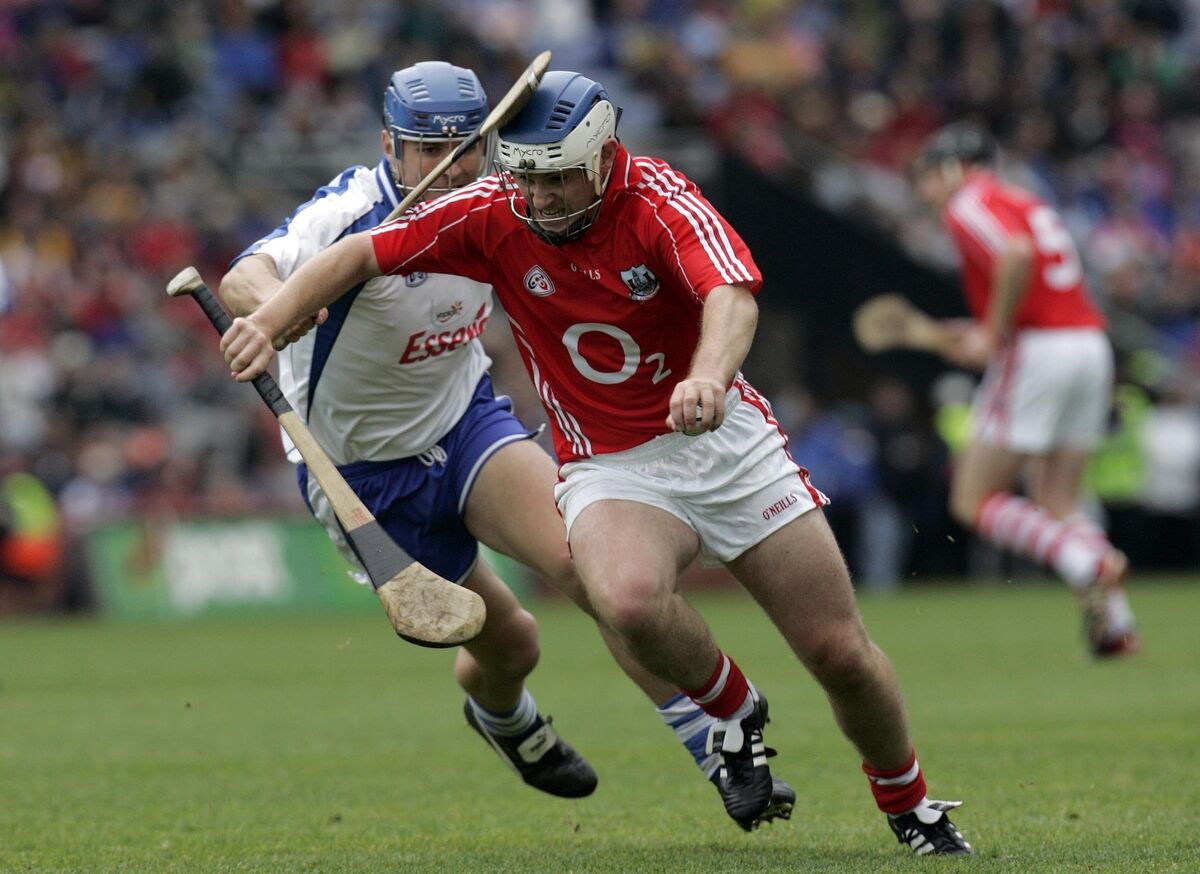
A week later, Dan Shanahan would add to the reputation he had built up that summer as his two goals were the difference in a 2-17 to 0-20 win. Despite the morale boost such a win would give, Waterford then lost to Limerick in the All-Ireland semi-final.
It’s a quirk that, as even as the two sides were from 2002-07, the only draw came in the eighth match of that period. By contrast, their next two championship ties, the 2010 Munster final and 2014 first round, needed replays.
Whatever else happens next Sunday, a replay won’t be required.






 App?
App?


