John Fitzgibbon v Gerald McCarthy: Vote for Cork's best city hurlers

Have your say in The Battle of the Bridge.
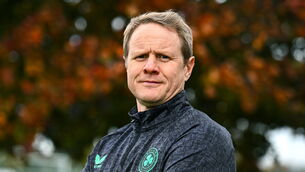
WHEN Glen Rovers ended a 13-year famine to regain the Cork County SHC with a final victory over Sarsfields in 1989, John Fitzgibbon gave an outstanding display in the Glen’s attack and subsequently was chosen as the Man of the Match.
A year later Cork ended a nine-year wait for the Liam McCarthy Cup and again the Glen Rovers star was a major contributor. It’s all of 30 and more years now since he was starring for club and county but his exploits in the Glen jersey and Cork’s have not diminished with the passing of time.
He was still eligible for the Glen minor team when he received the call-up papers for the club’s senior team and in that year of 1985 he was brought in as a sub against Seandún in a SHC encounter. From a very early age, his vast potential was spotted in Blackpool and his emergence as a player of real quality was no surprise.
He won All-Ireland minor and U21 medals with the county before going on to collect two senior titles in 1986 and 1990. During his time in the Cork jersey, he faced some of the game’s best defenders, one of them being the late and great Tony Keady from Galway, a glittering star in his own right.

The Glen star proved to be one of his toughest opponents and his celebration after scoring a goal in the final of 1990 drew comparisons with how the maestro himself used to celebrate after raising a green flag, two legs off the ground and the two hands in the air, a throwback to Christy Ring.
Down through the ages the Glen have produced a near endless list of great forwards and Fitzgibbon would have to be included in any conversation. When his great career ended after the 1993 NHL final second replay against Wexford, he scored another big goal after being introduced as a sub, he emigrated to the US and has spent many years over there with a similar success story in his business life.
Truly, an outstanding Glen and Cork forward.
GERALD McCarthy is the holder of a special piece of GAA history that will never be matched – but his Cork hurling career almost ended before it properly began.
The St Finbarr’s man was still a teenager when he was named as a sub for the 1964 national hurling league semi-final against Wexford in Croke Park. The night before the match, some of the players went to the cinema but, with the Phoenix Park closed, they had to take a longer route back to the hotel and missed curfew. Trainer Jim ‘Tough’ Barry was not happy.
“I stood at the back, trying to stay out of the way,” Gerald says, “but he pointed straight at me and said, ‘As for you – this is your last time ever travelling with the Cork team!’ I was rooming with Mick Archer and I could hardly sleep that night with the worry.
“The following morning at breakfast, Tough came up to the table. ‘I want to apologise to you,’ he said, ‘I thought you were the taxi driver!’”
Having overcome that early bump in the road, Gerald developed into a top player for the Barrs and Cork.
The Rebels claimed a first Munster title in a decade as Waterford were beaten and they made it to the All-Ireland final against Kilkenny, seeking to end a drought dating back to 1966. Any nerves within the young squad were doused on the bus journey in from the West County Hotel as they sang rebel songs and McCarthy lifted the cup named for his namesake Liam as Cork won by 3-9 to 1-10.
Later that year, Gerald captained the Cork U21s to win that All-Ireland as they beat Wexford after two replays. With players in the U20 grade now prevented from playing in the senior championship, his record cannot be equalled.
Four more All-Ireland medals followed, in 1970 and the three-in-a-row from 1976-78, while he helped the Barrs to three more county hurling titles as well as three Munster wins and two All-Irelands.

Later, he was in charge for three Barrs county wins and he was trainer as Cork won the 1990 All-Ireland, later going on to manage Waterford and his native county as well as helping the Cork camogie side to win Munster in 2006.

 App?
App?


