Campaigners against new jail plead: 'Don't lock away our history'
Labour councillor John Maher said: "The government and the minister have given the communities of The Glen, Blackpool and St Luke’s the two fingers and gone ahead with the building of a prison."
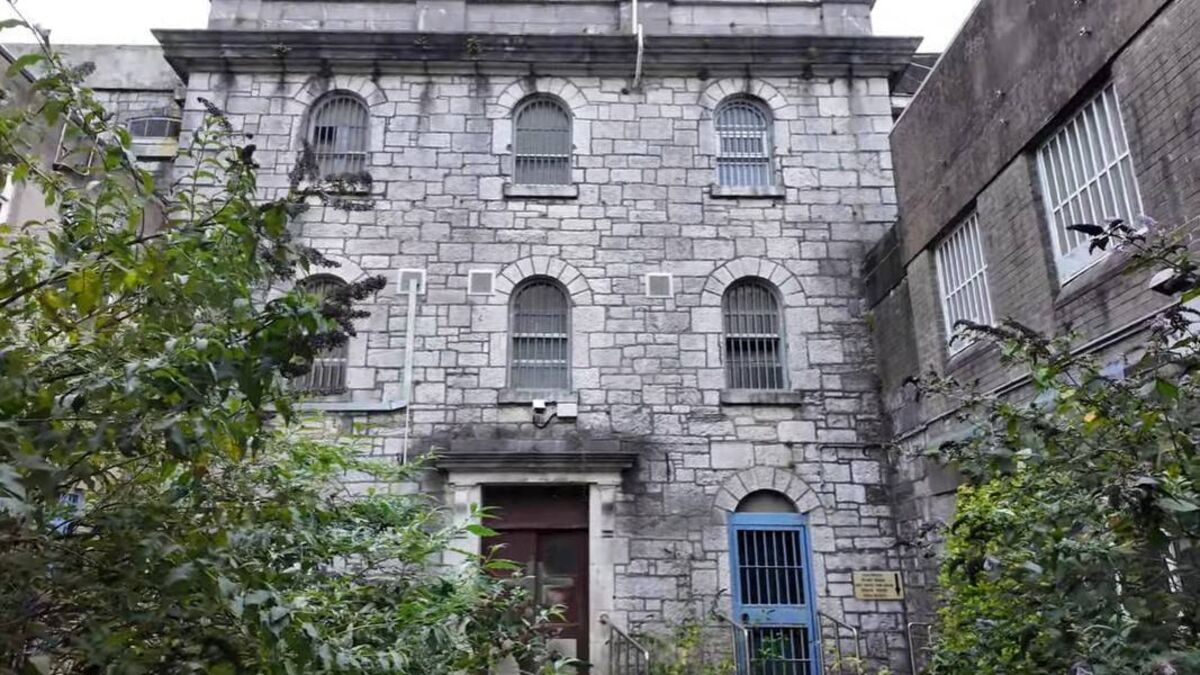
Last week, Justice minister Jim O'Callaghan confirmed he had approved plans to demolish the old Cork prison on Rathmore Road, despite councillors voting unanimously at the end of September to put the site on its protected structures register.
The planning permission only covers the demolition, which the IPS and the justice department applied for in May, with plans for the proposed new prison, set to be built by 2031, expected to follow.
The cell occupied by Thomas Kent has been identified and will be “retained and preserved as part of the redevelopment”, while the new prison will also contain an “appropriate acknowledgement” to former Lord Mayors of Cork, Terence MacSwiney and Tomás MacCurtain.
The plans have also been modified to not demolish the gatehouse, stone bastion features and sections of the Old Prison Walls.
They will be incorporated into the design for the “future large prison extension”, a characterisation that local residents, community groups and opposition politicians have pushed back on, noting that the plans are for two new prison facilities, one to hold 230 men and one with capacity for 100 women.
Mervyn O’Driscoll of UCC’s school of history told : “Retaining some prison elements is a step in the right direction, but choosing what to keep is not the same as preserving a historic place’s integrity.”
He said that though the announcement names the gatehouse, adjoining wings, Thomas Kent’s cell, and parts of the walls and bastions, “it should explain what will be lost or preserved, and how the site will remain historically intelligible and accessible to the public.”
He noted that the State’s National Inventory of Architectural Heritage recognises the surviving nineteenth-century military prison as an important structure with a complex history, extending beyond famous republican prisoners to military discipline, penal history, architecture, and Cork’s changing relationship with the British and Irish states.
Mr O’Driscoll continued: “There is also a critical question of independent scrutiny. The Department of Justice’s actions create the appearance of acting as ‘judge and jury’.
“The Irish Prison Service, after all, is promoting the project, while the minister responsible for that service approves it under Part 9.
“Public consultation matters but differs from the independent planning adjudication required of private citizens. Decisions risking irreversible loss of recognised heritage warrant independent evaluation.”
He said that “adequate, humane prison accommodation does not justify failing to explain why this loss is necessary”, and called for the Minister to publish an assessment of alternative sites and designs, detailed conservation proposals, and clear plans for the execution yard and public access, before any demolition takes place.
Mr O’Driscoll concluded: “Cork City Council’s express wish to protect the historic building and execution yard warrants a substantive response — not just assurances that selected features will be retained. Local democracy deserves to be respected.”
Eolan Ryng, a history podcaster who has been highlighting the stories behind the prison said that hearing the news “felt like a blow".
It was really disappointing and difficult, he said.
"But when I sat back and reflected on where we started from and where we are now, I realised that the people of Cork will not be ignored.
“In July, the proposal was to completely demolish these buildings. Now, they have recognised their history and importance.
He added that the people of Cork “continue to stand with our campaign and they know that Cork’s Kilmainham deserves to be seen”.
Mr Ryng continued: “I do not believe that the legacy of our martyred Ard Mhéara, of Thomas Kent, or of the hundreds who were imprisoned here can be commemorated behind prison walls.
“The British establishment tried to hide Thomas Kent’s grave. They failed because the Irish people will remember and we will fight for our heroes.
“Our campaign will continue,” he said, adding that no plan has been put forward or permission given for the building of the new prison.
Lord Mayor of Cork, Fine Gael councillor Damian Boylan, gave the news “a cautious welcome”.
He said: “I welcome the commitment to retain and preserve elements of the historic structure, including the gatehouse, sections of the prison walls and the cell associated with Thomas Kent.
“Given the historical and cultural significance of the prison, particularly its association with significant figures and events in Cork’s history, I and my City Council colleagues will be studying the details of the proposal carefully and the measures proposed to protect and commemorate the site’s important heritage.”
But Labour councillor John Maher said:
“They were shamed into protecting the buildings of heritage but they’ve no shame forcing an additional prison on communities crying out for services and supports,” he said.
“This is postcode politics at its finest. The government sat on this site during a housing emergency and now want to build a prison without speaking to anyone in the community.” He said that the Taoiseach, government ministers and TDs “should be ashamed”, and that the people of the Glen deserved better.
There was also dissatisfaction from the Irish Penal Abolition Network, who said: “While the Minister for Justice is at pains to sell this new prison as a simple extension of the existing prison, the proposed new prison with 330 spaces is significantly larger in scale than the current prison on the other side of the road.
“The reality is that a second, larger prison is being built in The Glen community of North Cork, only eleven years after the previous prison opened,” despite submissions opposing it by locals.
The spokesperson said: “The sudden emphasis by the Minister for Justice on the conservation of the old Cork Prison, closely associated with Thomas Kent, is simply appropriating the campaign message of the local community and historians.
“It is revealing to preserve and commemorate a historical site, like the cell of Thomas Kent, by building an adjacent new prison.
“Rather than learn from the past horrors of imprisonment and build community facilities for everyone’s benefit, the Government is set on prison expansion and creating more misery.”
The spokesperson noted that using the Part 9 planning process permitting ministerial discretion, prisons are exempt from standard planning permission process, saying that the process “raises questions over transparency and centralised governance.
“Many residents of the Glen were vehemently opposed to the expansion of the Cork prison site due to the negative impact the existing prison has on their community. The Minister’s discretion meant these concerns would never be meaningfully considered.”
The spokesperson concluded: “Prisons do not rehabilitate nor do they make communities safer. Yet this Government continues to use the prison system as a catch-all when other health and welfare supports are under-resourced.
“The residents of the Glen want more housing and community facilities for their children, young people and elderly – these requests have gone ignored in favour of pain and punishment.”








 App?


