Cork divers discover rare seahorse at Oysterhaven
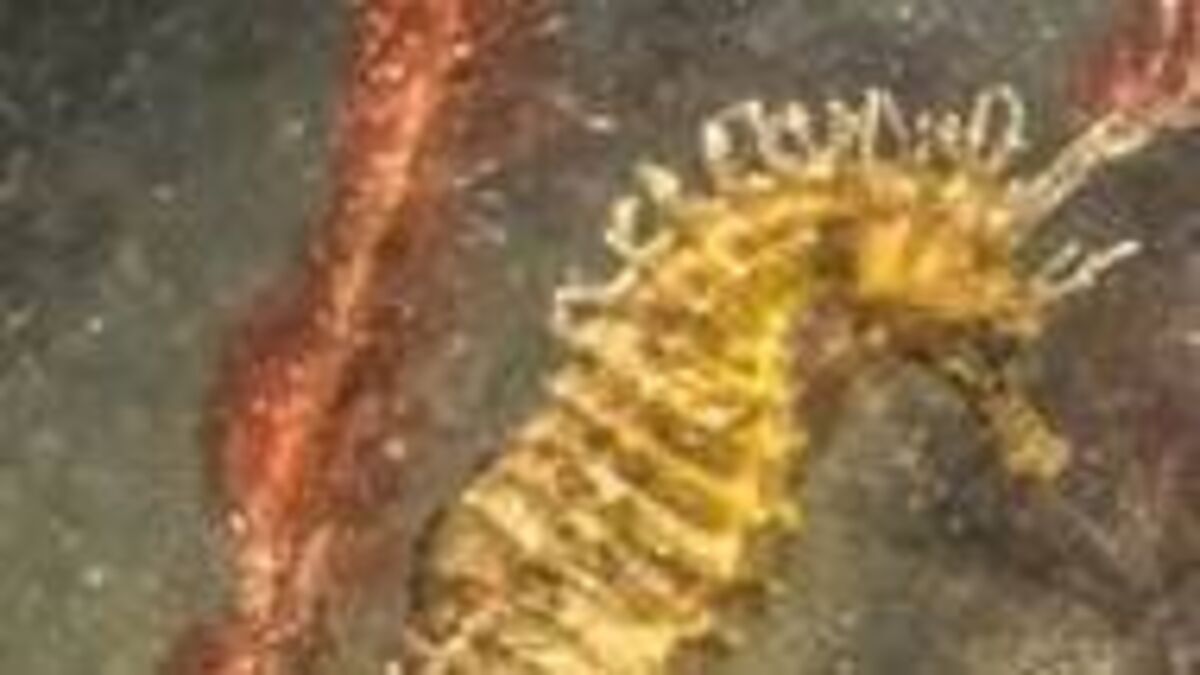
The long-snouted seahorse discovered in the seagrass beds of Oysterhaven on Monday night.
Three scuba divers in Cork had the ‘encounter of a lifetime’ this week after discovering a rare seahorse in Irish waters.
Local divers James Northover, Luke Cuddihy and Martyn Mannion were diving at Oysterhaven on Monday night when they came across a long-snouted seahorse in the seagrass beds.
The National Biodiversity Data Centre says that seahorses are a rare species in Irish waters, holding only eight previous records of two species present here.
However, most of these records are more than 100 years old.
It is believed that seahorses have never been filmed in the wild in Ireland before this encounter, marking it an exceptional event.
A previous sighting of a dead long-snouted seahorse was recorded at Ballynamona Strand at East Cork in March, leading marine enthusiasts to believe there is a cohort of the living creatures beneath the surface.
This was the first sighting of the species in Ireland since 1990, until the discovery on Monday night.
Mr Northover, owner of the Discovering Scuba dive centre, said the sighting was “so exciting”.
“My buddy, Martyn Mannion, spotted it first and was waving frantically to me and Luke to come over to him.
“As I went over to him I could not believe what I was seeing and luckily was able to get some video footage.”
The seagrass meadows at Oysterhaven have been the subject to intense research in recent years from a dedicated team of citizen scientists at Cork Sub Aqua Club.
Ecologist and club member Dr Tim Butter said the seagrass beds in Kinsale and Oysterhaven are “valuable resources”, and should be maintained to encourage marine biodiversity.
“It is a biodiversity hot spot that supports a diverse range of marine life, but not in my wildest dreams did I think we would ever see a seahorse,” said Dr Butter.
“It is such an iconic species. Seagrass is garnering significant attention as a key inshore habitat, and not only does it support lots of biodiversity, but it has a huge capacity to absorb atmospheric carbon, supports local fisheries, and helps to dampen the impact of storm events.”
Keep up-to-date with the top stories in Cork with our daily newsletter straight to your inbox.
Please click here for our privacy statement.
Have you downloaded your FREE
App?

It's all about Cork!
Add Echolive.ie to your home screen - easy access to Cork news, views, sport and more