Fr Flanagan’s 1946 industrial schools warning resurfaces as he moves toward sainthood
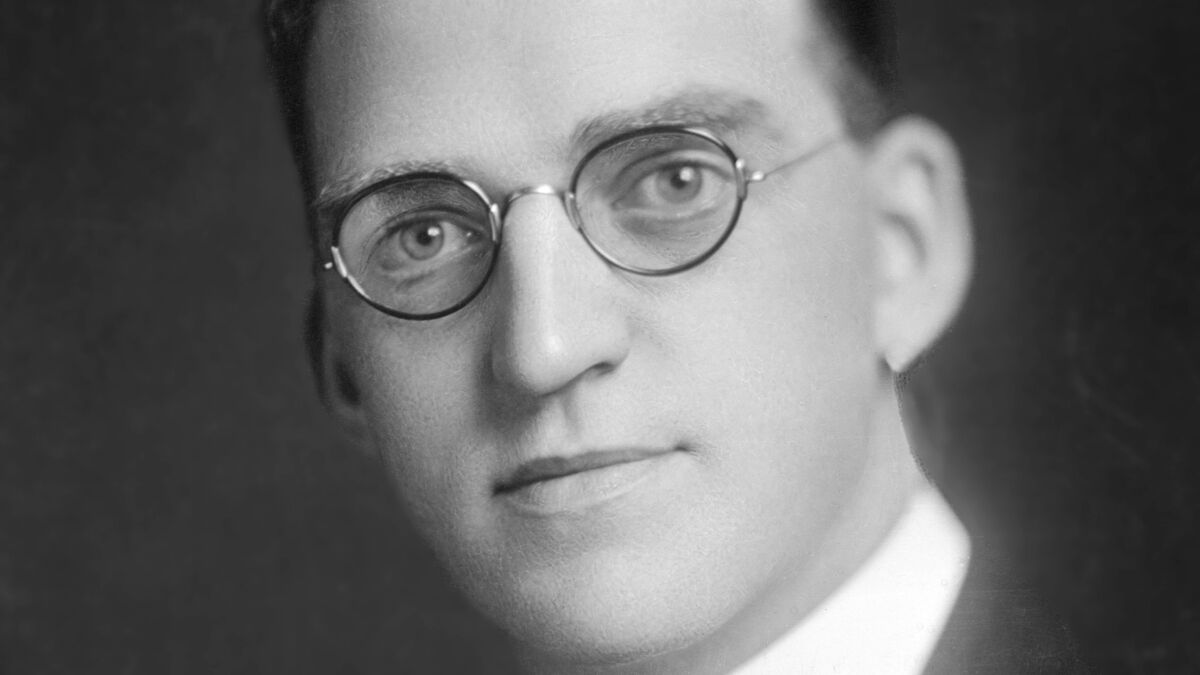
Fr Edward Flanagan, the Roscommon-born founder of Boys Town.
Monsignor Edward Flanagan was 59 then, a Roscommon native born on the Galway border in 1886, who had emigrated to the United States at the age of 18. He had become something of an international celebrity when Spencer Tracy portrayed him in the 1938 film Boys Town.
That film was based on Fr Flanagan’s work with ‘wayward’ homeless boys, orphaned and destitute in Omaha, Nebraska, where in 1917 he initially founded a home for five boys. Fr Flanagan espoused a radical creed, believing that reformatories were too harsh on vulnerable children, and saying: “there is no such thing as a bad boy”.
Drawing a firm line between what he was doing and the more traditional borstal model, Flanagan insisted he was not building a prison, saying “this is a home .. you do not wall in members of your own family”.
From the beginning, there was criticism of the idea that children of different backgrounds, races, religion, classes and circumstances could live together, and Flanagan’s boss, Archbishop Harty, was initially sceptical, but ultimately, he held faith with his priest.
Within a year, the home was catering for more than 100 boys, and better facilities were needed. In 1921, he bought Overlook Farm on the outskirts of Omaha and developed it into a village catering for the abandoned and impoverished children. In time it became known as the Village of Boys Town, and by 1936, the state of Nebraska recognised it as an official village.
Soon Hollywood came calling, and in 1938, a crew arrived at Boys Town to film on location a movie of the same name, starring Spencer Tracy and Mickey Rooney.
The following year, accepting the 1939 best actor Oscar for his portrayal of Fr Flanagan, Tracy said of his subject: “I honestly do not feel that I can accept this award. I can accept it only as it was meant to be for a great man - Father Flanagan”.
According to Nick Clooney, father of George, in his 2002 book , an MGM publicist got a rush of blood and announced that Tracy would donate his Oscar to Flanagan. An unimpressed Tracy growled: “I earned the damn thing. I want it.”
The Academy scrambled, and a second Oscar was produced, this one for Boys Town. It was inscribed: “To Father Flanagan, whose great humanity, kindly simplicity, and inspiring courage were strong enough to shine through my humble effort. Spencer Tracy.”
In 1943, Boys Town adopted as a slogan and logo a picture of a boy carrying a younger child on his back, with the phrase “He ain’t heavy, Father, he’s my brother”. Flanagan would claim it was said to him by a little boy carrying his disabled brother, but in fact the phrase was originally coined by the United Free Church of Scotland – minus the “Father” - and decades later it would give its name to a Russell and Scott ballad that would become a 1969 hit for the Hollies.
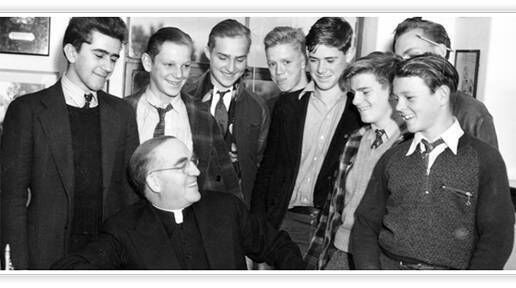
In 1945, US president Harry Truman sent Flanagan on a fact-finding tour of Europe and Asia, where multitudes of children were orphaned and destitute in the wake of the war, and the trip resulted eventually in the establishment of 80 overseas Boys Towns.
Stopping along the way in his homeland, Fr Flanagan was aghast at what he saw in Ireland’s industrial schools, condemning them as “a scandal, un-Christlike, and wrong”.
The country was more obviously pious in those days, but then, perhaps as now, we had a great welcome for ourselves. However, the returning emigrant was not impressed with what he saw in his native land.
On the afternoon of Saturday, July 6, 1946, the celebrity priest gave a public lecture in the Savoy Cinema in Cork, and he didn’t spare his audience’s blushes.
“From what I have seen since coming to this country four weeks ago, your institutions in this country are not all noble, particularly your borstals, which are a disgrace,” he said. “Your prisons are also a disgrace.”
It can’t have been comfortable listening for the Cork gathering, and it was also the hottest day of the year – 38 degrees, and 21 in the shade, according to the – but his comments were met with applause.
“I do not believe that a child can be reformed by lock and key and bars, or that fear can ever develop a child’s character,” he said.
“You are the people of this country, you own this country, not the politicians, and you are the people who can make laws for this country, not the politicians.
“You are the people who permit your children and the children of your communities to go into these institutions of punishment. You can do something about it.”
Perhaps wise to the offence his comments might give, Flanagan made no apologies, adding: “If in trying to help the forgotten boys in reform schools and prisons, whether it be in Ireland or in the United States, is intemperate and offensive, I’m afraid I’ll have to plead guilty.”
The carried a report on the Cork lecture, and noted that on Saturday night, Fr Flanagan gave a similar talk in Waterford, and the following night spoke in Limerick.
The government of the day – headed by Éamon de Valera – heard of the famous cleric’s criticisms, but its members were unmoved.
Gerald Boland, the justice minister, announced that he was “not disposed to take any notice of what Monsignor Flanagan said while he was in this country, because his statements were so exaggerated that I did not think people would attach any importance to them”.
Back home in the US, Father Flanagan addressed his Irish countrymen and women: “What you need over there is to have someone shake you loose from your smugness and satisfaction and set an example by punishing those who are guilty of cruelty, ignorance and neglect of their duties in high places . . . I wonder what God’s judgment will be with reference to those who hold the deposit of faith and who fail in their God-given stewardship of little children.”
According to the 2009 Ryan Report, between the 1930s and the 1970s, approximately 42,000 children passed through Ireland’s industrial schools.
Eighty years after Edward Flanagan’s speech in the Savoy Cinema, the Oberstown Children Detention Campus, which holds children aged 10 to 17 on remand or detention orders, has a maximum capacity of 46, broken down between 40 boys and six girls. Oberstown routinely operates at capacity.
Dr Niall Muldoon, the Children’s Ombudsman, told there has been considerable progress in Ireland’s youth justice system over the past quarter century.
“However, despite the progress, there is still much more to do to improve the justice system for young people,” he said.
Dr Muldoon cited the need to raise the minimum age of criminal responsibility “to at least 14 years, for all crimes, in line with UN Convention on the Rights of the Child concluding observations on Ireland from 2023, and European best practice”.
He added that there needed to be an improvement in the the provision of after-care support for children leaving detention, and the extension of the Bail Supervision Scheme nationwide.
“We are also concerned about the over-representation of children from marginalised backgrounds in the youth justice system, specifically Traveller and Roma children, highlighting the need for more targeted, preventive measures,” he said.
Monsignor Edward J Flanagan suffered a fatal heart attack on May 15, 1948, in Berlin. He was 61.
Over the decades since his death, the name of Boys Town has become greatly tarnished, with the organisation suffering financial scandals and multiple allegations of organised sexual abuse. This year, Boys Town was mentioned numerous times in the Epstein Files, but the nature of those mentions remains unclear. No allegations were ever levelled against Fr Flanagan.
In the 1970s, the organisation began its transition to a new model where married couples would care for groups of children, and in 1975 the last of its dormitories closed. In 1979, it admitted its first girls.
In 2012, the Archdiocese of Omaha opened the beatification process for Flanagan, and last week he was recognised for “heroic virtues” by Pope Leo XIV, granting him the title of Venerable.









 App?
App?


