Cork parents fear future for adults with intellectual disabilities
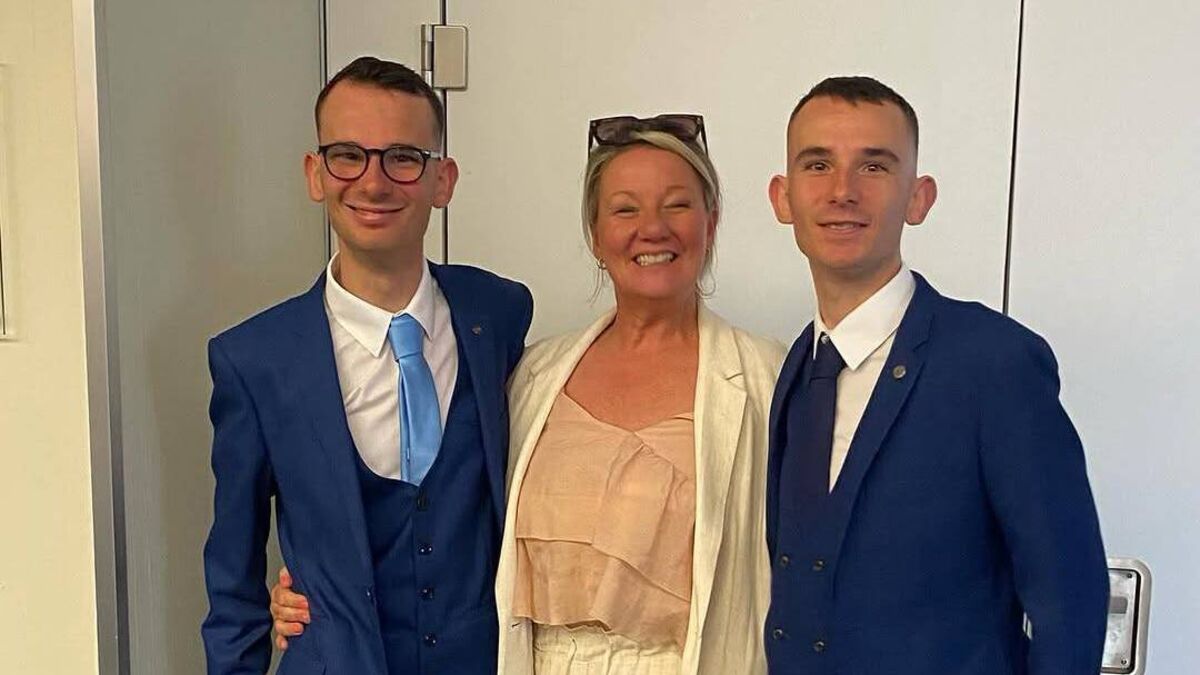
Sinead McGrath with her 23-year-old twin sons Lee and Alex, both of whom have intellectual disabilities.
MORE than 2,000 adults with intellectual disabilities in Ireland are still living with parents aged over 70, and their families say there is no plan for what happens in the future.
Sinead McGrath, from Glanmire, told The Echo that her twin sons, Alex and Lee, are 23 and have intellectual disabilities. They have been on the social housing list for five years.
A recent survey by Inclusion Ireland found that only 10% of people with an intellectual disability and their families had a meaningful plan for their future living arrangements. HSE South West say there are approximately 600 people with disabilities awaiting/requiring residential services in Cork and Kerry.
Across Ireland, at least 2,065 adults with intellectual disabilities live with parents over the age of 70, and 500 of these are over 80.
Struggling
Ms McGrath said: “I am not 50 yet, I’m healthy, I have time on my side. But I’ve met parents around Cork city and county in their 70s and 80s, and many of them are struggling to meet their adult children’s needs and are worried about the future.
“Back in 2017 or 2018 as the lads were getting older, we had a conversation and they said their wish was to live independently in the future, so I started looking into what was involved to make that happen.
“I found it unfortunately wasn’t as straightforward as I thought, we’ve come across loads of obstacles since.”
She was told she had to put her sons’ names on the social housing list
“The application form is ridiculous, it’s about 24 pages long and not fit for purpose for a person with disabilities.
“Whether they require minimum supports or round the clock care, you can’t even access residential places with disability service providers until your name is on the housing list. It’s an exhausting process to go through for what is essentially a box ticking exercise.”
She helped both sons fill out a form, and said on both that she was their mother and helping with the application as they had intellectual disabilities. Years later, she discovered that a medical document called a HMD-Form 1 was needed in order to ensure support would be provided if they were to get a housing place.
“Nobody ever told me about the medical form, so they weren’t down as having a medical need. We only started that process two years ago."
Waiting list
“You have to go to the GP who charges you, then get a social worker,” either through a social worker or a community multidisciplinary team, both of which have a 12-month waiting list to fill in the form.
“Then if you’re lucky enough to get offered a house, they need to start looking for a care package. You can’t take the house without the care, so you could end up back on the housing list.
“If your child needs 24-hour care, you’re going through all of that just to get a reference number to be able to apply for a residential placement and end up behind the other 600 people on the waiting list.”
Ms McGrath said parents are concerned that a move away from congregated settings nationally was resulting in a reduction of accommodation for people who needed full-time support.
“There are premises being closed down that are working really well. We need funding ringfenced for small scale, community-based, supported housing. There’s a model in place for the elderly, who are so deserving of it, but why can’t they use the same model for people with disabilities?”
Horror stories
She said she has heard horror stories about people with disabilities being placed in nursing homes, or living alone and being preyed on.
In one case she is aware of, a person with disabilities who lives independently with some supports has been targeted.
“People know he’s vulnerable and gets paid on a Wednesday and they call in asking for money, giving him dangerous errands to do.
“My two boys will need support, they’re full of life, sociable, and that makes them a target. They wouldn’t be safe. I would not sleep at night if they were in an apartment by themselves,” she said.
“They want what the rest of us want — their own home, a job, a meaningful life, and they’re entitled to that. But it’s like nobody is considering them, talking to them. There’s no housing pathways, no clarity.
“There’s been years of underfunding and presuming parents will continue to care for their adult children with disabilities into their 90s, then it automatically gets passed on to their siblings.”
Ms McGrath said when parents of adults with disabilities get unwell or die, the State will look to siblings, even far relations, or neighbours before the placement is considered an emergency.
“If it’s considered an emergency, the case will be put out to tender to private providers and whoever comes in cheapest will get it. The cheapest place for a person from Cork could be in Sligo.
“The person with disability, most of whom are in their 40s or 50s, not only has the trauma of losing their parent, but they’re taken out of the community they’ve lived in their whole life.”
Ms McGrath set up a WhatsApp group for Cork families.
“The group is growing overnight, we currently have 150 members.”
Concern
Yet only six of them are on the social housing waiting list, she said, expressing concern that this process hadn’t been communicated to parents and that the local authorities and government were unaware of the number of people requiring support.
The issue gets caught between the Department of Housing, which also covers local government and the Department of Children, Disability and Equality.
“It feels like nobody is communicating with each other,” she said.
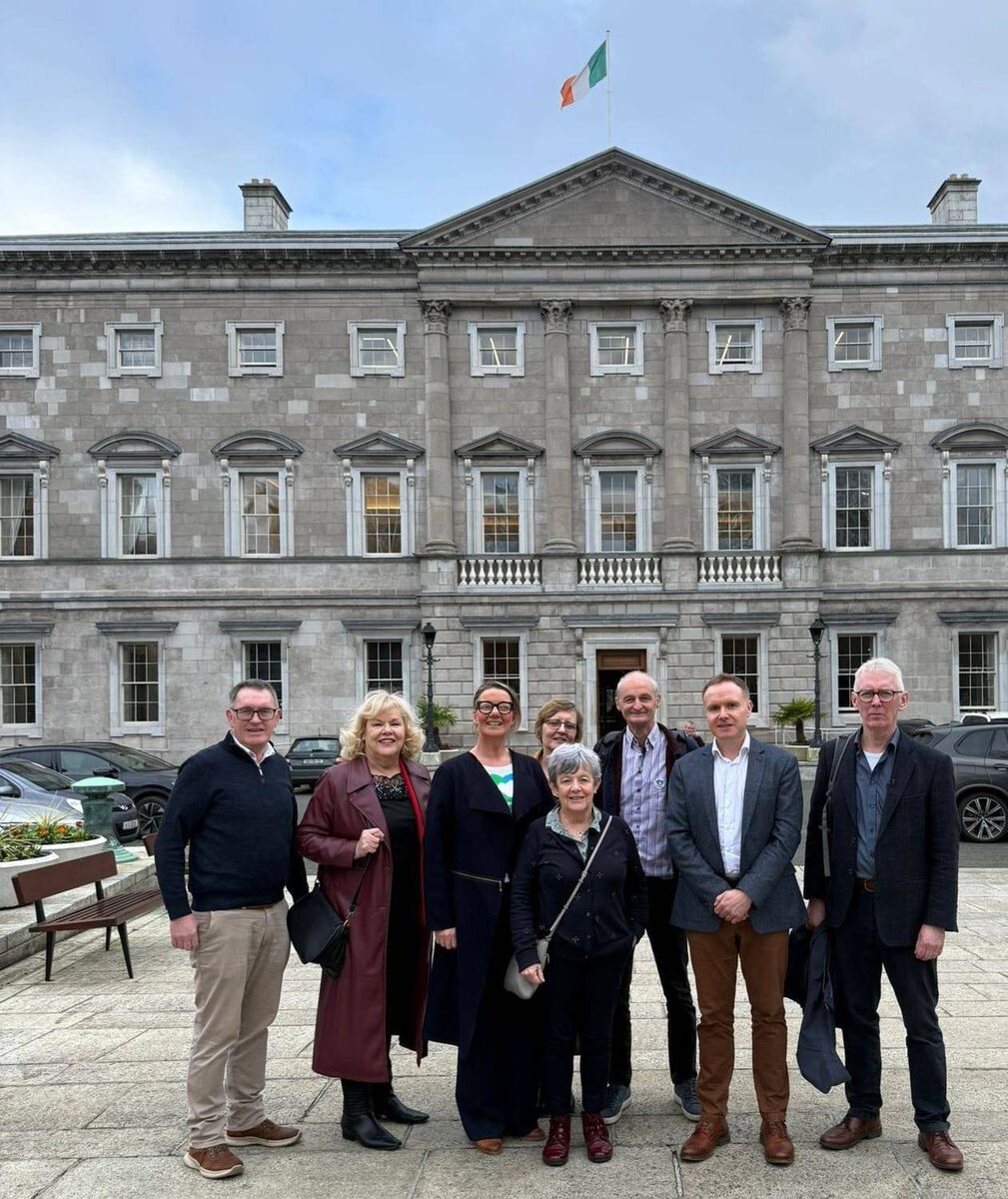
Ms McGrath is part of the Before We Die campaign group, established by parents Tony and Susan Murray. The group is calling for plans to be put in place before situations become emergencies.
“We have realised very quickly that there’s not even a plan to have a plan. We’re requesting a joined up approach from the Government, the HSE, local authorities, approved housing bodies, and disability service providers. We’re basically begging for help,” she said.
The group recently presented in the Dáil’s AV room, and she said “the room was packed, there were people sitting on the stairs”.
She said Social Democrats TD Liam Quaide who helped them to get them the presenting slot, as well as Fianna Fáil’s Pádraig O’Sullivan, had been to lots of their meetings.
Mr Quaide told The Echo: “The fact that so many adults with an intellectual disability remain dependent on ageing parents — often well into their parents’ later years — followed by the very real prospect of emergency placement far from home, potentially becoming their permanent residence, is a terrible indictment of the State.
“Future planning must start from a different place. People with disabilities themselves must be at the centre of decisions about their lives — with families fully part of that process.”
Meeting
Around the country, members of their group are meeting with their own TDs. They spoke to Taoiseach Micheál Martin in Cork recently, and have met with both Cork councils.
A spokesperson for the Department of Children, Disability and Equality told The Echo that it acknowledges the ongoing work of the Before We Die group, and that ministers Norma Foley and Emer Higgins had met with them recently.
They said the programme for government recognises the requirement for a whole-of-government approach to advance the implementation of the United Nations Convention on the Rights of Persons with Disabilities. They said they will “work in collaboration with a number of other departments and agencies including the HSE and local authorities, to advance a collective approach to provide a clear pathway for disabled people to access the supports they require to live independently and address societal barriers that impact on their daily lives”.
The Department of Housing, Local Government and Heritage told The Echo that implementation of its national housing strategy for disabled people 2022-2027, jointly published with the Department of Health and the Department of Children, Disability, and Equality, is ongoing.
Strategic plans
They said all local authorities have housing and disability steering groups whose role is to put in place strategic plans for housing for people with disabilities and to monitor activity, adding that between 2022 and 2024, 280 units of housing for people with disabilities were delivered nationally.
Ms McGrath and Before We Die are calling for other parents in the same situation, feeling isolated, to get in touch at beforewedie.ie.
“We don’t get to retire, we can’t take a summer off like the politicians, we can’t walk away, we can’t even die, “said Ms McGrath.
“I’ve been through it all — primary school places, secondary places, SNAs, transport — we’ve had to fight for all of it. Our campaign is about getting the word out to people that they are not alone.”






 App?
App?


