Propeller believed to be from German U-boat is raised from seabed in Cork Harbour
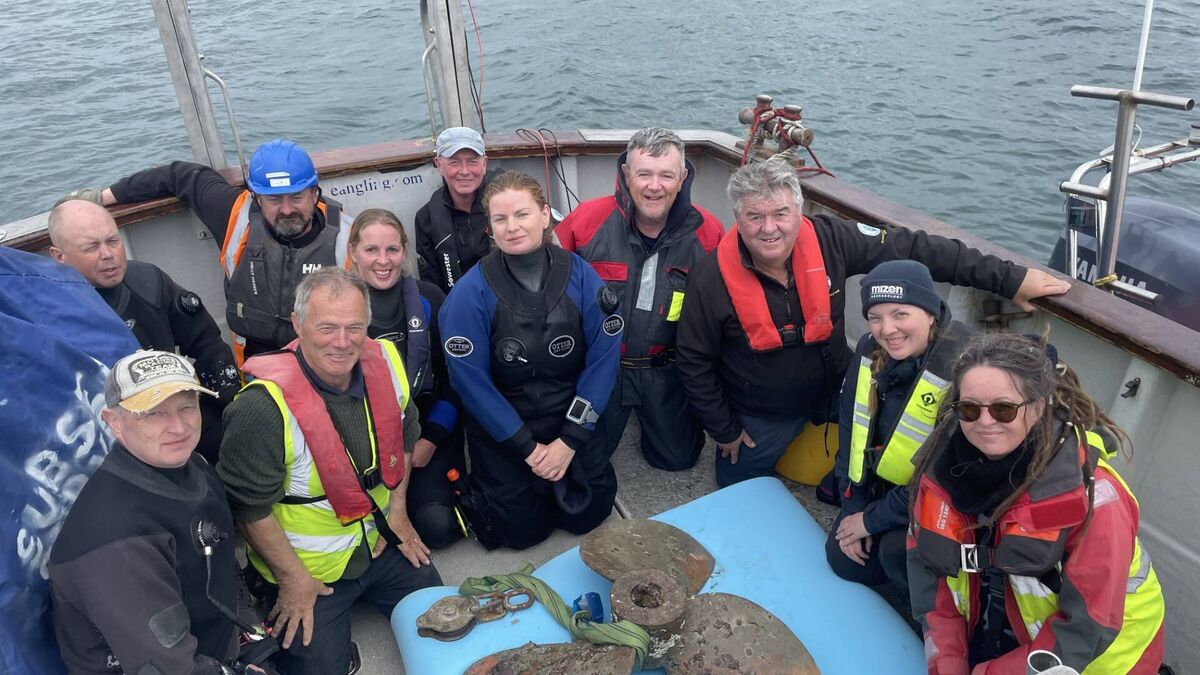
The propeller was first discovered by a sub-aqua diver from Fermoy two years ago. 
Propeller believed to be from German U-boat is raised from seabed in Cork Harbour

Frount row left to right Carroll O'Donoghue, Dick Vaugh, Louise Feeney, Julianna O'Donoghue Mizen Archaeology, Back row left to right, Timmy Carey, Gearoid O Looney, Peter Wheelan, Paul O’Keefee, Maurice Carroll, Julianna O Donoghue –Mizen Archaeology, Caitlyn Haskins –Mizen Archaeology and Connie Kelleher – National Monuments Service
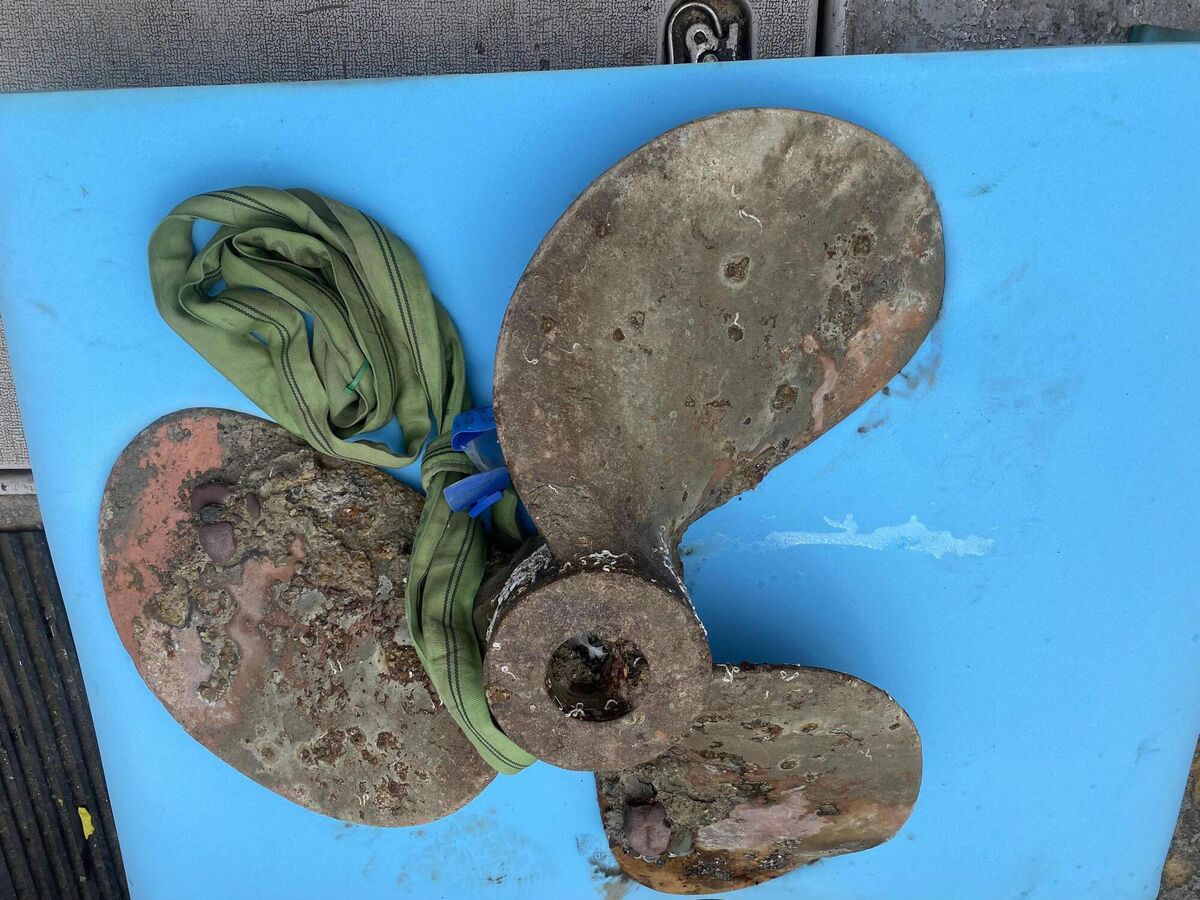
A PROPELLER believed to be from a First World War German U-boat was lifted from the seabed in Cork Harbour yesterday, two years after it was first discovered by a sub-aqua diver from Fermoy and 107 years after the vessel sank when it hit one of its own mines.

According to Timmy Carey, who spoke with The Echo, the propeller was discovered two years ago within 20 metres of the resting place of the UC-42, a German submarine which sank with the loss of all 27 crew members when its own mine exploded in Cork Harbour on September 10, 1917.

The propeller found off the coast of Cork. 

Although the propeller was discovered initially almost two years ago, it took that length of time to get the co-operation of the National Monuments Service, the National Museum, and the German government, which owns the wreck of the UC-42.


“It was in the debris field of UC-42, the German submarine so, because it was fairly shallow — around 30m, a depth where it might get caught in a fishing net or someone might try and salvage it — I reported it to the National Monuments Service and to the National Museum and discussed with them a plan to conserve it,” said the diver with 30 years experience.

He is a long time member of the Blackwater Sub Aqua Club.

“I kept it quiet for two years and got a team together and we got permission from the National Monuments Service and the German government to lift it today.”

Tim said he was thrilled to finally get the artefact to safety and that it was done with the approval of all the relevant authorities and according to best practice.

The next step , according to Connie Kelleher, the head of underwater unit of the National Monuments Service, is that the propeller, which weighs approximately 100-120kg, would undergo a few months of conservation where it would be kept in a bath of fresh water.

The plan is ultimately to put it on display in the Spike Island museum so the story of the ill-fated UC-42 can be told in full along with the wider context of the time.

Read More

Construction set to begin on ‘transformative’ public realm and flood defence project in Cork city

More in this section

Cork murder trial hears from garda who was called to scene  Cork murder trial hears from garda who was called to scene 
More than €50m funding allocated to greenways and active travel in Cork  More than €50m funding allocated to greenways and active travel in Cork 
Cork weather: Rain warning issued and strong winds forecast  Cork weather: Rain warning issued and strong winds forecast 

Sponsored Content

Turning risk into reward: Top business risks in 2026 Turning risk into reward: Top business risks in 2026
Top tips to protect Ireland's plant health Top tips to protect Ireland's plant health
River Boyne in County Meath, Ireland. Water matters: protecting Ireland’s most precious resource
Contact Us Cookie Policy Privacy Policy Terms and Conditions

© Examiner Echo Group Limited

Add Echolive.ie to your home screen - easy access to Cork news, views, sport and more