Former industrial school resident highlights issues surrounding redress without support
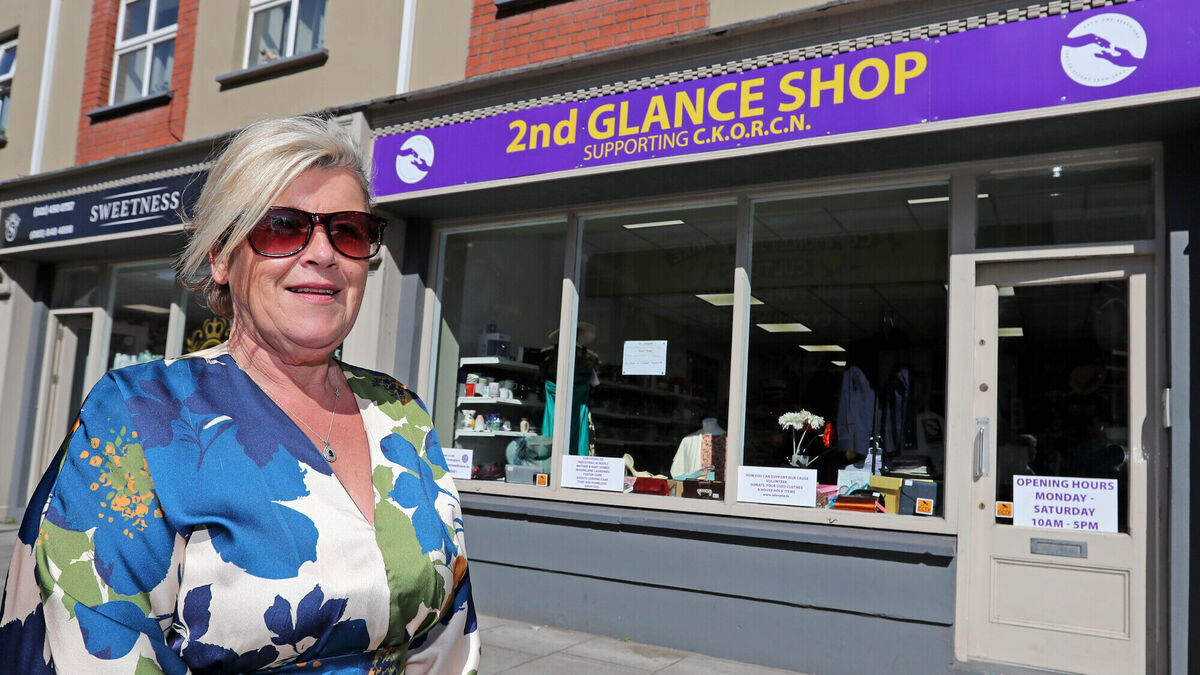
A former industrial school resident voiced concern that redress has only exacerbated issues for many survivors unable to access vital services.
A FORMER industrial school resident voiced concern that redress has only exacerbated issues for many survivors unable to access vital services.
Caroline Farry who runs Cork & Kerry Outreach Care was motivated to use her own redress funds to set up secondhand stores, 2nd Glance, in Blackpool and Skibbereen.
The money she raises is used to help former residents of industrial schools and mother and baby homes, as well as former foster children and adoptees.
She explained that the nightmare still continues for other industrial school survivors like herself who had hoped to rebuild their lives with the help of redress. However, Caroline said that many lost their redress funds to issues like alcoholism and crippling addictions.
A number are seeking help from Caroline after being left homeless or living in extreme poverty.
Funds raised have paid for everything from helping survivors heat their homes to addiction counselling and emergency accommodation.
Ms Farry, who originally hails from the North and attended St Joseph’s Training School in Middletown, Armagh, was inspired to support others after becoming homeless when her children were very young.
Despite becoming a successful chef working in top restaurants in Britain, Caroline fell on hard times once again after her marriage broke down.
The mum-of-three had been living in Cork when she was forced to seek refuge in a shelter.
“We had to go to Cuanlee,” she told The Echo. “It wasn’t bad, but it was a roof over our heads. Fortunately, we didn’t have to stay there for long as I had a friend who was renting out a house in Ballincollig.
"When I moved in there I couldn’t afford to wash my children’s clothes.
“A neighbour gave me washing powder. Without them I wouldn’t have been able to do the laundry”.
Caranua has distributed €98m to approximately 6,000 survivors across Ireland since its inception. The organisation was set up in response to findings from the Ryan Report, published in 2009.
The fund consisted of contributions from the relevant religious congregations listed in the report. It has now been exhausted, with the Department of Education announcing the initiative was in the process of being wound down some months ago.
Homelessness Concerns
Caroline said the number of survivors who became homeless after exhausting redress funds is a significant cause for alarm.
“Life skills were not taught in institutions,” she told The Echo.
“We weren’t taught how to pay a bill or what to do with money. When you finally have that freedom it’s difficult to know where to go or how to deal with it.
“I started in the Simon Community in John St and it was full of survivors.
"It is very much an intergenerational issue.
“If you speak to a lot of people who are homeless they will tell you that either their mother was in the Magdalene laundries or their father was in an industrial school. Basically, children were born into a system that was never broken. It has a knock-on effect.”
She said that some children of offenders have gone on to lead dysfunctional lives due to unaddressed trauma.
“They suffer from a childhood trauma that runs very deep. Whether we are adopted, fostered, or coming from a mother and baby home, or industrial school, we carry that shame.
“Nobody is looking at why people are reoffending to get back into the prison. It all comes down to the fact that they know no different. Sometimes it feels safer in prison.”
Lack of Services
Caroline laments the lack of services available to survivors locally.
“Right of Place Second Chance — an organisation providing support to survivors — was situated here in Cork but their phonelines and services were all transferred to Waterford.”
She described the urgent need for services in Cork specifically aimed at survivors.
“There are survivors homeless on the streets of Cork today because they don’t have a place that belongs to them anymore.
“When you make the calls there is no accommodation for any survivor,” Ms Farry added.
The former chef said she still suffers from PTSD following the day that changed her life forever.
“The Troubles were rife when I was growing up and this was back in the 70s. I was taken into care at the age of 11.
"I can still remember skipping home from school with a satchel on my back but I never made it home from school.
“Imagine being released into the care of the RUC in Northern Ireland. The fear of God will never leave me when I see men in uniform because I could be lifted and taken. Even though rationally I know this could never happen again, I’m triggered when I go to the North and see the RUC."
Caroline described how she was made to feel like a criminal.
“I stood in front of a court at 11 years of age where I was sentenced to St Joseph’s training School in Middletown, Armagh. I was on remand for six months even though I had never committed a crime. I wasn’t coming from war. Ours was a sleepy village.
“My education stopped the day I was taken. I went into care with a criminal record. The reason I was sent away was because the family unit broke down per se. I was in the back of a social workers car with no idea where I was going. The memory of those black gates will stay with me until the day I die."
Government Supports
Education Minister Norma Foley announced that approved further supports had been granted to abuse survivors last June.
Supports for recipients of an award under the Residential Institutions Redress Scheme, or an equivalent court award or settlement, will now receive an enhanced package of health services and assistance.
Assistance will also be offered to survivors pursuing further education and training and access to advocacy supports through a new independent service.







 App?
App?


