Councillor seeks more information after Cork University Hospital takes decision to fell 'end of life' trees
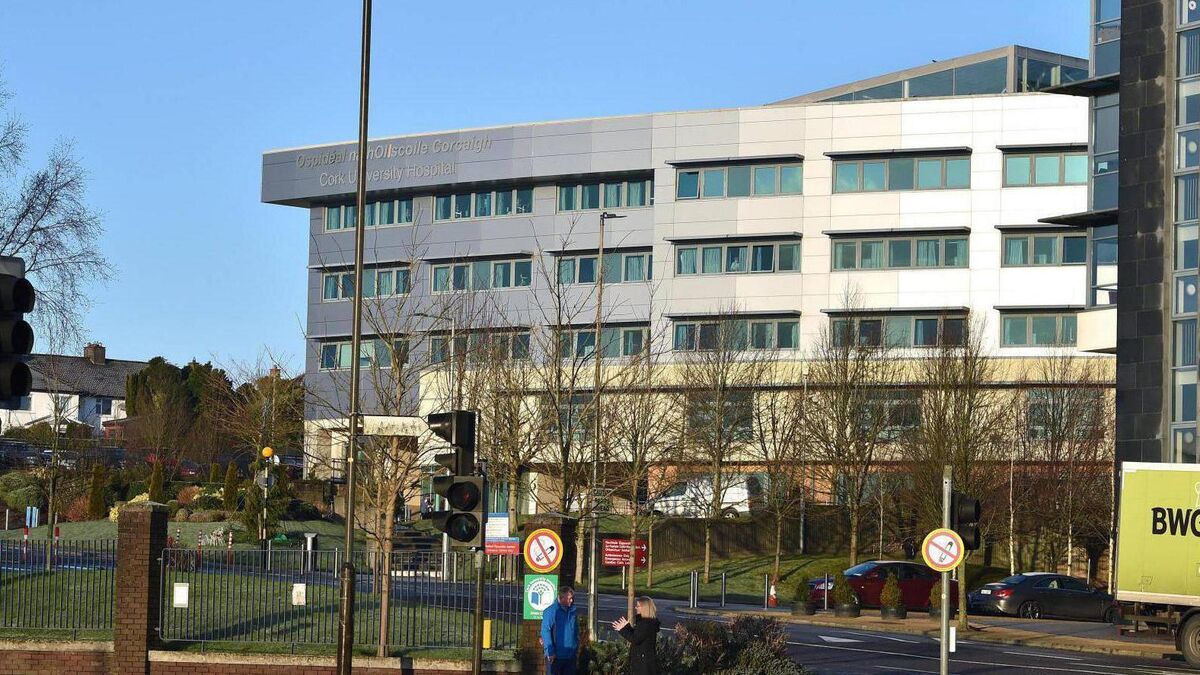
Green Party councillor for Cork City South West, Colette Finn, has contacted the Chief Executive of the HSE to ask for an explanation. FILE PIC
A city councillor has called on the HSE to explain the decision-making process which led to the felling by Cork University Hospital (CUH) of a stand of mature trees last Saturday.
The felling of the trees, approximately 15 tall, mature poplars, was met with some upset on social media over the weekend.
A press statement issued on behalf of the hospital last week read: “Cork University Hospital intend [sic] to carry out works to fell the trees at the front of the campus which have reached end of life”.
Green Party councillor for Cork City South West, Colette Finn, has contacted the Chief Executive of the HSE to ask for an explanation.
“Dismay was my reaction when I was contacted about the tree felling at CUH on Saturday,” Cllr Finn said.
“The reason given for the felling was that the trees had ‘reached end of life’, but I’m not sure what exactly that means, because it would be unusual that a row of trees would all reach the end of their natural existence at the same time.
“However, I will give hospital management the benefit of the doubt,” she said.
Cllr Finn said she has asked the Chief Executive of the HSE to outline how the decision was made to cut down the trees.
“I’ve asked what management process did they use in order to reach that decision?
Cllr Finn said there was “ample evidence” that surrounding hospitals with greenery was good for patients, and the public health remit of CUH should mean that they promote biodiversity on their campus.
“Biodiverse areas have been shown to promote a healthier environment for humans.
“I hope at the very least that the hospital management intend to replace the trees felled with double the number,” she said.
“I understand that mature trees cannot be replaced with trees of equal quality but there should be no diminution to the greenery of the CUH campus.”
Eoin Lettice, a plant scientist at University College Cork’s Biological, Environmental and Earth Sciences, said it was very disappointing to see the further erosion of what he called “the Cork urban forest”.
“These trees were prominent features in an area dominated by motor vehicles and provided an aesthetically pleasing buffer between the roadway and the hospital buildings,” he said.
Echoing Cllr Finn, Mr Lettice said there was “good evidence” for the positive benefits of trees and nature in general in improving human health and wellbeing.
“Some studies have even shown that having a view of nature can speed up recovery post-surgery,” he said.
“It’s unfortunate then that these trees were lost from a hospital campus.
“I note that no plans have been published on whether any replacement trees will be planted.
“Whatever trees might be planted will not be able to compensate fully for what has been lost,” Mr Lettice said.
“I look forward to the upcoming publication of a tree policy for Cork city which may help to raise awareness of the benefits of urban trees and may also help to protect trees like these from being lost.”
A spokesperson for CUH said the trees had been situated along the main route in to the emergency department, PETSCAN, and the Glandore Oncology Department, a route used daily by ambulances, buses and pedestrians.
“Due to decay of the trees, they were scheduled for removal,” the spokesperson said, adding that the trees have been mulched and will be used on the CUH campus.
“We are scheduled to plant replacement trees in early November,” they said.






 App?
App?


