How the finest work of a revered sculptor found its way to a Cork city church
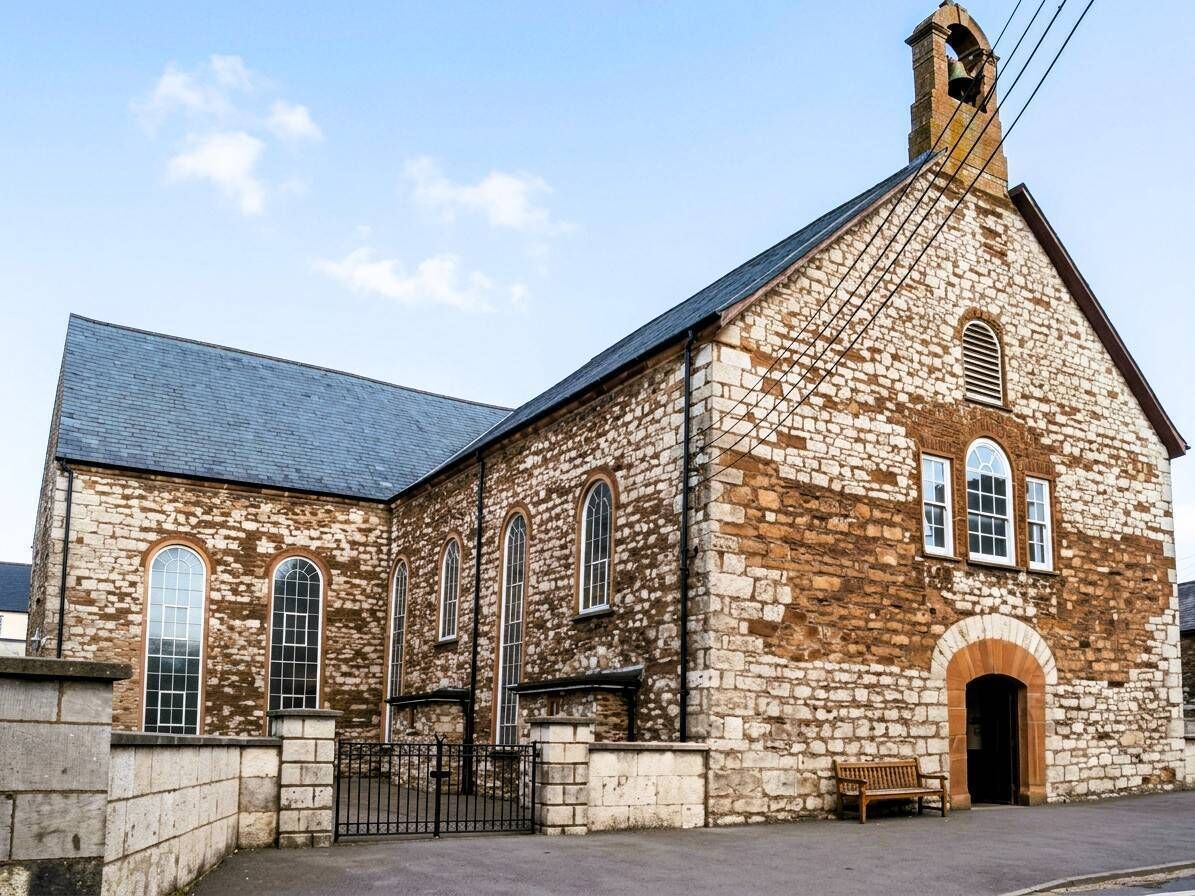
Celebrating its 260th anniversary this year, St Finbarr’s ‘South Chapel’ is the oldest Roman Catholic church in Cork, but the hidden gem, tucked away on a city side street, is renowned not for its modest architecture but for its exquisite sculpture, explains PAT POLAND
How the finest work of a revered sculptor found its way to a Cork city church

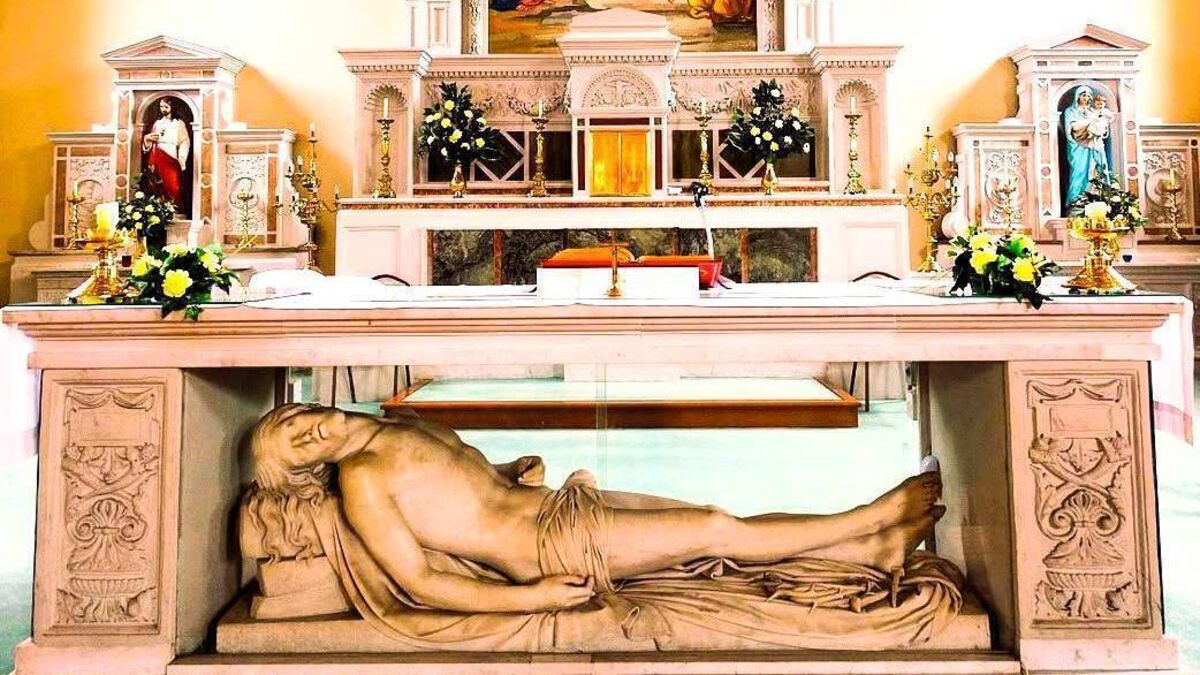
The Dead Christ, by Cork sculptor John Hogan. He conceived it “not as a gruesome display of suffering, but as a moment of profound, peaceful transition,” says Pat Poland.

St Finbarr’s South church - known affectionately to Corkonians as the ‘South Chapel ’-quietly marks 260 years as a place of worship this year.

Completed in 1766, and beloved by generations of the faithful, among those who attended services within its hallowed walls in past times were luminaries like the foundresses of two great religious congregations, Nano Nagle (Presentation Sisters) and Mother Mary Aikenhead (Sisters of Charity) - both of whom had once been social debutantes.

Other parishioners included General Daniel Florence O’Leary, who became a national hero in South America, and the great Arctic explorer Jerome J. Collins, U.S Congressional Gold Medal awardee (and whose funeral from the North Pole to Curraghkippane is reputed to be the longest recorded in history).

But it was a lanky, local lad from nearby Cove Street, described by his contemporaries as having a “noble head and eagle look, full of vivacity and gestures”, that would, one day, put the South Chapel on the map.

*******

The story of John Hogan’s The Dead Christ is not merely an account of a sculptor and his marble; it is the visual crescendo of a people emerging from a long, forced silence.

To understand how a carpenter’s son from Cork became famous and carved the most hauntingly beautiful image of the Redeemer in the 19th century, one must first look back to the broken stones and hushed prayers of an earlier Ireland.

The journey begins in 1691 with the Treaty of Limerick. While the treaty promised religious tolerance, the subsequent decades saw those systematically dismantled by the Penal Laws. This legislative ‘machine,’ as Edmund Burke later described it, aimed to reduce the Irish Catholic majority to a state of poverty and ignorance.

Among the many restrictions was a symbolic and physical one: no Roman Catholic church was permitted on the ‘King’s Highway’. No steeples were allowed, and no bells could be rung to summon the faithful to prayer (the South Chapel bell was installed in 1892).

Faith was pushed to the periphery - to the back lanes, the marshlands, and the Mass rocks of the countryside.

In Cork, this clandestine existence began to shift in 1766 with the construction of St Finbarr’s. Tucked away in the narrow, winding landscape of the south side, it was the first Catholic church built in the city post-Reformation. It stood as a modest but defiant symbol of a community finding its feet.

*******

In this same neighbourhood, the legendary (now Venerable) Nano Nagle, foundress of the Presentation Sisters, moved through the shadows of the lanes, carrying a lantern to teach the city’s poor.

This environment - of secret resilience, emerging institutional faith, and the grit of the Corkonians - was the crucible that would eventually produce John Hogan.

He was born in 1800 in Tallow, Co. Waterford, but was a Corkman by every defining measure of his upbringing. His family moved to Cove Street, just a stone’s throw from St Finbarr’s. His father was a master carpenter, and it was in the shavings of the woodshop that young John first learned the symbiotic relationship between hand and chisel.
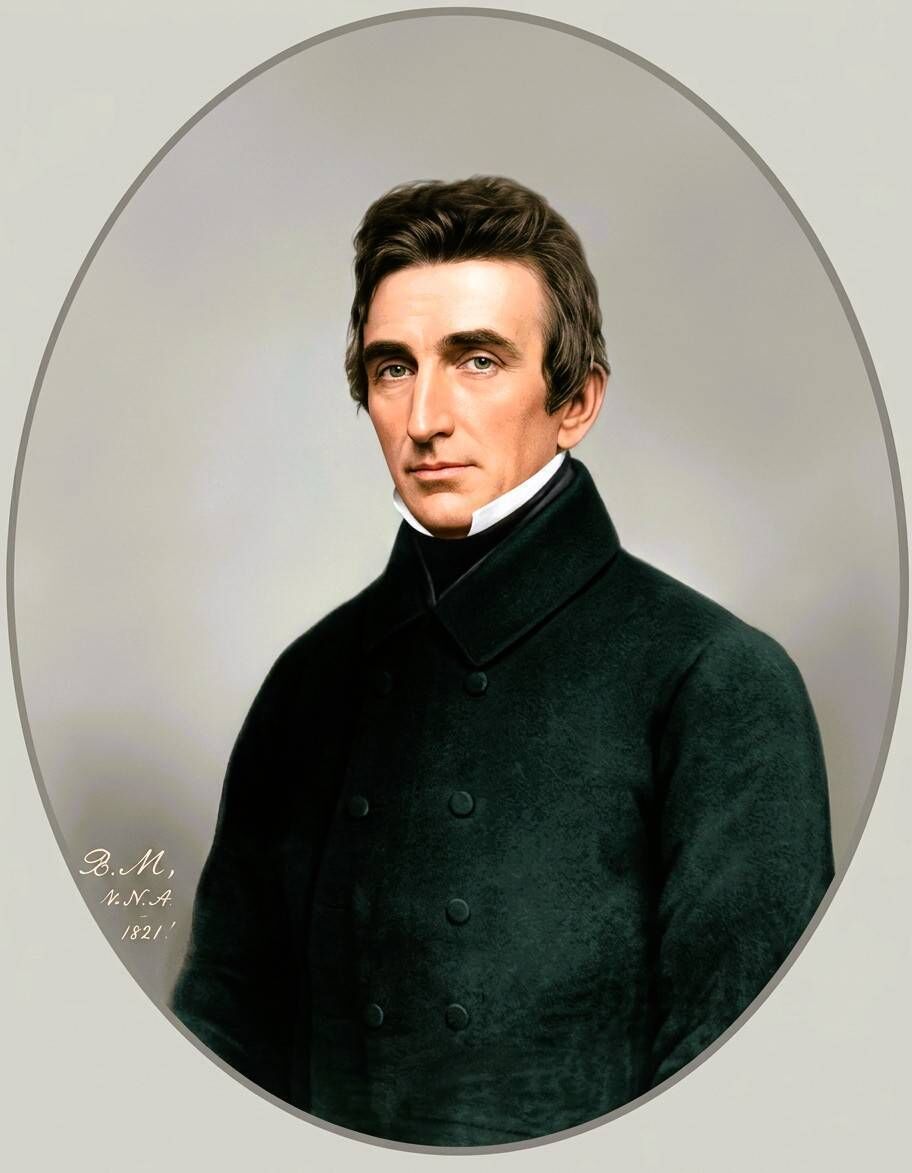
The Ireland of Hogan’s youth was one of limited horizons for a Catholic boy, but he possessed an uncanny, innate talent. Initially apprenticed to an attorney, Hogan spent more time carving figures into his desk than studying law. His employer, recognising a genius that could not be bridled by legal briefs, encouraged him to follow his true calling.

The Dead Christ, by Cork sculptor John Hogan. He conceived it “not as a gruesome display of suffering, but as a moment of profound, peaceful transition,” says Pat Poland

Hogan soon found work with the architectural firm Deane and Co., where he carved Corinthian capitals and ornamental details. At this time, his first public work was executed for the Royal Exchange Assurance Corporation who engaged him to carve a life-size figure of Minerva, the Roman Goddess of Security, for their new Fire Engine House on the South Mall. (At that time, three insurance companies in Cork maintained their own private fire brigades).
Made in pinewood, the statue today graces the sculpture gallery in the Crawford Art Gallery; the same venue that contains casts executed under the superintendence of the legendary Italian sculptor, Antonio Canova. It was these same casts that influenced Hogan while a student there.

His name was now coming to public attention, and the Catholic Bishop of Cork, John Murphy, commissioned him to execute figures, in pinewood and oak, of the saints and apostles for the newly refurbished Cathedral of St Mary and St Anne (the ‘North Chapel’), which had been seriously damaged by fire in 1820. Today, expertly restored, they form part of the Cathedral’s collection.

Yet, Hogan’s eyes were set higher - on the human form and the spirit within.

*******

In 1824, with a small fund raised by Cork patrons, Hogan set off for Rome, the undisputed capital of the artistic world. He arrived with little more than his talent and a fierce Irish work ethic.

In Rome, he was a contemporary of the great Canova (whose work he had studied in Cork School of Art) and Bertel Thorvaldsen, the internationally-famous Danish sculptor.

Hogan did not just study the classics; he rivalled them. Indeed, Thorvaldsen remarked that he ‘was the best sculptor in Rome’. In 1837, he married an Italian lady, Cornelia Bevignani, by whom he had 11 children.

Despite his international acclaim, Hogan’s heart remained anchored in Ireland. His work became the bridge between the high Neo-classicism of Italy and the spiritual yearning of his homeland. This synthesis reached its zenith in his most famous work: The Dead Christ.

Hogan conceived it not as a gruesome display of suffering, but as a moment of profound, peaceful transition. Carved from a single block of flawless Carrara marble, the figure of Christ lies in the stillness of death, the anatomy so precise and the drapery so fluid that the stone seems to possess the softness of skin and linen.

Hogan’s genius lay in his ability to imbue the marble with a sense of ‘living silence’. There is a rhythmic grace to the body - the slight tension in the fingers, the gentle slope of the shoulder - that suggests not an end, but a pause.

For a people that had survived the Penal Laws, this image of a resurrected hope lying in wait was deeply resonant.

St Finbarr’s South Church in Dunbar Street, fondly known as the South Chapel, where The Dead Christ sculpture resides. 

Hogan executed three distinct versions of this masterpiece, each finding a home in a location significant to his life and his patrons:
1. St Therese’s Church, Clarendon Street, Dublin: The first version, completed in 1829, was Hogan’s ‘calling card’ to the Irish public. Its arrival in Dublin was a sensation, signalling that Irish art had returned to the European stage.

2. St Finbarr’s ‘South Chapel’, Cork: Returning to the neighbourhood where he spent his youth, Hogan gifted a version to the church of his childhood. Placed beneath the high altar, it remains a site of pilgrimage for Corkonians, a homecoming in marble.

3. The Basilica of St John the Baptist, Newfoundland: The third copy travelled across the Atlantic to St John’s, commissioned by Bishop of St John’s, Newfoundland, Michael Anthony Fleming. It stands as a testament to the Irish diaspora and the global reach of Hogan’s vision.

******

Despite his immense skill, Hogan’s life was not one of great luxury. He was an artist of uncompromising integrity who often struggled with the commercial side of his craft.

He eventually returned to Ireland permanently in 1848, but the country he found was ravaged by the Great Famine. The patronage he had hoped for was scarce; people were preoccupied with survival and politics.

Hogan felt the sting of neglect. While he was revered in Rome, he often found himself sidelined in Dublin in favour of lesser talents or English imports. He died in 1858, his passing marked by a quiet dignity that mirrored his sculptures.

It is said that on his deathbed, he asked to see his mallets and chisels one last time, the hands that had transformed cold stone into divine grace finally finding their own rest.

The Dead Christ remains Hogan’s most enduring gift. By placing these masterpieces in parish churches rather than elite galleries, he ensured that his art was accessible to the people he came from.

The boy who grew up in the shadow of the Penal Laws succeeded in placing Irish art back on the ‘King’s Highway’ - and indeed, far beyond it.

Today, when one stands before the altar at St Finbarr’s and gazes at the serene form of the Redeemer, one is just not looking at a mere sculpture; one is looking at the soul of John Hogan, the carpenter’s son from Cove Street who taught the world how stone could breathe.

More in this section

TV: Brennan brothers at our service for new run TV: Brennan brothers at our service for new run
TV: Cork town marks 9/11, 25 years after tragedy TV: Cork town marks 9/11, 25 years after tragedy
Author: ‘We drove into a Cork town, fell in love with it, and stayed...’ Author: ‘We drove into a Cork town, fell in love with it, and stayed...’

Sponsored Content

Big Beach Clean 2026: Final call to join 7,000 Clean Coasts volunteers  Big Beach Clean 2026: Final call to join 7,000 Clean Coasts volunteers 
CS Skoda September 2026 In every hidden detail, Tapestry for Ireland captures who we are
When it comes to supporting education for children with special needs, every little helps a lot When it comes to supporting education for children with special needs, every little helps a lot
Contact Us Cookie Policy Privacy Policy Terms and Conditions

© Examiner Echo Group Limited

Add Echolive.ie to your home screen - easy access to Cork news, views, sport and more