‘I only ever wanted to be No.1, nothing else was acceptable’
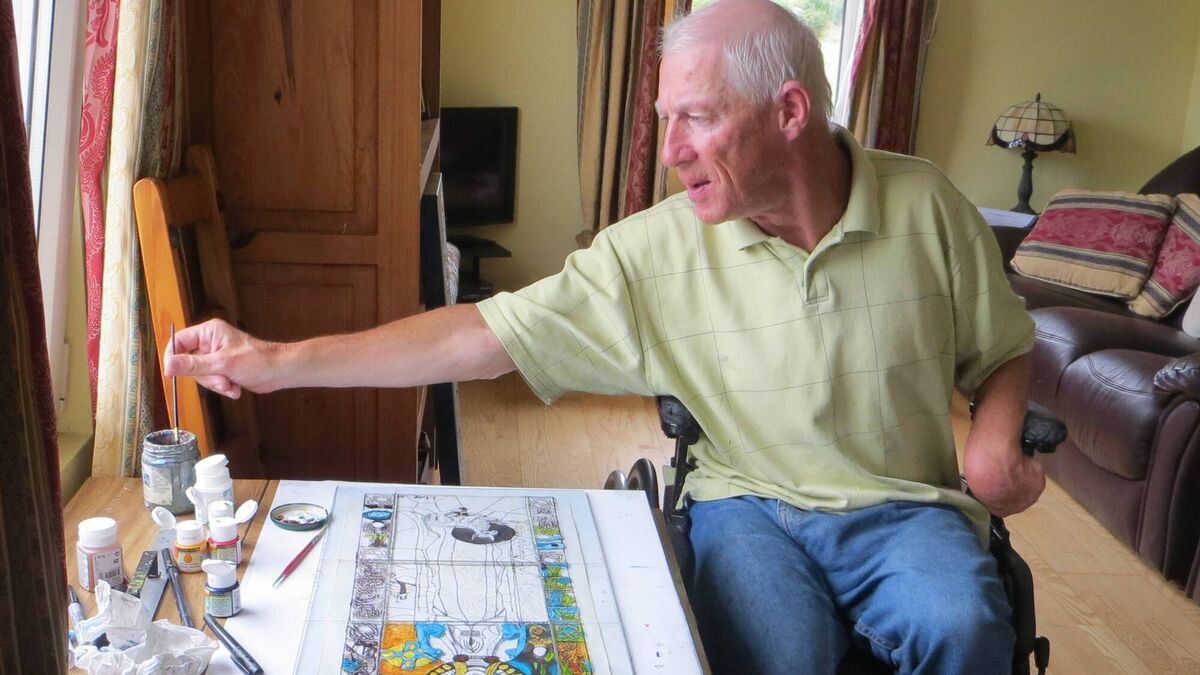
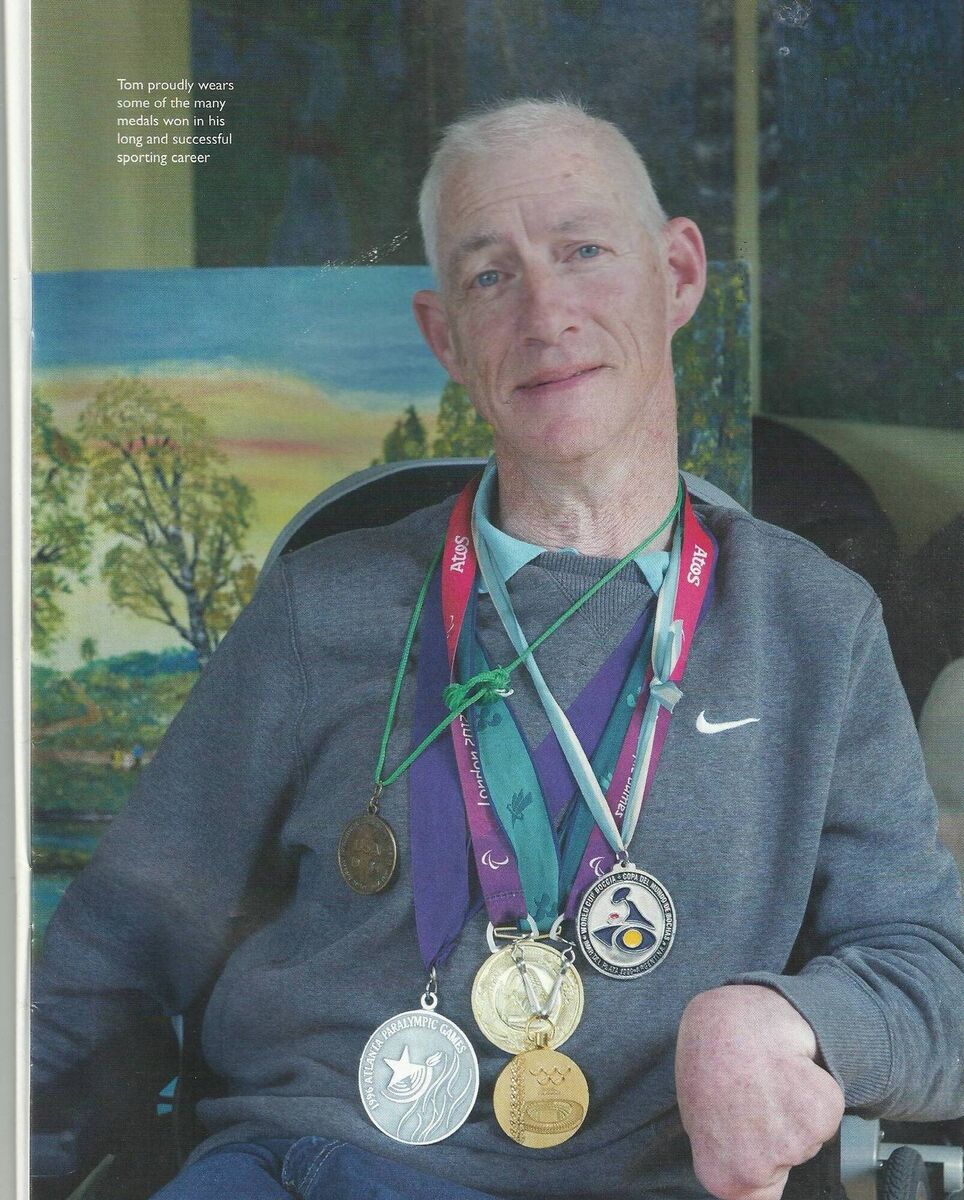
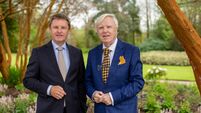
Tom Leahy, Paralympic champion and artist
One of Ireland’s most decorated Paralympians, Tom Leahy, from Ballyhooly in north Cork, has written a searingly honest memoir (with Emmett Coffey), entitled Here For A Reason.
It documents his life as a disabled person who demands to be seen.
And there is plenty to notice about this determined man, who won a total of eight medals at the Paralympic Games, including three golds having taken part in eight successive tournaments from 1984 to 2012.
A five-time world record holder, Leahy won more than 50 medals for Ireland on the international stage. His sports were throwing the discus, club, shot put, and boccia - a precision sport similar to bowls.
Having given his all to sport, he retired from it in his early fifties when his hips became very painful. He now works as an artist.
Tom, born in 1957, is the fourth child of six. His dedicated parents, now deceased, were Jack, a carpenter and Mary Leahy, a homemaker. They were there for him during his triumphs, and later when he became depressed and aimless after giving up sports.
While his sporting career took him all over the world, the practicalities of travelling abroad and to Dublin by train in a wheelchair with cerebral palsy are described in the book.
For Tom, speaking is difficult and his disability affects his left arm and leg, which can occasionally be jerky.
Growing up in Ireland in the 1960s and ’70s with a disability was challenging. The rights of the disabled were not properly recognised at that time.
Tom writes that it “is a natural instinct for us human beings to judge people on first appearances”. Acutely conscious of how some people “are probably frightened by me or at least confused,” he adds that he is sometimes written off – and that hurts.
But Tom credits various people that rallied around him and helped him realise his ambition. He also admits to being highly competitive. “I only ever wanted to be number one, nothing else was acceptable.”
Tom, who was in the breech position in his mother’s womb, was born three weeks before his due date. He spent time in an incubator, was unable to keep food down, and had to have an operation on his twisted intestines.
Cerebral palsy wasn’t mentioned, but Mary’s maternal instinct told her that all was not well.

As a toddler, a place was secured for Tom at the Marino Clinic in Bray, Co Wicklow, where specialist treatment was promised. He settled there and remained at the clinic until he was six years of age.
He has memories of having to negotiate the stairs by bum shuffling. There were no lifts and he hadn’t yet been given a wheelchair.
Referencing writer Christy Brown, who had cerebral palsy, and was portrayed by Daniel Day-Lewis in the film, My left Foot, Tom writes that he couldn’t help smiling at the scenes where the young Christy kept goal while his brothers played outfield. “I was that soldier,” remarks Tom.
He started school life in 1964 at the Cork Spastic Clinic (now Enable Ireland) where, by today’s standards, the education was “rudimentary”. But school gave structure and meaning to Tom’s life. There were weekly art classes “which would bear fruit many years later”.
There was occupational therapy and speech therapy which helped Tom’s confidence.
Later, he attended the Lavanagh Centre where upwards of 50 pupils enrolled at the newly-named School of the Divine Child in Ballintemple.
In the summer of 1975, when Tom was 18, his school days were over. Anxious about his future, his working life began in 1976 at the Rehab Centre.
One of his jobs involved packing work socks into boxes. Paid the “princely sum” of £4 per week, Tom felt like “a millionaire. I was a proud productive member of society”.
After four months at the Rehab Centre, his pay rose to £6.
But there were reservations about Tom’s role in the Rehab Centre due to his reliance on his wheelchair and proposed changes to the building that would require the use of stairs.
At home, out of work, Tom felt betrayed by the system. He fell between the cracks because he didn’t have a learning disability and wouldn’t earn enough to pay for his own digs and transport.
The months turned into years. Tom was fed up, living with his parents, who tried to buoy him up.
Fortuitously, Tom began to read reports of “people like me” taking part in wheelchair sports. He noticed his younger brother, Seamus, gathering stones in the garden and throwing them as far as he could. Tom started to do the same thing.
And he was put in touch with the right people when he attended Irish Wheelchair Association meetings.
Cathy Dunne, an accomplished international wheelchair athlete and sports organiser, “opened the door into a whole new world and a whole new chapter in my life”.
Tom’s father became his zealous coach and an international career was ignited.
Tom doesn’t pull any punches. Having suffered numerous small humiliations, some so subtle that people didn’t realise what they were doing to him, he had a sense of injustice and resentment.
“It’s from this great well of frustration that I drew my anger. I want, I need to prove to those who write me off how wrong they have been.
“The anger is what drives me and is a main source of my motivation.
“My speech difficulties made it almost impossible for me to express this anger verbally. I had to find other means.”
These days, Tom is in a more Zen-like state, painting in his studio in Ballyhooly.
He has written an inspiring book in the belief that we all have a purpose.
Olympic silver medallist Sonia O’Sullivan says Tom’s story shows what sport is truly about – “resilience, and never losing sight of why you started.”

App?