Cork group keeping history alive for future generations
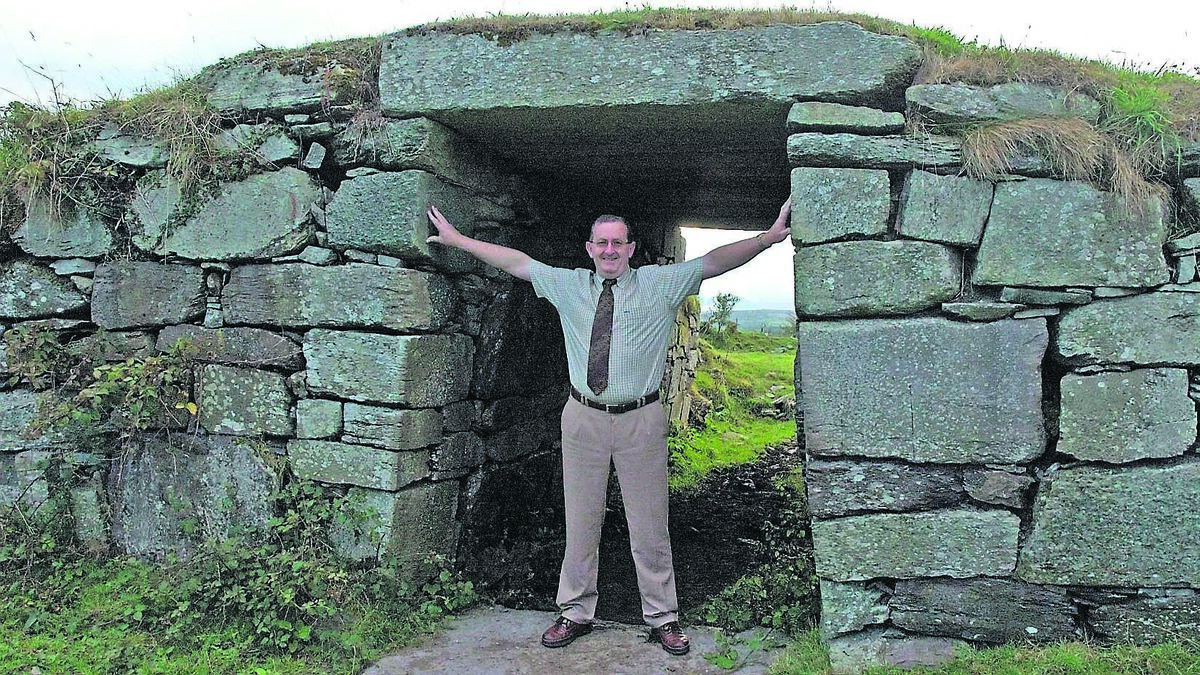
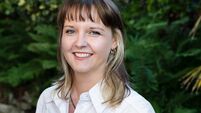
Colum Cronin at Cahervagliair Ringfort near Coppeen in 2005. BELOW: The Round Tower at Kinneigh
For 22 years, a dedicated group of people in mid-Cork have made it their mission to research, restore, and preserve the rich heritage on their doorstep.
The Coppeen Archaeological Historical and Cultural Society (CAHCS) also aims to inform and educate people about the past.
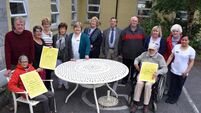
At the helm of the group is Colum Cronin. Along with president Mary Cross, Anne Harte, treasurer, secretary Rose Cronin, and the rest of the group, they have created a heritage trial and walk, providing a fascinating glimpse into the past for all to enjoy.
Colum, who is involved with 16 societies across West Cork, says that with each passing year and with each passing generation, more stories and knowledge is lost, and their group want to keep our history alive for future generations to appreciate.
“In all circles of society, people are losing touch with the history around them,” he says.
“Lifestyle changes and the fast pace of life make it harder for the younger generation to get involved in societies like ours.
“But when they visit these sites, they learn so much abut their culture and what is around them in hidden locations.
“We have a wealth of history in every townland and most of it goes unnoticed or undiscovered.”
Colum adds: “By highlighting these sites, you give people a sense of place, and the value of their heritage and the value of what we have.”
Over the years the CAHCS has written five journals, called Coppeen, A Glimpse Of The Past, as they gather research before it is lost to time. These can be accessed through your local library.
Help has been provided by The Heritage Council and Cork County Council, particularly Conor Nelligan, to keep the research on track.
The best-known historical sites in the region relate to the War of Independence.
The ambush site at Béal na Bláth, where General Michael Collins was shot, and the townland of Kilmichael, which is 3km from the War of Independence ambush site, are known to most, and the talks given on these sites get great attendance.
But Colum says the lesser-known ring fort in Coppeen, burial boulder and famine sites are where new interest is being born.
These locations are fascinating and the archaeology is uncovering so much information.
At the famine site, the houses that were there were knocked on top of the bodies of the dead and simply left like that. A fact that is hard to fathom now. The monument is a beautiful testament to those awful times.
The burial site is on a farm and inaccessible, but the stories that Colum relates from that time are harrowing and bring to life the dark days of An Gorta Mór, first reported in Kilmichael in September 14, 1845.
The report on the neighbouring area of Gurranreigh by the chairman of Kilmichael Relief Committee John E Barrett was printed in the Cork Examiner: “As you pass along the road, you see none of the indications of industry that formally might be seen on every side. You see no fields ploughed or dug up - no labourers working near the roadside - no cottages spring up - all seems uncultivated and desolate.
“Nothing meets the eye but untilled fields and tenantless hovels, almost crumbling into ruins, and haggard skeletons, the very shadows of what had once been strong and cheerful peasants.”
The burial boulder has ancient marking on it and a quartz stone underneath it - something that would never be noticed with a quick glance of the passer-by.
Again, Colum’s knowledge transports the listener to a long-forgotten time in our collective history.
The ring fort is by far the most popular attraction, and the work will continue there for many years to come.
The Kinneigh Round Tower dates from around 1000 AD. It is highly unusual, having a hexagonal base, and this is West Cork’s last remaining such tower.
The original monastery was founded in 619 a short distance away, and destroyed by the Danes in 916.
The surviving community re-established the monastery here, forming a diocese with a cathedral church. There’s an ancient graveyard around it. There have been three churches on the site, the present one is Church of Ireland.
There are around 1,400 graves on the site, most of them historic, and the work to document these is ongoing.
Colum says some are inscribed stones, but most are just markers.
Over the last 20 years, the group have been documenting and gathering graveyard data. With the help of UCC, they have been able to decipher, record, tag and number each grave for posterity.
Cahervagliar Ringfort, with its unique stone archway entrance, is a sight to behold. It is claimed by some historians that Brian Boru was held hostage here between the ages of 11 and 16.
Visible in the distance from this 1000AD landmark are the Sheehy Mountains and Nowen Hill.
The village of Coppeen offers a wealth of fascinating history and a glimpse into our collective past that must be recorded, recalled and appreciated. The tireless work of CASCS is keeping it alive for future generations.
The society can be contacted via email and they are happy to take people on tours of the area, or you can use the map that is on the side of the pub wall in the village to head out on your day of discovery.
If you’d like to get involved with the group, they would love to hear from you!
Colum Cronin can be reached on info@coppeenheritage.com

App?