Cork man’s mission to tackle poverty in Africa 
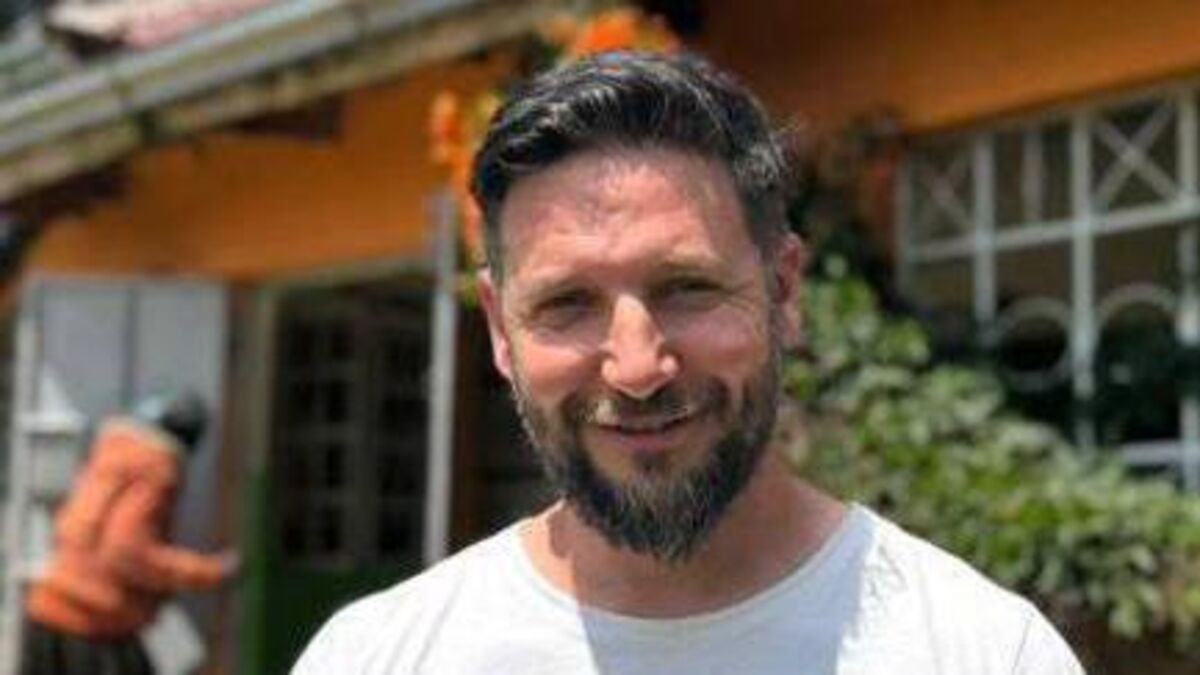
James Hennessy, of Glenville, tells CHRIS DUNNE about the organisation he set up in Kenya that aims to make life easier for villagers and help them out of poverty
Cork man’s mission to tackle poverty in Africa 

James Hennessy said the poverty he witnessed in Nakuru had a huge effect on him.

When Cork man James Hennessy saw the poverty at first hand in Nakuru, a city in Kenya, in 2007, it had a huge, life-changing effect on the 24-year-old.
The people there were strangers who became friends to James, from Glenville, who was raised on a dairy farm run by his parents.

“I am 42 now,” says James. “And I have come to love the African people and their country.”

What led him to Nakuru, the place he now calls home?

“I have a cousin, Brother Colm O’Connell, who was working as a missionary in Kenya who trained athletes,” says James.

“After completing my master’s degree in International Relations in 2005, I decided to travel there.

“The poverty I witnessed in the villages had a huge effect on me, and I became involved with three local colleagues, helping people living in the slums in dire poverty in Nakura.”

How did James fund himself while connecting with those less fortunate, gaining satisfaction from making a difference, and achieving personal growth in a land so far from home?

“We are bang smack on the equator,” says James. “I returned home for two months each year to earn enough money to maintain myself in Kenya and to finance small projects, mainly medical.”

He also spent a year in Russia and is fluent in Swahili.

“My family and friends provided funds and raised funds by organising coffee mornings, quizzes and car boot sales,” said James, who was talking to me while he was back in Cork for his brother’s wedding.

His aunt Rachel McQuire and her husband Brendan, both now retired, enjoy holding car boot sales to help fund James’s projects.

“At one stage, our house in Douglas had subsidence,” says Brendan. “We had to clear out everything before repairs began and one of the ways we got rid of stuff was holding car boot sales.

“We still enjoy going to Rathcormac and Carrigtwohill for car boot sales. And the fact we are helping James in his work makes it all the more worthwhile.

“The reality is that the people in those rural areas in Africa have nothing,” adds Brendan. “They are living hand-to-mouth.”

He and Rachel have travelled out to James to see his work at close hand.

“We’ve been out to visit him on a few occasions,” says Rachel. “It is always a wonderful experience.

“To see things developing and progressing is marvellous. And the people respond well and appreciate all the efforts to help them.”

There must be some cultural shows for them in Kenya?

“The tea!” says Rachel laughing. “It was awful! I couldn’t drink it.”

James and his colleagues realised the need for aid was greater in more remote rural areas, as other NGOs were working in urban Nakuru. They therefore decided to establish projects in the remote rural area of Sarambei.

James, co-founder and programme co-ordinator of Development Pamoja, says that people in this semi-arid region are generally subsistence farmers and traditionally pasture-less.

“This creates several challenges,” says James. “For instance, as farmers have to move their cows longer distances for food and water, yield is affected.

“Farmers tend to stick to planting staple food crops such as maize and beans, but these can have up to 50% failure rate in this particular region, especially given the impacts of climate change or rainfall patterns.”

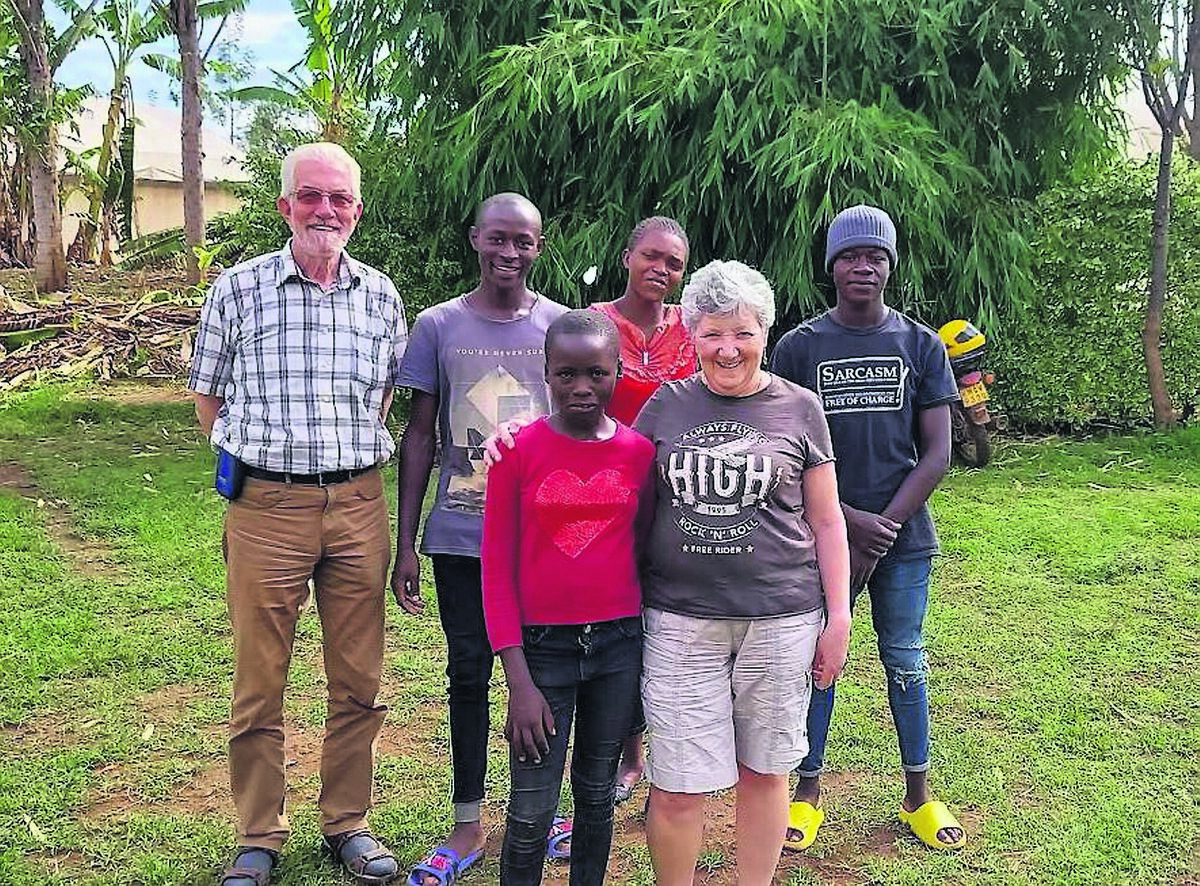
Brendan and Rachel McQuire in Africa with some of the people they are helping through the organisation Development Pamoja. 

The purchase of a tractor and forage harvester, made possible by an anonymous donation, is available to loan out to local farmers, while Development Pamoja has also built a community store so families can keep their hay safe for the dry season.
The setting up of a co-operative model by Development Pamoja works out well. These groups, made up of about 20 people each, save together and then take loans from the shared fund, allowing them credit to buy seed, fertiliser, etc, which they subsequently repay over a longer time period.

How does this help the farmers?

“This system gives farmers a sense of ownership in the projects, but also helps to measure the success of initiatives,” James explains.

“The community hall we built is a meeting place for the villagers to gather and to discuss their finances. They have a chat and a cup of tea. It is a big event for them.”

Healthcare is another focus of Development Pamoja, through its two primary medical centres.

“Before the project, there was no physiotherapy available in the area unless people were willing to travel 50km to Nakura,” says James.

“Other services include vaccinations and antenatal and reproductive health care, as well as supporting the elderly and disabled people. This year, we got a sensory room up and running. That was a lovely day when everyone celebrated.”

James, doing a lot of work and a lot of good, says that, in Sarambei and Ronjai, women do most of the domestic work and the work on the farm.

“Collecting water and firewood are two tasks exclusively for the women,” says James. “The women look after the livestock on the farm.

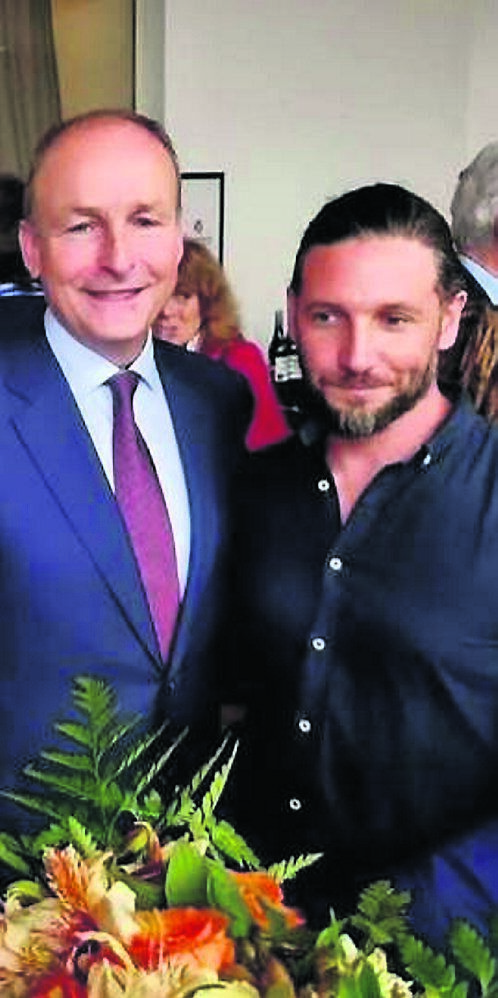
James Hennessy with Micheál Martin at the Irish Embassy in Nairobi, Kenya’s capital

“We try and make the working day easier for women, erecting a water tank, for instance, making water more accessible so that the women don’t have to walk for hours to find water for themselves or for the animals.”
There is another fact that I find amazing about the women in the rural villages where James and his colleagues work.

“No woman is allowed to own an animal higher than her hip!” says James, laughing at my incredulous expression. “That is just the way it is. It is the culture.”

What do the men do while the women are slaving away?

“Good question,” says James. “Some of them drink hooch in their shebeens and watch the world go by.

“In Nakuru, there are a few nightclubs and Nairobi is the mecca of Africa that boasts a lot of wealth.”

Are the people happy?

“Yes, they are,” he says.

They have nothing to compare their lifestyle to.

“That is a really good point,” says James. “They are happy with their lot.”

Was he ever fearful in his surrounds, 7,000 miles from home?

“Not really,” he says. “Although I used to have long hair and when I travelled by bus people would feel my hair with their hands because the texture is different to theirs!”

Spooky!

“A bit!” says James, laughing.

He is proud to be part of the culture of Kenya and its surrounds.

“I was proud to get my residency,” says James. “Development Pamoja is a small organisation, but the structure continues growing.”

What are the main problems there, apart from dire poverty?

“Gender-violence based problems are prominent,” says James. “Water- borne diseases like typhoid are common. Many houses now have rainwater tanks installed in order to provide them with a better source of water.

“Solar panels that can be used as lights and also to charge mobile phones provide a vital lifeline for many of the people due to lack of electricity. The lights are of great use to villagers and were donated by Afri Ireland.”

Community efforts, self-sustaining initiatives, education, and support, without giving unfiltered aid, are the practices at the core of Development Pamoja, operating two bases in the villages of Sarambei and Rongai, which are 40km apart, including two primary health care centres and an 11-acre demonstration farm in Sarambei.

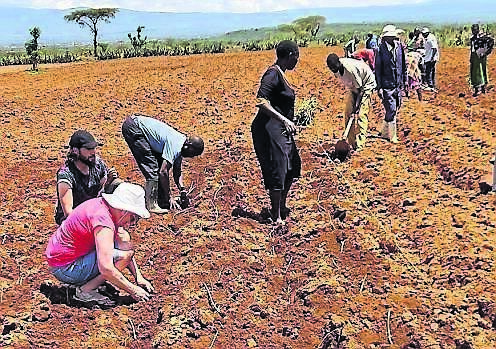
Sowing lucerne plants. 

“Teaching farmers about better techniques, helping them dig their own ponds for collecting rain-water, encouraging them to grow grass which is easier to cultivate and fetches a good price at market” - these are just some of the practices used by James and his colleagues to assist the locals.

“Maize was always the main crop grown to feed the families,” says James. “It is the staple diet along with kale. Feeding the family is always the main priority.”

James, making a big impact on the people in the rural villages, is motivated.

“Less money goes further here and that’s what would motivate me,” says James.

“I know we will never solve the problems of everyone we work with, but we can make their lives a bit easier.

“You know the saying give a man a fish, and you feed him for a day. Teach a man to fish, and you feed him for a lifetime.”

See: www.developmentpamoja.org

More in this section

'I see more interest in learning about real chocolate': Meet Cork’s chocolate makers 'I see more interest in learning about real chocolate': Meet Cork’s chocolate makers
The Pubs of Cork: The Beatles, Bruce... Cork pub that’s attracted superstars The Pubs of Cork: The Beatles, Bruce... Cork pub that’s attracted superstars
Five generations of one Cork family: Una welcomes first great-great-grandchild  Five generations of one Cork family: Una welcomes first great-great-grandchild 

Sponsored Content

Where tech meets care: At the forefront of IVF Where tech meets care: At the forefront of IVF
10 minutes with Shannon O’Sullivan of Corlann 10 minutes with Shannon O’Sullivan of Corlann
10 minutes with Jason Cooke of Cheshire Ireland 10 minutes with Jason Cooke of Cheshire Ireland
Contact Us Cookie Policy Privacy Policy Terms and Conditions

© Examiner Echo Group Limited

Add Echolive.ie to your home screen - easy access to Cork news, views, sport and more