Letters to Gay Byrne reveal an Ireland of the past
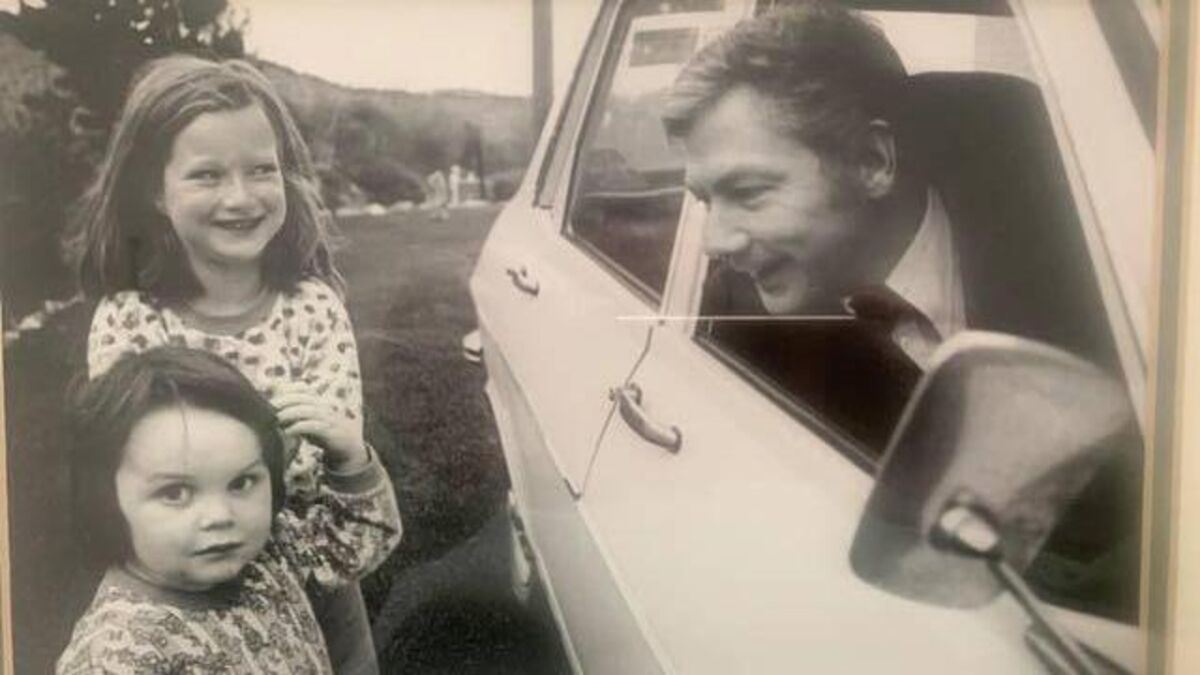
Gay Byrne with his daughters Suzy Byrne and Crona Byrne.
“IN a world as yet unconnected by the internet or social media, radio was a lifeline for many.”
Those are the words of Suzy Byrne, daughter of the legendary radio and TV presenter Gay Byrne, who died in 2019.
Suzy has put together a collection of listeners’ letters from the time her father, fondly known as Gaybo, presented his radio show on RTÉ, from February 2, 1973, until his retirement in 1998.
Letters To The Gay Byrne Show - A Handwritten History of Ireland is dedicated to all those who put pen to paper to write to him, and in particular those who had the courage to share difficult stories at a time when so many remained unspoken,” states Suzy.
“Your letters and stories changed Ireland for the better. We all owe you a debt of gratitude.”
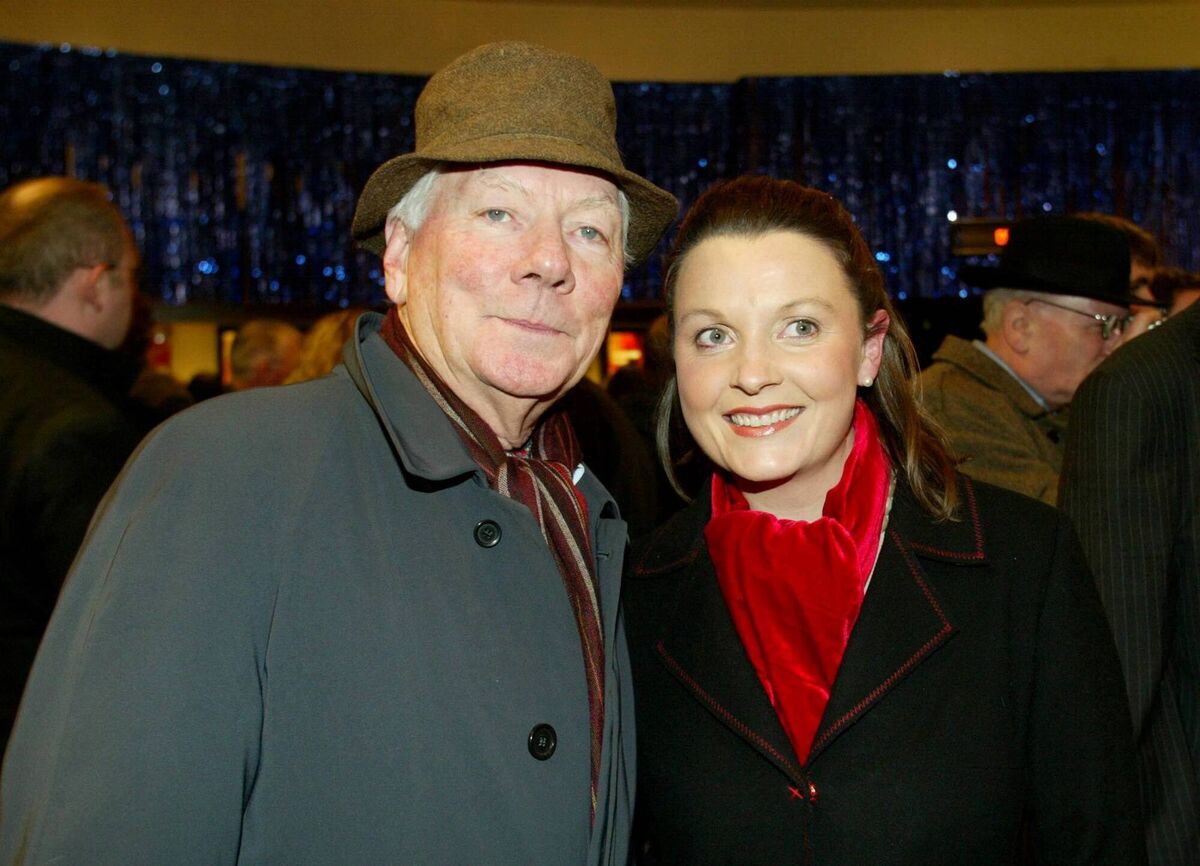
The book details the thoughts of the people of Ireland in those 25 years at the end of the 20th century when the country was changing rapidly.
Historian and broadcaster, John Bowman reflects of Byrne’s role as a touchstone for the people: “We had the good fortune that we had the right person in the right place at the right time, to play an exceptional role in late 20th-century Irish history.”
His radio shows had daily audiences of 850,000 and, as a young housewife and mother myself at the time, I took notice and listened to The Gay Byrne Show while people talked, and he listened.
He read out their letters on air, and the letters in response to them would arrive by the sackful.
It was often an outpouring of grief, shame, pain, misery, and horror. Sometimes, Gay, who was usually non-judgmental, was able to lighten things up.
For the most part, the book by his daughter contains letters from the hidden Ireland. The 1970s, when Gay started his radio jon, was a significant transitional period for people in this country, coming down from the economic high of the ’60s, but yet to face the crippling economic recession of the early ’80s.
‘Uncle Gay’, with the mastery of mixing serious topics with light ones, aired all sorts of dilemmas from his listeners.
One reads: “I put my Christmas cake in the oven yesterday at 1pm and the electricity went off at 1.45pm. I rang a nearby cookery school and they said not to continue cooking because the fruit will sink to the bottom, but some neighbours said I could re-stir the cake and start again. Would anyone be able to tell me the best thing to do?”
Suzy writes: “Hopefully, some kind and knowledgeable listener took the time to send a helpful response, as one thing I know for sure. Dad would not have had the slightest notion of how to answer that one!”
Many will recall Gay’s drunken rendition of the Christmas cake recipe, demonstrating his sense of fun, as he added more alcohol to the cake mix, his voice slurring more and more until the cake was complete. In kitchens across the nation, people’s days were made lighter as Gay made us giggle. The show could be both entertaining and thought-provoking.
Suzy emphasises the programme wasn’t always “sad and depressing”, adding: “If he did something serious, he’d switch between that and something hilarious. It wasn’t all doom and gloom.”
It was his brilliance at both light and dark that set Gay apart.
The show often set out to find things for people, such as a nice, soft bouncy bed or a particular brand of bra. Cures for snoring and smelly husbands were discussed! We were all transfixed and entertained.
Many of us remember the tragic Ann Rose Lovett, the 15-year-old schoolgirl from Granard, County Longford, who died giving birth beside a grotto on January 31, 1984. Her baby son died at the same time.
Ann’s death was not only a personal tragedy for her family, but also an infamous public scandal in 1980s Ireland, a scandal that continues to resound to this day.
Some letters that arrived into the Gay Byrne Show were particularly troubling, telling of an Ireland where girls were kept in ignorance and lived in fear.
Letters about tragic Ann Lovett arrived in their droves.
One reads: “Dear Sir. It is with a heavy heart that I write. Part of me was sad for what Ann and her baby experienced. Part of me was happy for her little one.
“My mum was an illegitimate baby just like Ann was trying to conceal. I watched her suffer to great extremes; being omitted from family occasions and all the snide remarks, not to mention the fact that my mum’s mother left her behind to go to England, where she married happily and was well off. I was to witness her on holiday - her polite but evasive attitude to my mam.
“Is it any wonder that my mam was to die at a very young age in a mental hospital?
“Forgive them Lord, for surely, they must not know what they do.’”
Suzy Byrne did much of her research for Dear Gay during Covid.
“I had no idea how big the archive was,” she says. “For much of it, I was on my own in RTÉ. I’d go in and they’d leave me there with all the boxes out, and I’d be on my own.”
There was a charitable side to her father’s show too, and Suzy had no idea how much the ‘Gay Byrne Fund’ changed people’s lives.
One person who benefitted from the fund wrote: “You will never know how happy we were to receive your cheque. My kids will be so happy Christmas morning and that means the world to me, just to see my kids’ faces. I am so happy, you will never know. Only God will reward you. Thank-you sincerely.”
Suzy uncovered wonderful personal handwritten letters, sent in from people around the country who confided in ‘Uncle Gay’.
The saga of racehorse Shergar, who went missing in Kildare in 1983, provoked much letter writing and discussion, as did the moving statues in Ballinspittle in Cork two years later.
Suzy reveals in the book that after her dad’s interview with Gordon Wilson, whose beloved daughter, Marie, had been murdered in the Enniskillen bombings in 1987, Gay got death threats.
As a result, he always travelled alone to Donegal where he holidayed every year with family and close friends.
Apart from an insight from people living in the ‘hidden Ireland’ and the ‘Valley of the Squinting Windows’, we get an insight in the book to Gay himself.
He always carried a rosary ring and every evening he went home to play the piano.
Suzy who knew the iconic broadcaster so well, says Gay had a bond with his loyal listeners.
“Communication between Gay and his listeners was the cornerstone of his radio show. Here, the listeners felt, was a man they could trust, with whom they could share their troubles, problems, hopes and dreams - from the mundane to the taboo, moments of joy and desperation.
They were opinions and issues they might never have shared with their closest family and friends, but Gay’s voice - his presence in homes nationwide - was so ubiquitous in their day-to-day lives, that they felt they could trust him.
This book will both trigger nostalgia of times gone by, and will evoke wonderful memories of when the country was enraptured by Gay Byrne’s radio show for 25 years.
As Joe Duffy says: “The letters in the book are a reminder of Gay Byrne’s astonishing contribution to the telling of our national story.
“This is essential reading for anyone interested in understanding the radical social change Ireland has undergone in recent decades.”
Thanks for the memories, Gay.
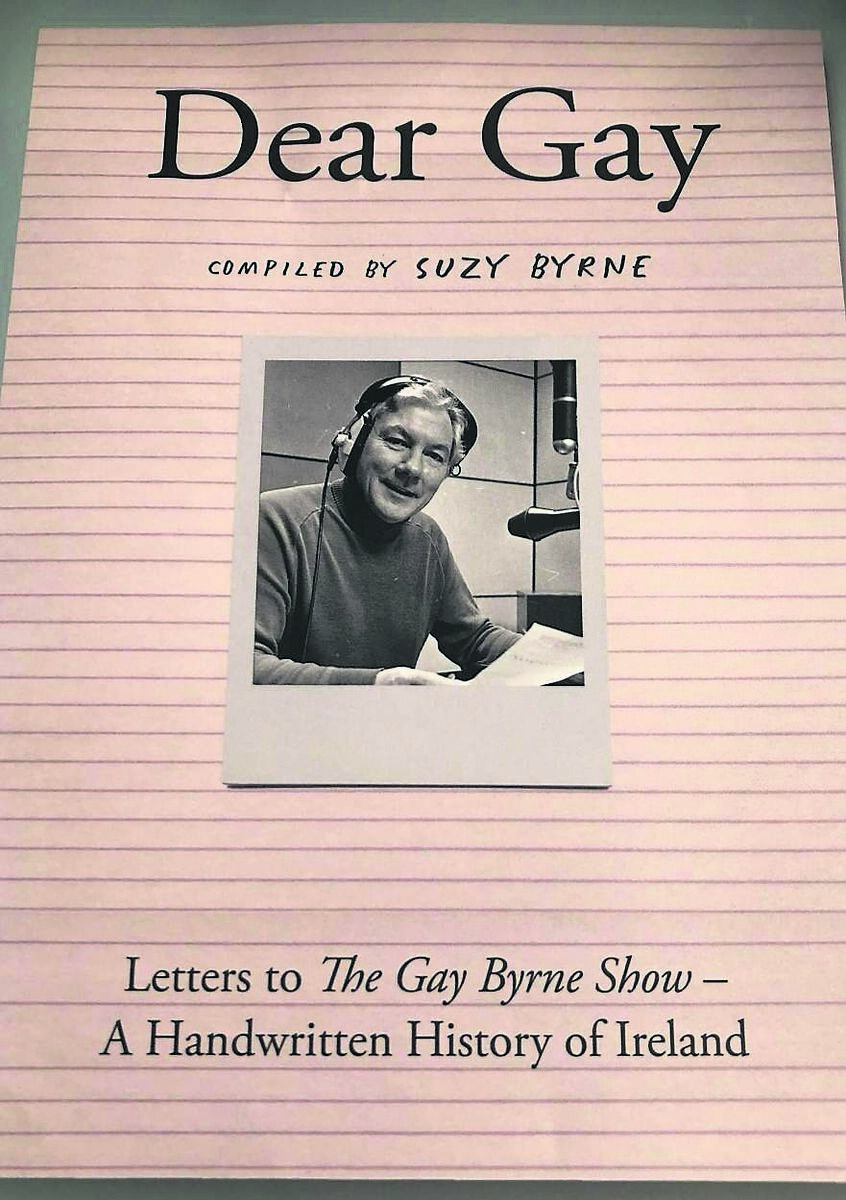
Dear Gay, Letters To The Gay Byrne Show - A Handwritten History Of Ireland, compiled by Suzy Byrne, published by Gill Books, €20.85.





 App?
App?


