Too dark outside to run? Simple exercises you can do indoors
LISA SALMON chats to personal trainers about the best ways to stay fit indoors this winter.
Too dark outside to run? Simple exercises you can do indoors

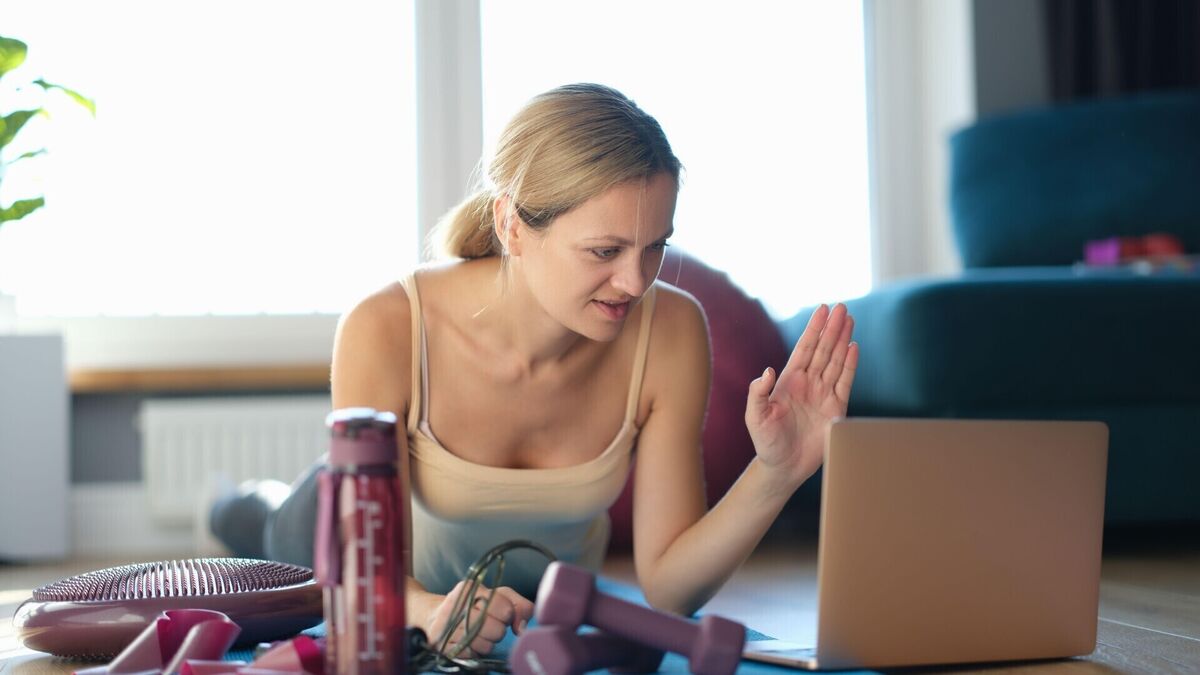
Myers suggests runners borrow ideas from lockdown, and if you usually meet a running group, that shared appointment should be kept by completing a circuit on FaceTime, Zoom or Teams together. Picture: Alamy/PA       

If running is your go-to exercise, it can be tempting to let the darker evenings dissuade you. But there are plenty of great exercises you can do in the comfort of your own home.

Personal trainer Henry Myers, who runs Peakonic Training, says runners should maintain their normal training timings, but just swap an outdoor run for indoor movement.

“The bigger consideration is protecting whatever good habits and routine you currently have in place. If you’ve already got a routine that works training into the rest of your lifestyle, start there.

“If you normally run at 6pm on a Tuesday, keep that appointment with yourself. Follow your typical routine in prep, as what seems like ordinary tasks are often mental cues that trigger readiness. Your mind will notice the pattern and begin readying you for training – then train, just indoors instead of out.”

And personal trainer Dean Zweck, head of product at Total Fitness, adds: “Darker evenings and cold, wet weather can make heading out for a run less appealing, particularly after work. Having an indoor alternative can help you maintain a regular routine without having to fit every session around the weather.

“Dancing, shadow boxing and short-exercise circuits can all help you work on your cardiovascular fitness at home, making them useful alternatives when you can’t get out for a run. Some people enjoy following a workout, while others prefer putting on music and moving at their own pace.

“Choose something that feels manageable, give yourself enough clear space and warm up with a few minutes of gentle marching, side steps and shoulder rolls.” Here are the indoor exercises the PTs suggest to help maintain your fitness over winter…

Myers suggests using a combination of movements including squats, lunges, press-ups, star jumps, sit-ups, tricep dips, mountain climbers and burpees, explaining: “These are all simple bodyweight movements that you can easily perfect with a little guidance. Jacking your heart rate up in training isn’t about anything overly fancy – it just needs to do the trick, and movements like this can do just that in a variety of ways.

“Just make sure the technique is good to avoid injury.” He recommends structuring sessions with a 5-10 minute warm-up to elevate heart rate and incorporate dynamic stretching, a 2-4 minute primer to replicate movement patterns of the main workout under control, a 15-40 minute main session, a 2-3 minute high-intensity finisher, and finally a 5-10 minute cool-down, including a static stretch and mobility, to reduce heart rate and breathing to resting rate.

Session ideas

Circuit training

Myers suggests choosing five exercises such as squats, press-ups, sit-ups, mountain climbers, and reverse lunges, performing each for 30 seconds, followed by 30 seconds to recover and change position. Complete two or three rounds for a 10 to 15-minute main session.
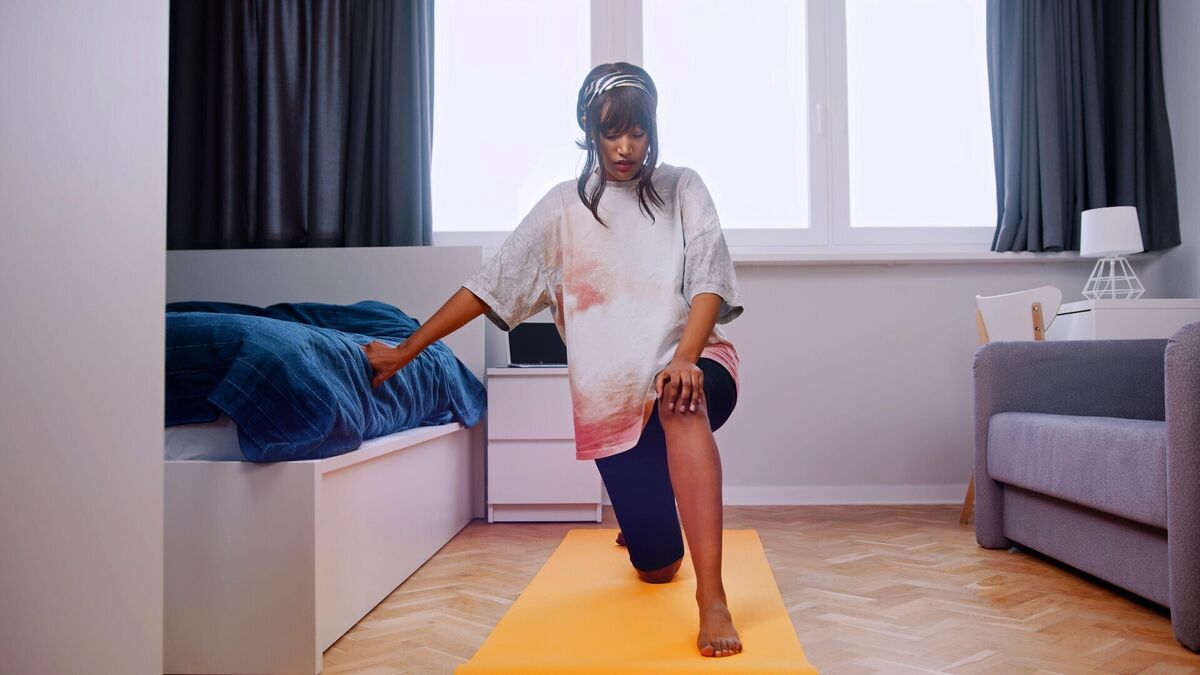

Personal trainer Henry Myers says runners should maintain their normal training timings, but just swap an outdoor run for indoor movement. Picture: Alamy/PA       

Every minute on the minute (EMOM)

At the start of minute one, perform x reps of y movements (for example, 10 squats), explains Myers. In minute two, repeat for a new movement. In minute three, perform another. Rest for the remainder of each minute. Repeat four times for 12 minutes.

He says: “These repetitions are examples. Adjust them so you can maintain technique, and finish with recovery time remaining.”

As many rounds as possible (AMRAP)

Myers suggests setting a 10-minute timer and then completing 10 squats, 10 press-ups and 20 mountain climbers, (counting each knee drive as one rep). Repeat at a sustainable pace, resting when needed.

“The aim is to accumulate good-quality work. Record your rounds and repetitions so you can monitor progress without rushing,” he advises.

Make it progressive

Progressive overload means gradually increasing the demand as your body adapts, Myers explains. At home, that could mean adding reps, extending a work interval from 30 to 35 seconds, adding a round, reducing rest slightly, or progressing to a more challenging exercise.

He suggests changing one variable at a time, and keeping a record of what you completed and how it felt. “Progress should remain manageable, with technique and recovery guiding the next step. And allow an easier day between demanding sessions,” he advises.

“Doing a little more than before is progress. Over time, make sure the activity continues to provide an appropriate challenge for your goal.”

Keep the social side

Myers suggests runners borrow ideas from lockdown, and if you usually meet a running group, that shared appointment should be kept by completing a circuit on FaceTime, Zoom or Teams together. “Everyone can use different exercise variations while following the same timer,” he points out.

In addition, follow-along workouts on YouTube or an app can also provide ideas and structure, he says. “Choose sessions that explain technique, offer easier options, and suit your current ability. These can be great, but my advice of course would be to reach out to an online coach – while general online workouts aren’t specific to you, a coach can tailor movements and durations to meet your needs and goals, and help you make better progress.”

Build up with side steps and skaters

Zweck suggests increasing movement through simple side steps, which are a useful option if you prefer not to jump. “Move your arms as you go, and wider or quicker steps will increase the effort,” he says.

“For skaters, take a wider sideways step and bring the opposite foot behind you for a light toe tap, then switch sides – but give yourself time to find your balance. You can continue stepping or add a small sideways hop if you feel comfortable.”

Add squats or burpees

“Squats and burpees can make a circuit more demanding,” Zweck points out.

For a squat, stand with your feet about shoulder-width apart, push your hips back and bend your knees, then return to standing. Zweck says you can also add a small jump, landing softly with bent knees, to increase the effort.

For a burpee, bend down, place your hands on the floor and step or jump your feet back into a plank. Step or jump them forwards again, and return to standing. “Move at your own pace and allow time to recover between exercises,” he advises.

Try boxing movements

Shadow boxing brings together cardiovascular exercise and coordination, without needing gloves or a punchbag, says Zweck.

“Stand with one foot slightly ahead of the other, knees slightly bent and hands raised near your chin,” he explains. “Extend one arm into a controlled punch without locking your elbow, then bring it back and switch hands. Start slowly, adding small steps forwards and backwards once the movement feels familiar. Take breaks between short rounds so you can keep your movements controlled.”

Dance away

Dance can make exercise something to look forward to, Zweck points out. Choose your favourite songs, or make it seasonal with some Christmas tunes, and start by stepping from side-to-side. Add arm movements, knee lifts or steps forwards and backwards as you feel comfortable.

“You don’t need to learn a routine, although an at-home dance or Zumba workout can provide some structure if that helps,” he says. “Start with one or two songs and build from there, gradually increasing the pace to get your heart rate up.”

More in this section

Top 6 bridal trends for 2027 brides, from bows to basque waists Six key bridal trends for 2027
Gail Doyle: ‘My intention wasn’t to be an influencer... it was to educate women’ Gail Doyle: ‘My intention wasn’t to be an influencer... it was to educate women’
Emer O'Callaghan: Alcohol can have an impact on our skin...let’s be more drink aware Emer O'Callaghan: Alcohol can have an impact on our skin...let’s be more drink aware

Sponsored Content

Protect your investment: Why a licensed estate agent is non-negotiable Protect your investment: Why a licensed estate agent is non-negotiable
JSA Planning strengthens Cork presence as region prepares for next phase of growth JSA Planning strengthens Cork presence as region prepares for next phase of growth
CanesMeno sponsored Menopause: One in four say the biggest emotional burden is the pressure to appear fine
Contact Us Cookie Policy Privacy Policy Terms and Conditions

© Examiner Echo Group Limited

Add Echolive.ie to your home screen - easy access to Cork news, views, sport and more