Cork centenarian: ‘In my 80s I went around the world... my 100th birthday was marvellous’
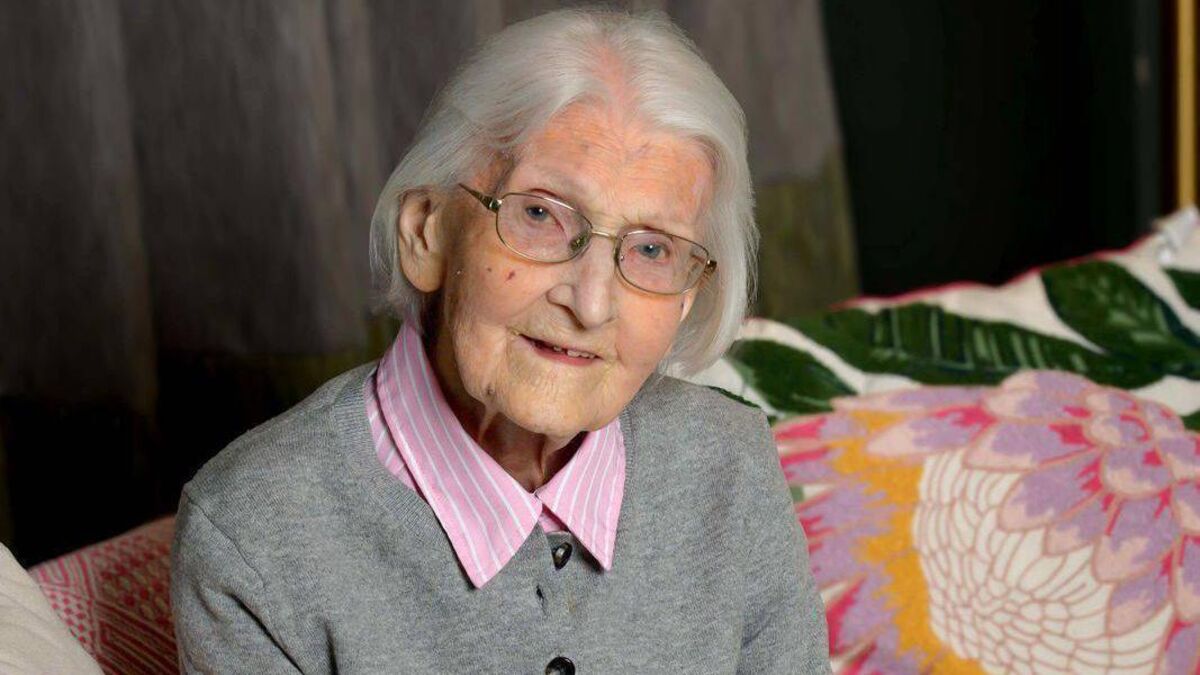
Sr Miriam Twohig is one of around 1,000 living people in Ireland included in the 1925 Census. She tells CHRIS DUNNE about her memories of growing up in Cork, her decision to become a nun, and what she credits as the secret to her long and happy life.
Cork centenarian: ‘In my 80s I went around the world... my 100th birthday was marvellous’

“Summer Sundays at the seaside were always great days. Winter Sundays were spent in front of the fire," recalled Sr Miriam
There’s always a welcome on the mat at Marymount University Hospital and Hospice. And on this fine day, coming to meet Sr Miriam Twohig, who is 102 years old, Fred’s ice-cream van is a welcoming sight too.

“I often get a call to come along on a fine day from the staff here,” says Fred, busy outside the main door doling out ice-cream cones to staff, patients, and visitors alike.

“Today is an ice-cream day!” adds Fred, full of the joys of life in the delightful sunshine.

Sr Miriam is full of the joys of life too.

“I can’t believe you’ve come especially to talk to me!” she says shaking my hand.

Why ever not?

After all, Sr Miriam is one of just approximately 1,000 people recorded in the 1925 Census still alive to see its recent publication.

I want to know all about her long, happy, fulfilled life.

“I’m a native of Coolavokig in the parish of Kilnamartyra, midway between Macroom and Ballyvourney,” says Sr Miriam whose soft, peachy skin and gentle hands belie her years spanning more than a century.

When is her birthday?

“I was born on March 14, 1924, the fourth of eight children,” says Sr Miriam, who was born Eileen Twohig.

I tell her that my birthday is March 1, St David’s Day, patron saint of Wales.

“We are both March hares so!” Sr Miriam declares, the twinkle in her eye alive and well.

Sr Miriam’s father, John, was a local teacher who married a local girl, Mary. He went to school through the fields.

“My father cycled to school every day, and he saluted the local farmers along the way,” says Sr Miriam. “He got to know them over time.”

John Twohig got to know Mary too, who was a farmer’s daughter.

“They got married and when I was 12, my father noticed the numbers were going down in the Coolavokig National School and he saw a vacancy had come up in Dripsey,” says Sr Miriam.

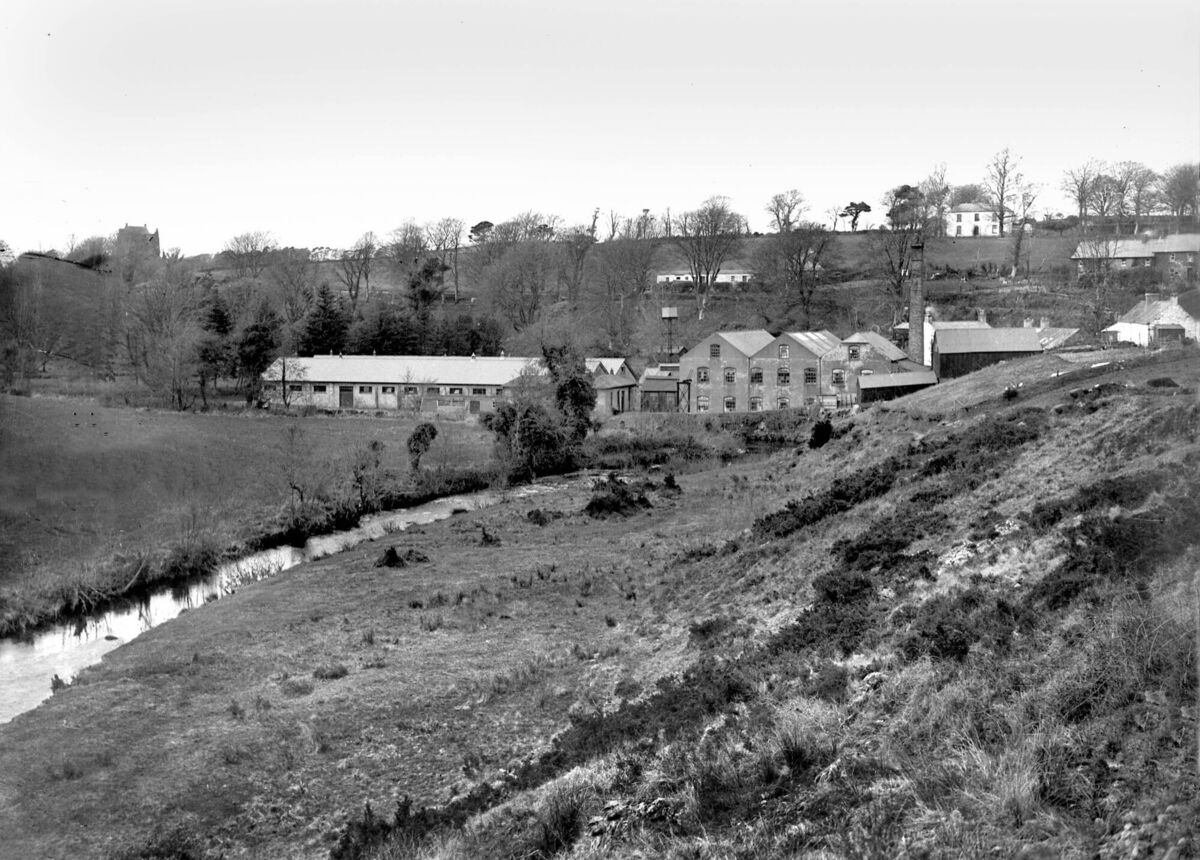
“He applied for the job and he got it. We all moved east to Dripsey.

What was domestic life like then?

“My mother was a real homemaker,” says Sr Miriam.

The Dripsey Mills pictured in 1929. Sr Miriam moved to Dripsey when she was 12. 

“She baked lovely brown bread. We slept two to a bed. We talked through the night. My parents were wonderful people. The wages long ago were very bad and they often did without themselves to give to us.”
The family went to mass via pony and trap.

“Tommy was our pony and Johnny was the driver of the pony and trap,” says Sr Miriam.

The rosary was a daily practice.

“My mother was very devout,” says Sr Miriam. “And we were a very religious family growing up. The rosary was a big part of our day.

“God help you if you missed it or were late for it!” says Sr Miriam.

“We had to have a very solid excuse for not attending the family rosary! We had to be punctual for mass every Sunday in Kilnamartyra.

“If we were late, it would be seen as an insult to the priest. You had to be in your seat when he appeared on the altar.”

One of the Twohig family members only lived to the age of eight.

“Sheila suffered a burst appendix and she died,” says Sr Miriam. “My father never got over her death, and he was bereaved for along time. He had his own way of dealing with his grief and he said we were not to mention Sheila again and that she was gone to God.

“I remember Nora, a lovely person who helped us out at home, was holding the eighth child in her arms when we got the news that Sheila had died. I was not yet seven and I didn’t know then what that meant.”

Sr Miriam completed her final year of primary school in Dripsey before going to boarding school in Ennis.

“I loved school,” says Sr Miriam. “I loved the big country school.”

She went to school through the fields too. “I loved running to school across the fields and jumping fences!” she says.

“Summer Sundays at the seaside were always great days. Winter Sundays were spent in front of the fire.”

Sr Miriam spent six years in boarding school being taught by the Sisters of Mercy. Was she homesick?

“Yes, I was,” says Sr Miriam. “In fact, I was heartbroken. I don’t think I would ever send a child away to school.”

What was her favourite subject when she settled in?

“I loved history,” she says.

“History continues through life.”

Another subject was a favourite in the Twohig household.

“My father was adamant that we all learned to play music,” says Sr Miriam. “Both my parents were musical.

“My father bought a piano and he always had a book of songs on top of the piano. We were encouraged to learn the songs. ‘Learn them if you like,’ he said.

“We didn’t have a gramophone growing up, but I had cousins who had one and I used to go and stay with them for a few days, and I used to love putting on records when I was there.”

What songs did she play on the gramophone?

“Songs by John McCormack and Sydney McKeown and then later I discovered the Clancy Brothers of course.”

Sr Miriam followed in her father’s footsteps when she went to teacher-training college in Limerick where she continued her studies for two years to become a teacher.

“I made lots of friends from everywhere,” says Sr Miriam.

“My best friend was Nuala Gaffney from Co. Clare. We both liked the same things.”

Did they like dancing?

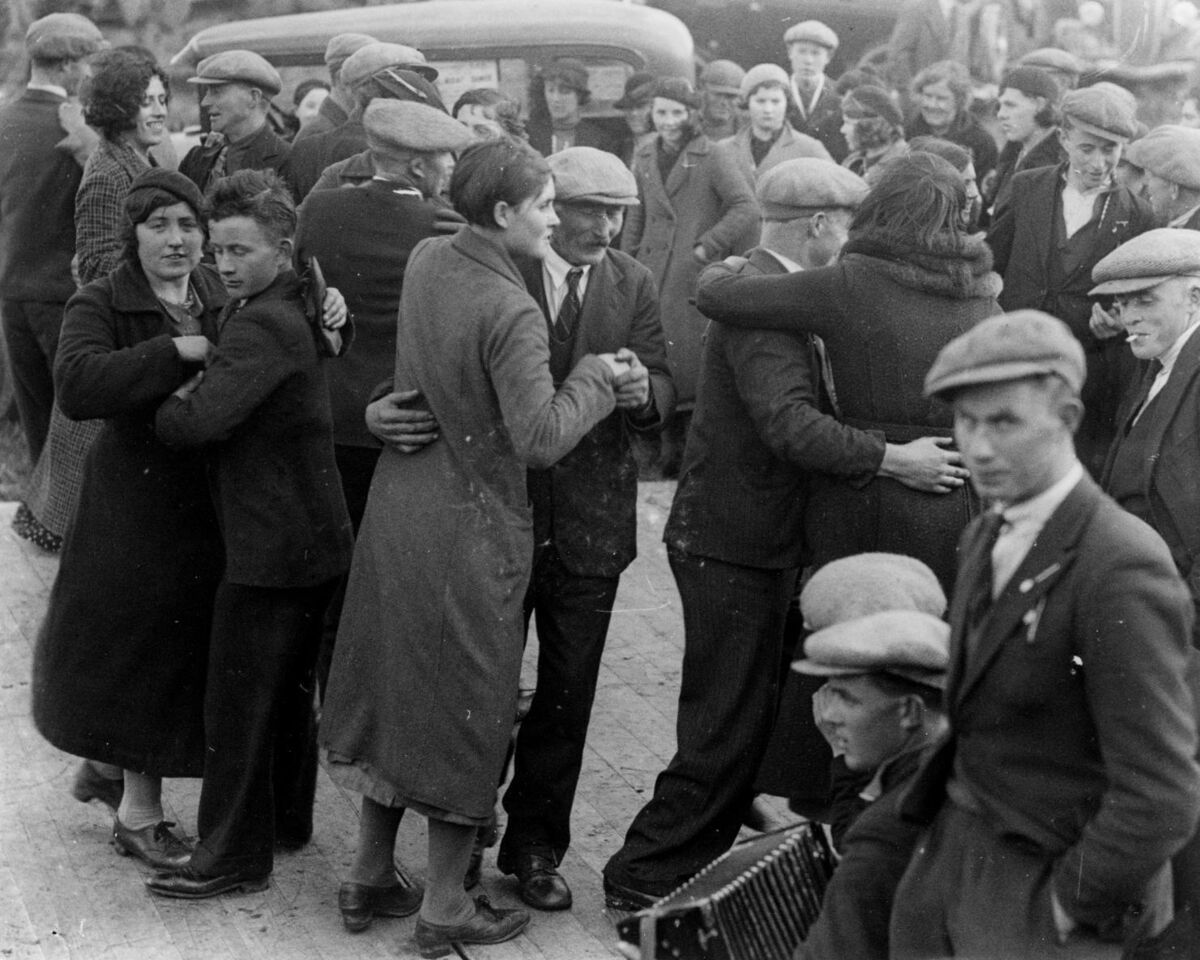
Sr Miriam laughs. “Indeed, we did like dancing,” she says. “And we often danced at the crossroads. The boys would cross the road to come and ask us to dance! Of course, we cycled everywhere. When we lived in Dripsey, we’d think nothing of cycling to Fermoy Sports or cycling to a dance in Cork city, no bother at all. I went dancing in Cork city.”

Dancing at the Crossroads in Newmarket in 1938. Sr Miriam says that she enjoyed dancing growing up, and often danced at the crossroads. 

It was the halcyon days of the ballroom of romance. “All the boys were on one side of the hall, and all the girls on the other side! I often got mass at 6am on the way home!”
Sr Miriam taught as a lay person at St Vincent’s in Cork city before joining the Sisters of Charity at age 32, with whom she taught in Clonmel, Co. Tipperary, Mountjoy Street, and Milltown in Dublin. Foxford In Co. Mayo, and back in Cork, in Blarney.

“At 32, I knew my own mind,” says Sr Miriam.

Her dancing days became days of yore when she joined the Sisters of Charity in the mid-1950s.

She made her mark there.

“When I joined the Sisters of Charity, I was the only sister who could drive!” she says. “I passed my driving test before I entered the convent, so I used to take the sisters to doctors’ appointments and to the hospital.”

Sr Miriam drove further afield. “I would take them on their holidays up to Foxford in Co. Mayo, which was a good journey.”

She got far then. “I only gave up driving when I was 90!”

Did Eileen Twohig have boyfriends before she became Sr Miriam?

“Indeed, there were no shortage of them!” says Sr Miriam, her bright eyes still twinkling.

I’m not surprised.

“Why do you say that!” enquires Sr Miriam.

Well, apart from her charming demeanour, her musical talent, and her obvious joie de vivre, she must have been quite a catch at a time when women earning their own salary in Ireland were a rather rare occurrence.

“You’re right!” she says. “I was quite independent.”

She travelled to Rome.

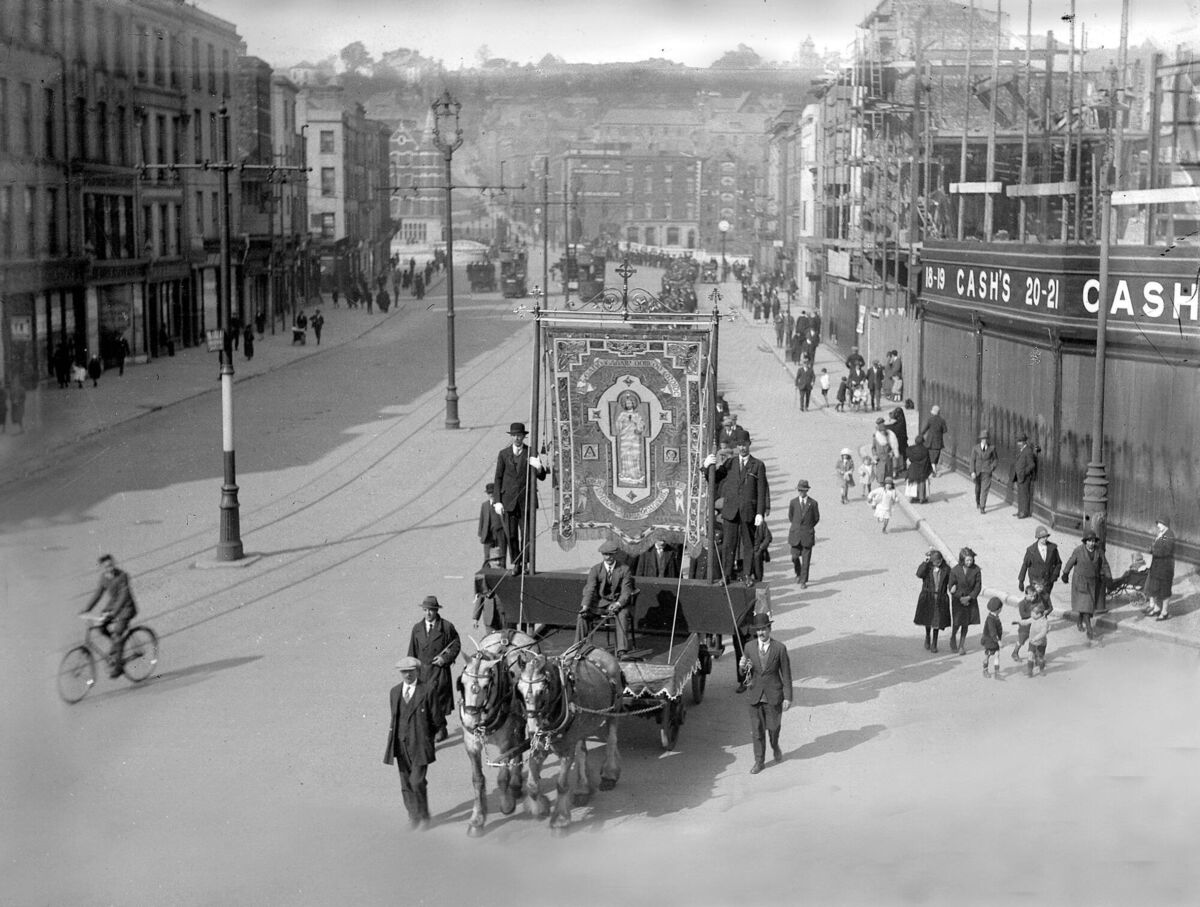
A religious procession makes its way along Patrick Street, circa 1924, the year that Sr Miriam was born.

“When you were in the convent for a few years, you got what was called a Spiritual Year and I chose Rome,” says Sr Miriam.


“I loved the city. After a lecture in the morning, I had afternoons free. Travel was so much cheaper than Ireland and I got a ticket for a month. I got to see every inch of Rome.”

Sr Miriam never let the grass grow under her feet.

“In my 80s, I went around the world to see Australia, New Zealand and Tasmania, staying in convents in all three places.”

Her 100th birthday was a major celebration.

“My nephew wrote to all his aunts and uncles and invited them all here for my 100th birthday party.”

It was like the ballroom of romance.

“My nephews are all good dancers, and we all had a great afternoon,” says Sr Miriam.

“Later, the manager here organised a sit- down tea with cakes and other lovely goodies. It was marvellous.”

How has the world changed since she was a girl?

“Well, ways of communication have certainly changed,” says Sr Miriam, who is resident in Marymount Hospital and Hospice since she suffered a broken hip after a fall four years ago.

“And I was thinking the other night how different things are now for my nieces and nephews and their children going everywhere by car or flying all over the world.

“When I was growing up, we used to cycle everywhere.”

It was no bother to her.

“You would pull out your bike, hop on it, and off you went!”

What does Sr Miriam put down to her longevity and happy countenance, having lived life to 102 thus far?

“I accepted what life gave me and I did the best I could with it,” she says.

We have been chatting together for almost two hours.

“You stayed talking to me for that long!” she marvels.

I could stay talking with Sr Miriam forever and a day.

More in this section

Less than a quarter of MD Chair roles went to women Less than a quarter of MD Chair roles went to women
My countdown to the Mini Marathon: ‘A lot of runners say you’ll end up loving it...well’ My countdown to the Mini Marathon: ‘A lot of runners say you’ll end up loving it...well’
5 reasons you might be feeling extra tired this summer 5 reasons you might be feeling extra tired this summer

Sponsored Content

Keeping their house in order: How PSRA regulation has raised the bar for Ireland’s property services sector Keeping their house in order: How PSRA regulation has raised the bar for Ireland’s property services sector
"My master's at UL taught me that structured learning and a demanding career can coexist" "My master's at UL taught me that structured learning and a demanding career can coexist"
Three days of steam, music and heritage at the 62nd National Steam Rally Three days of steam, music and heritage at the 62nd National Steam Rally
Contact Us Cookie Policy Privacy Policy Terms and Conditions

© Examiner Echo Group Limited

Add Echolive.ie to your home screen - easy access to Cork news, views, sport and more