Could ‘exercise snacking’ during the day help you to get fitter?
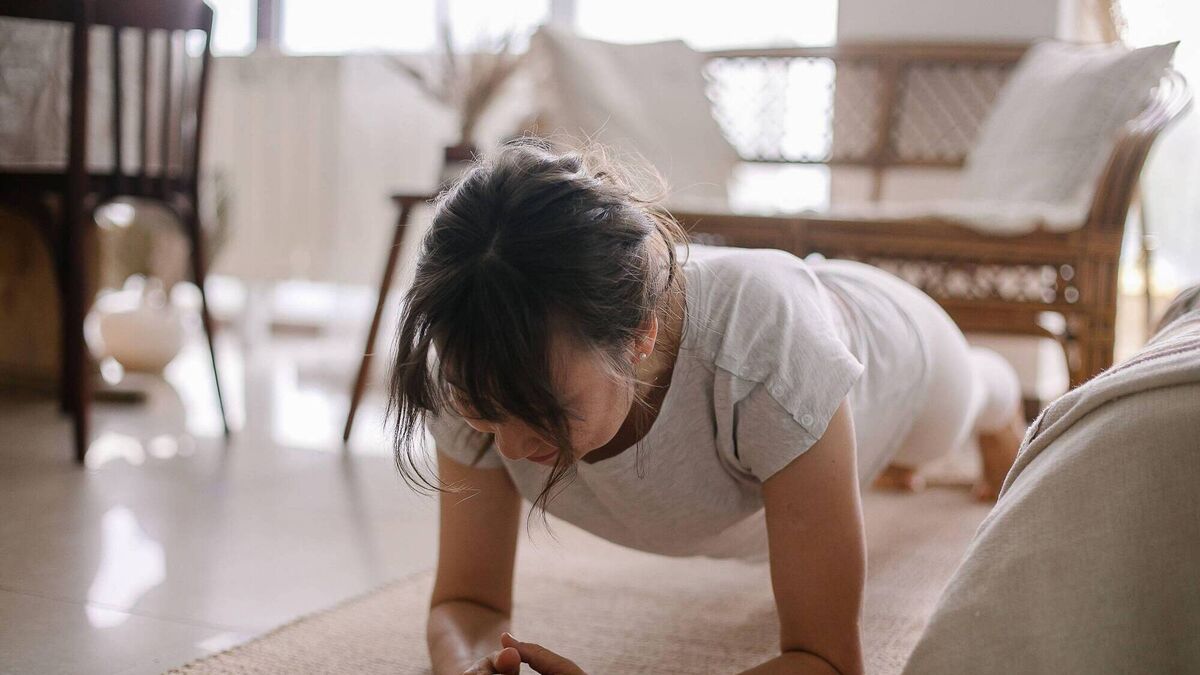
“If you’re working at home, you can pull yourself away from your desk and go into a different room, and put a five or ten-minute timer on and pick three or four exercises to do within that time frame,” says Simmons.
January usually triggers a renewed sense of enthusiasm for getting fit, but as the months roll on and spring comes into fruition, life’s busyness often gets in the way.
However, new research suggests we don’t need to commit to a strict gym schedule because short bursts of vigorous exercise – such as taking the stairs or running for the bus – can also help us keep fit and healthy.
The study, by researchers in China, included 96,408 people taking part in the UK Biobank study and compared the data with the likelihood of dying or developing eight health conditions (heart disease, irregular heartbeat, type 2 diabetes, liver disease, long-term lung conditions, chronic kidney disease, dementia and immune-mediated inflammatory diseases, which include arthritis and psoriasis) over seven years.
They found that the people who did more vigorous exercise had a lower risk of all diseases, and that their risk of dementia was 63% lower when compared to people who did no vigorous activity.
The researchers suggested that the benefits remained even if the time spent exercising intensely was modest.
This notion of short bursts of exercise is often referred to as ‘exercise snacking’, and we spoke to some fitness experts to find out more about what exactly this involves and how we can translate it into our everyday lives…
“The idea is that you can break up your day with little snacks of activity, rather than just a ‘main meal’ (main workout), to keep your body limber, stop it from getting stiff and to get rid of any excess energy,” says Monty Simmons, a UK-based personal trainer and founder of Move with Monty.
“The idea is that you basically take yourself away from your desk and move for five or ten minutes.”
Darren Sealy, coach and co-founder of Flow State Fit Club, agrees and calls it a “mini workout”.
“It’s basically a mini workout that will raise your heart rate and boost your cardio and metabolic conditioning,” says Sealy. “The effects of these short bursts of activity, which are usually no more than five minutes to 10 minutes at a time, can really compound throughout the week if you do them regularly.”
“In terms of physical benefits, exercise snacking is good for reducing feelings of stiffness and pain, and, depending on the exercises that you choose, it can also be useful for counteracting slouching at your desk and can help improve your posture,” says Simmons. “It’s great if you can get a bit of cardio in there to get your heart rate up and get a bit of heart rate variability throughout the day.
“Exercise snacking can also increase your daily calorie burn just because you’re doing a bit more activity, which really accumulates over the week.”
“If you’re working at home, it’s quite easy,” says Simmons. “You can pull yourself away from your desk and go into a different room, and put a five or ten-minute timer on and pick three or four exercises to do within that time frame.
“If you’re at work and are worried that exercising in the office looks a bit odd, then you can always grab yourself a coffee, go for a walk and maybe stretch out your thighs or do some more subtle exercises instead.”
Picking a set time per day to do this can help you stay consistent.
“If you do a short burst of activity at the same time every day, then you’re building a habit in your brain, so you know that each morning you are going to do your five-minute exercise snack, for example, which helps you build consistency,” says Sealy.
Simmons says there are three main types of movement to choose from.
“The first is my personal favourite and is stretching. This helps reduce stiffness and increase blood flow in your body,” says Simmons.
“The second one is cardio and could be taking the stairs, getting off the bus early, walking fast, doing some star jumps, jogging on the spot or going for a little jog around the block.
“Then finally the last one is something that incorporates a bit of strength. That could be like front lunges, push-ups or sit-ups. You could pick three or four of those, and even mix stretching, cardio and strength exercises together.”
“If you’re sat at a desk a lot, I would suggest doing some back bends,” recommends Simmons. “You basically stand up, have your feet shoulder-width apart and have your fingers interlaced in front of you. You reach them up and overhead and look up at the ceiling, and then just lean back a little bit.
“You’ll get a really nice stretch in your abs, and a bit of activation of your upper back muscles, and that can be great for just reversing that slouched, crunched-over sitting posture.”
“For a good morning, you stand up with your feet shoulder-width apart and put your hands behind your head and stand tall, looking forward,” instructs Simmons. “Then you sit your hips back, keeping your knees only a little bit bent, but mostly straight, and you lean forward so that your chest points to the floor. You should feel the stretch in your hamstrings and the activation of your back muscles.
“Then you go all the way up to standing again using your glutes and hamstrings.
“It’s a really nice way to wake up your back and activate the posterior chain, which often doesn’t get much love if you’re sat down all day.”
“Bodyweight exercises are great because you don’t need any equipment for them,” says Sealy. “Keep it simple and pick one upper body, one lower body, and one core exercise, and then find a quiet place to do them. For example, you could do a quick routine of planks, squats and push ups and start by doing each exercise for 30 seconds and do this routine three times. Then gradually build up the time and consistency as your fitness increases.
“Eventually you could have a quick five-minute bodyweight workout routine that’s optimising your upper, lower and midsection, and will be ticking a lot of boxes.”




 App?
App?


