WoW Food: How to build the perfect cheeseboard
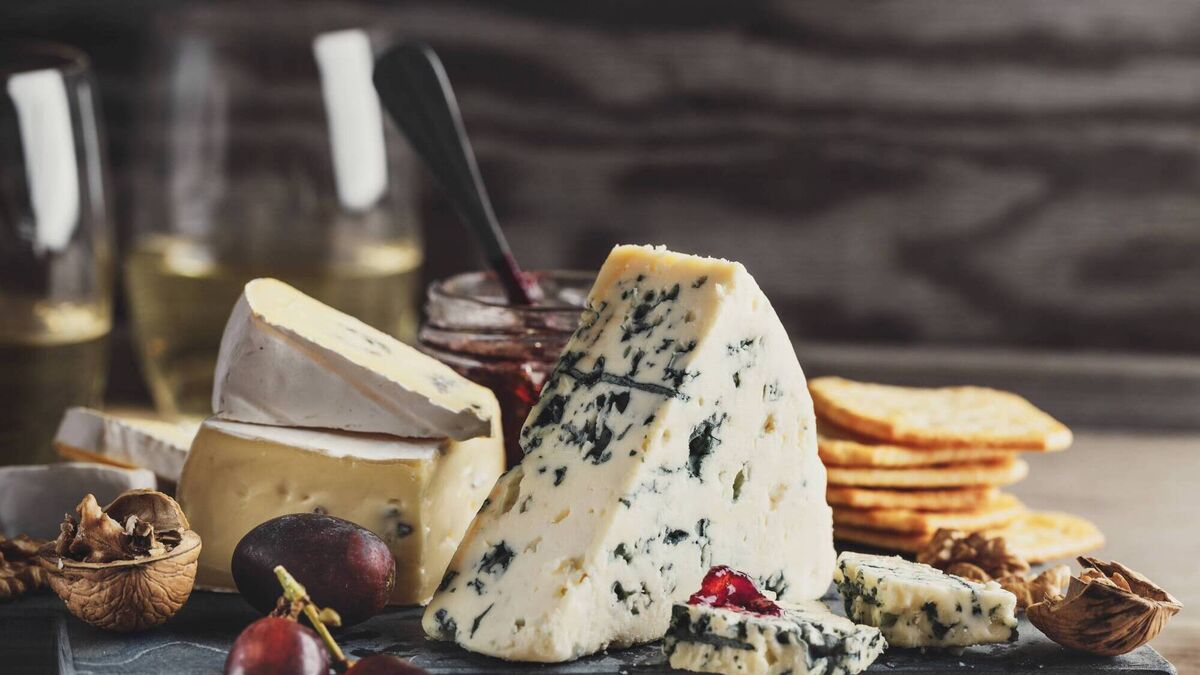
Fancy building a cheeseboard to serve up this Christmas, but not sure where to start? KATE RYAN shares some of her top cheese picks as well as advice on how to create a showstopper board.
WoW Food: How to build the perfect cheeseboard

Between three and six cheeses are deemed to be ideal for a cheeseboard, says Kate Ryan. 

In Cork, we love to shout about being the food capital of Ireland, and when it comes to cheese, it’s a claim that rings even truer than usual.

The epicentre of Irish farmhouse cheeses is in West Cork, and three women, during the 1960s, quite unwittingly started a food revolution that still reverberates today.

It all started with Veronica Steele, her one-horned cow named Brisket, and a cheese that frequently failed before it succeeded. Veronica kept meticulous handwritten notes of her adventures in cheesemaking, on one occasion noting it resembled a “quare aul hawk”. But by perseverance, her Milleen’s Cheese, made near the village of Eyeries on Beara Peninsula, has long been regarded as a celebrated cheese of Ireland – a tradition that continues today under the hands of her son, Quinlan.

Shortly after came Jeffa Gill and her Durrus Cheese, then Gianna Ferguson and her wheels of Gubbeen.

From these three expressions of farmhouse cheese did all 72 artisan cheesemakers in Ireland today spring, and who (between them and the 14 large-scale cheesemakers based at Irish creameries), make nearly 500 different types of cheese every year.

That’s a lot of cheese!

If cheeseboards aren’t usually your thing, they probably will become something for the purpose of the festive feast at Christmas. Between three and six cheeses are deemed to be ideal for a cheeseboard, but how to whittle that down from 500?

The beauty of cheese is just how much range there is; how from milk, rennet and a bit of time, we get an array of cheeses that look and smell so different, with textures ranging from oozy to hard, from very mild to mouth-strippingly acerbic in taste. It’s fun to keep tasting to find out what you like, and where on this enormous spectrum your cheesy taste buds lie.

Still today, Cork remains a powerhouse of farmhouse and speciality cheese, driven, in part, by being the leading milk-producing county in Ireland. As a result, we have an incredible amount of choice.

Add to that a great selection of chutney and relish makers, cracker and biscuit producers – not to mention beautiful pottery to place it all on – and you have the magic ingredients for a truly delectable, interesting and conversation-starting cheeseboard for after-dinner or anytime snacking.

To create the perfect cheeseboard, I like to consider the look of it and what to put with my cheese as well as the cheese itself.

Dress it up

When thinking about your cheeseboard, consider how you want it to look.

Maybe your guests are great ‘turophiles’ – the fancy term for a cheese lover, and if so, maybe it’s about pairing back the presentation so that it’s all about showcasing the great selection you’ve curated for them.

Or maybe it’s about showing generosity, in which case the bigger, bolder, layered and more colourful it is, the better. Is less more, or more is better? That’s up to you; your hosting style and your guests’ tastes.

Whatever you serve, decide on crockery to serve it on, provide cheese knives (if you have them), side plates (especially if presenting a sharing board), napkins, and condiments. Considering everything is the art of a truly great cheeseboard, even if that’s a simple trio of cheeses on a piece of your best-loved china.

Sharing boards

Slate is a great way to display cheeses in this way, plus you can write in chalk the name and style of each cheese so guests can be at ease selecting what they like.
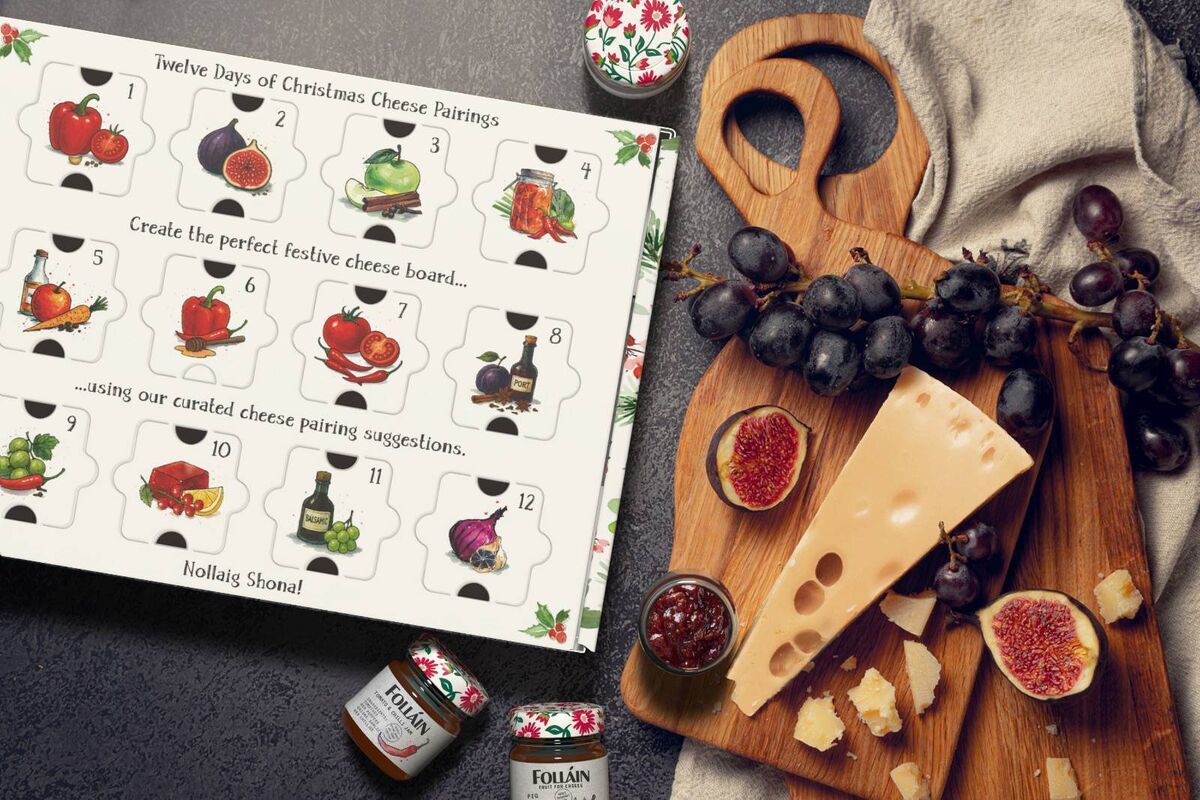
Or go for the wow factor and get creative with arranging a selection of cheeses, charcuterie, fruits, nuts, crudities and crackers on a sumptuous platter.

The 12 Days of Christmas Cheese Pairing selection from Folláin. 

Place mini pots of jam, chutney, relish or honey in between for a jewel-like hue on the platter. Hanna’s Bees sells mini pots of their seasonal honeys, and Folláin’s 12 Days of Cheese contains two dozen mini pots of special seasonal flavours

Colourful

A rainbow platter of cheese? Yes please! I don’t mean the artificially coloured stuff, but many cheeses are aged in coloured waxes – think emerald green, firetruck red, or deep black.

Natural and washed rind cheeses also give hints of colour. Blues, smoked, bloomed or ash rinds really pop against slate or chunky dark wood boards, not to mention the injection of colour from fruits, crudites, chutney and relish, jams and crackers.

Fresh fruits

Fruit refreshes the palate between strong flavours and different textures. The classic accompaniment is grapes, but if your cheeses are local, why not keep your fruits local, too? Fresh pear and apple are fantastic palate cleansers, and fresh figs are great with soft goat’s cheeses.

For strong cheeses, try pairing with something a little unusual, like sweet glace fruits, which can help round out strong flavours and provide enough point of difference in flavour to encourage multiple return trips to the cheeseboard.

Urru Culinary Store in Bandon stocks a great selection of glace fruits made by Country Choice in Co Tipperary.

Chutney, relish and pickles

No cheese board is complete without some fabulous chutney, relishes, jams and pickles. I’m a big fan of Cork-made Brazen chilli sauces, and their No. 65 Yellow Chilli Jam delivers sweet heat from pineapple, lemon and a kick of habanero that’s great with semi-soft cheeses.

Folláin Kimchi Relish is a fab match with strong cheddars, and their Spiced Irish Apple Jelly is great with smoked cheeses.

For pickles, you can’t go wrong with some cornichons, a well-made piccalilli or balsamic vinegar pickled baby onions. The English Market is great for picking up a great selection at Mr Bell’s, Roughty Foodie or Toons Bridge stalls.

Bread or crackers

It’s hard to go wrong with Sheridan’s Brown Bread Crackers, but I also like their linseed and rye crackers for an extra nutty flavour. For cracker alternatives, try blue cheese on Christmas plum pudding, mature Coolea on Seymour’s Irish Shortbread, or experiment with these “dressed bracks” from Graham Herterich’s book, Bake.
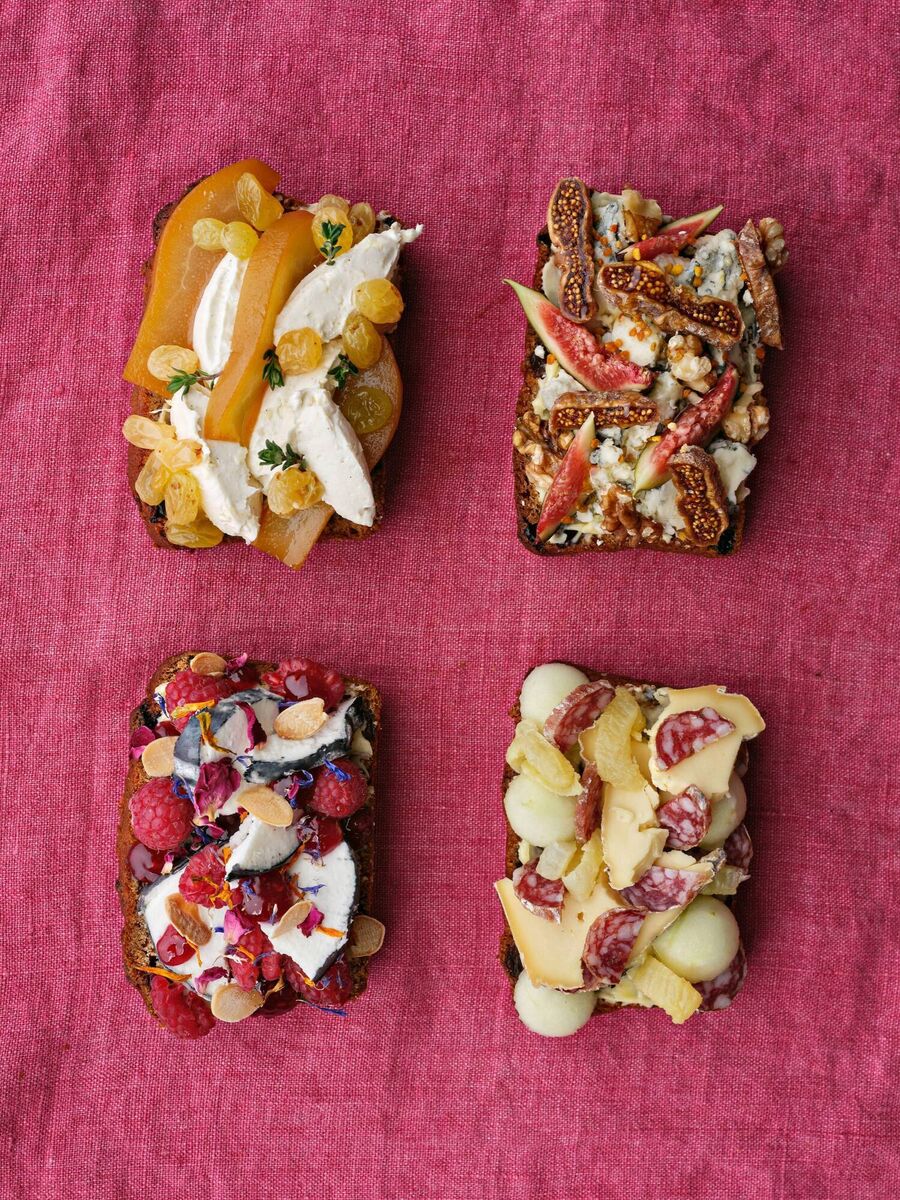
Dressed Brack as featured in Bake.	 Picture: Jo Murphy.
Dressed Brack as featured in Bake. Picture: Jo Murphy.

Say cheese

Now you’re ready to select your cheeses, so consider these things first.

Milk

Cheese can be made with cow, sheep, goat or buffalo milk, and each carries flavours in their own way. Cow’s milk tends to be creamier and milder, sheep’s milk cheese can be tangy and acidic, and goat milk is creamy with a hint of funky barnyard, which is not as off-putting as it sounds!

If a cheese is described as ‘raw milk’ that means the milk used has been unpasteurised and should be avoided by some people, for example, pregnant women. If it doesn’t say this, the cheese has been made using pasteurised milk. If in doubt, ask the cheesemonger.

Rinds

The rind of a cheese carries flavour, but is mostly a maturation technique that determines the final character of the cheese a maker wants to create.

A cheese can be fresh with no rind (e.g. creamy goats cheeses, mozzarella, burrata), washed (e.g. Durrus, Milleens), smoked (coated in wax to keep the smoke flavour in, but not always), bloomed (moulds encouraged on the outside so they look furry), ash coated (real ash, edible), rolled in herbs (for added flavour), or hard rind (e.g. cheddar).

Create a six-cheese board

When selecting which cheese to pick for your board, remember that tasting is as much about texture as it is flavour. Choose cheeses that run the gamut of hard to soft and mild to strong in flavour.


I love a six-cheese board so I can play with a wide expression of milk and maturation techniques. The bigger the selection of cheese, the less you need to have of each, so, paradoxically, it can work out as less of a spend overall to have more cheeses than fewer.

Some people really can’t abide stronger-tasting cheeses like a blue or a goat’s cheese. If that’s you, rather than go with six cheeses with very little variation in strength, select just two or three that you really enjoy, because wasted cheese is a travesty!

Coolea Extra Matured, Co Cork: Tangy with redolent salty crystals and a slight crumble with very present notes of butterscotch, this 18-month matured cheese has always been my favourite. A gouda-style cheese made with pasteurised cow’s milk is the perfect way to set the taste buds tingling.

Sobhriste, Co Cork: A raw cow’s milk milled curd pressed cheese matured for six weeks with a crumbly texture like a Caerphilly. It has a fine lactic tang to it, and a fresh buttery taste made with a mixture of milk from their own tiny herd of cows, some neighbouring cows, and their own wild starter culture.

Gubbeen Smoked, Co Cork: The Ferguson family are icons in the world of artisan food, and this semi-soft washed rind cheese is gently oak smoked, sealed with breathable black wax and imparts a gorgeous woodsmoke aroma to the cheeseboard.

Durrus Óg, Co Cork: A little Durrus Óg goes a long way. A young soft-rind cheese, just ten days old with an orangey-pink bloomy rind, is a pungent cheese much milder on the palate than it is on the nose. A beautifully creamy cheese that’s all about the milk. Liable to creep off the plate.

Crozier Blue, Co Tipperary: Made by the Grubb family, who are famous for their Cashel Blue, this is their sheep’s milk cheese made from early summer milk and matured for minimum of six months for an umami-laden creamy cheese that matches the might of the mould. This year’s vintage is particularly good, but as with all Irish sheep’s cheese, not much is made, making it an extra special edition on your cheese board.

St Tola Ash, Co Clare: Raw milk fresh goats’ cheese from one of Ireland’s best loved cheesemakers, Siobhán Ní Gháirbhith, in County Clare, rolled in ash to slow down the maturation process, keeping the floral flavours of the cheese vibrant and clear. The colour contrast between the dark moody exterior to the crystalline white interior is always a showstopper.

Read More

Rick Stein's tips and tricks for Christmas dinner 

More in this section

Overworking 7 simple ways to break away from living a sedentary life
‘I've always wanted to do this’: Cork woman begins training to become an embalmer ‘I've always wanted to do this’: Cork woman begins training to become an embalmer
7 best fashion trends to wear for 2025 festivities 7 top trends to embrace for your festive events

Sponsored Content

A French icon, reinvented A French icon, reinvented
Get the Douglas Court Shopping Centre look this Winter Get the Douglas Court Shopping Centre look this Winter
Making impact, inspiring futures: SETU delivers €1bn regional transformation Making impact, inspiring futures: SETU delivers €1bn regional transformation
Contact Us Cookie Policy Privacy Policy Terms and Conditions

© Examiner Echo Group Limited

Add Echolive.ie to your home screen - easy access to Cork news, views, sport and more