Rick Stein's tips and tricks for Christmas dinner

So what are the main mistakes people make with turkey? “Overcooking it,” says Stein. Picture: James Murphy/PA
In a restaurant kitchen, even professional chefs don’t have to make every element of a three-course meal.
, is published in hardback by BBC Books. Photography by James Murphy.
Try a different centrepiece this Christmas.
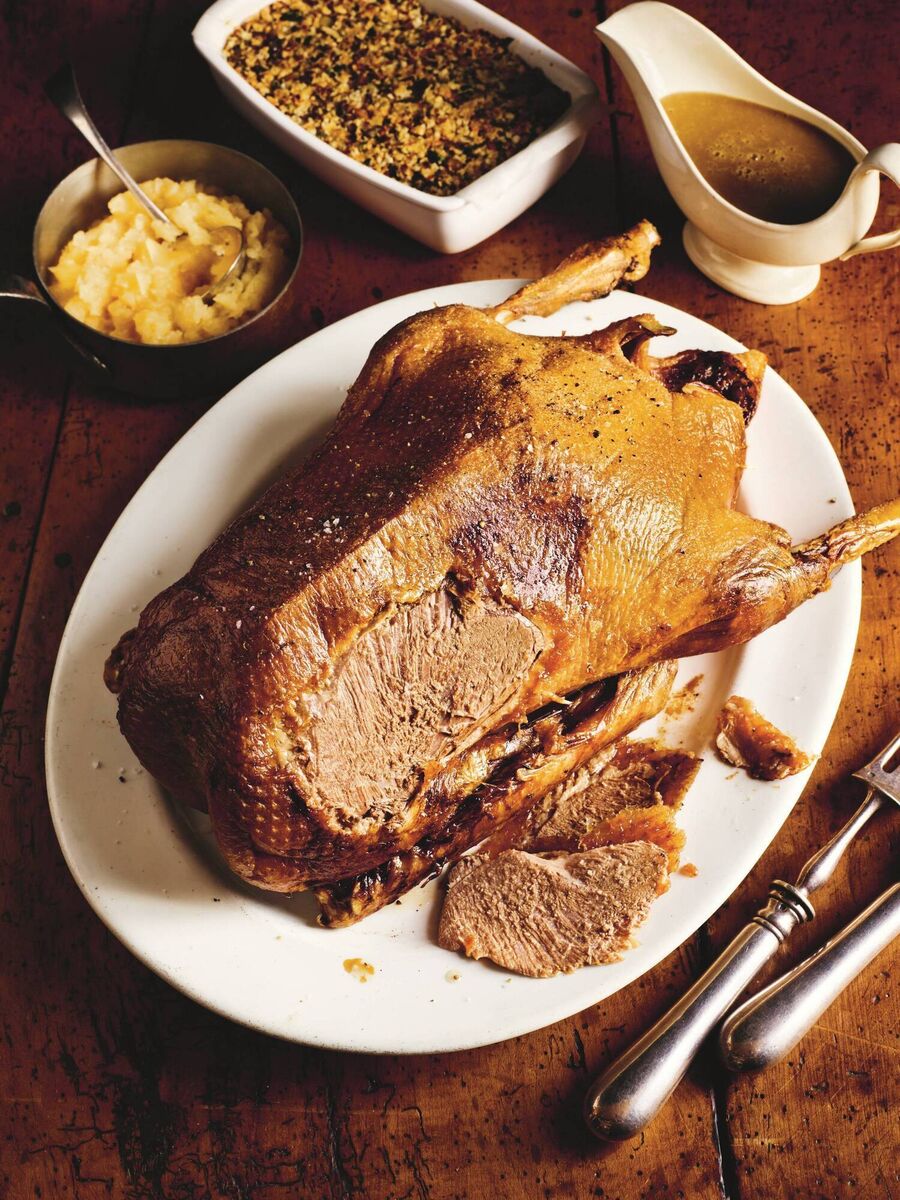
“I have probably enthused about goose elsewhere but for me, the great benefit is the roasted skin and delicious fat,” says TV chef Rick Stein.
“I often think it is more like roast beef than poultry.”
- 4.5-5kg oven-ready goose
- Salt and black pepper
- Sage and onion stuffing
- 3 large onions, finely chopped
- 75g goose fat
- 200g fresh white breadcrumbs
- 200g vacuum-packed chestnuts, chopped
- Finely grated zest of 1 lemon
- 4tbsp chopped fresh sage
- 3tbsp chopped parsley
- 1 large egg, beaten
- Oil, for greasing
- Salt and black pepper
- Stock/gravy
- 4 rashers of streaky bacon, chopped
- Goose giblets
- 1 small onion, chopped
- 1 carrot, chopped
- 2 celery sticks, chopped
- 2 bay leaves
- 6 black peppercorns
- 2 heaped tbsp plain flour
- Apple sauce
- 4 Cox’s apples, peeled, cored and sliced
Method
1. Preheat oven to 220C/Fan 200C. Remove any clumps of fat from inside of goose cavity, put into a pan and leave over a very low heat until melted. Pass the fat through a fine sieve into a bowl. Season the goose inside and out with salt and place it on a rack set over a large roasting tin. Roast for 30 minutes. Remove from the oven and lower the temperature to 180C/Fan 160C.
2. Lift goose on to a board with 2 wooden spoons (you don’t want to pierce the skin), pour off excess fat from the roasting tin then replace the goose on the rack. Keep the fat for future roast potatoes.
3. Put goose back in oven and roast for a further 1-11/2 hours, or until the juices run clear when the thickest part of the thigh is pierced with a skewer and the temperature of the meat when probed in the thickest part of the thigh reaches 66˚C for a minute.
4. To make giblet stock for the gravy, fry bacon, giblets and vegetables in a little goose fat until golden brown. Pour off excess fat, add 1.2 litres of water, the bay leaves and peppercorns and simmer for 1 hour. Strain through a sieve and set aside.
5. For stuffing, fry the onions in about 75g of goose fat until soft and very lightly browned. Put breadcrumbs, chestnuts, lemon zest, sage and parsley in a bowl, add onions and season with salt and pepper to taste. Stir in the beaten egg to bind the mixture together. Spoon the stuffing into a well-greased terrine dish or loaf tin, cover with a lid or foil and set aside to cook later.
6. For apple sauce, put the prepared apples into a pan with 100ml of water, simmer for 12-15 minutes, stirring now and then, until soft. Season the sauce with a pinch of salt and keep it warm.
7. When goose is cooked, lift it on to a board, cover it with foil and leave it to rest for at least 20 minutes. Put the stuffing in the oven and cook for 25-30 minutes.
8. Pour off most of the fat from the roasting tin, leaving about a tablespoon. Set tin on hob, stir in flour and cook for a couple of minutes. Add giblet stock and deglaze the tin by rubbing the base with a wooden spoon. Simmer for about 10 minutes, then taste to check the seasoning. Pass the gravy through a sieve into a warm gravy boat.
9. Serve the goose with the stuffing, apple sauce and gravy, plus roast potatoes and vegetables.
Christmas is the perfect for canapes and champagne.
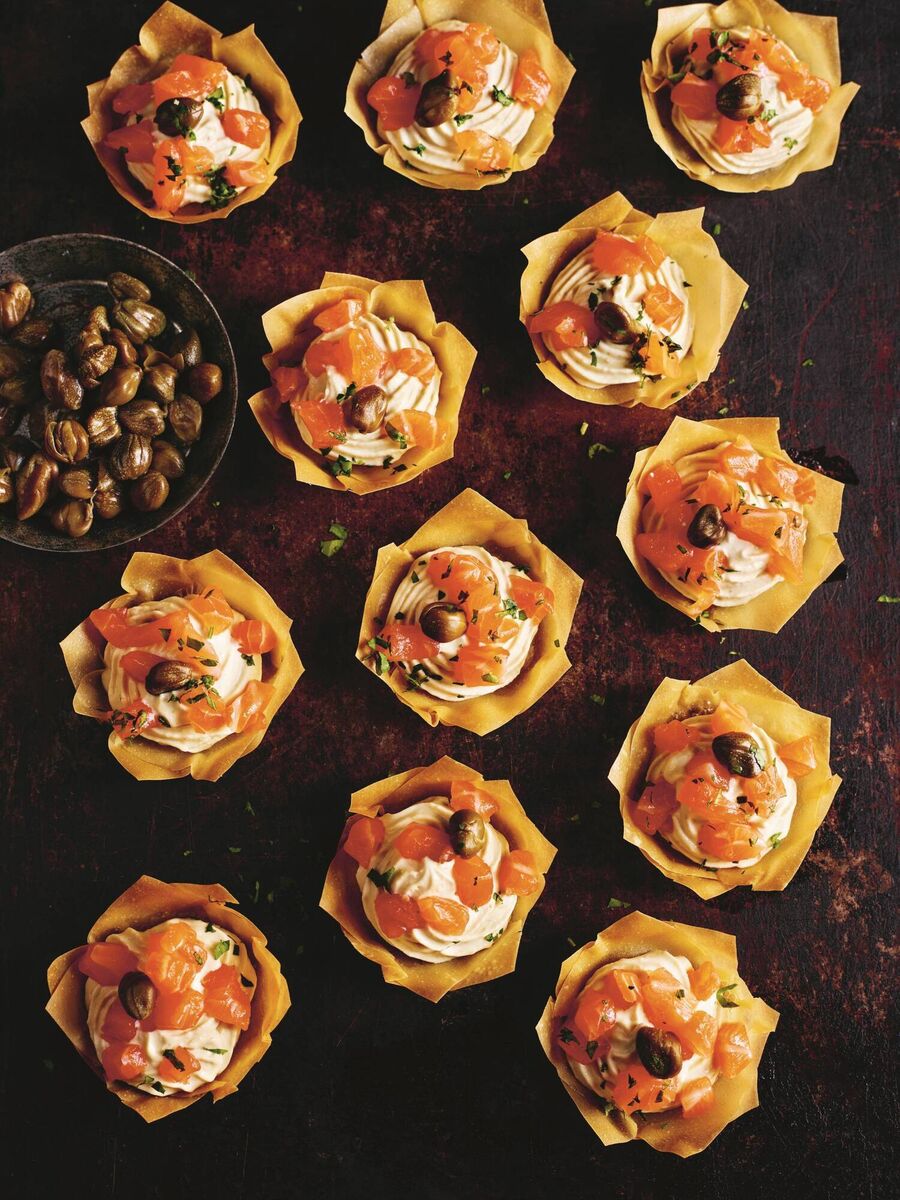
“I do think that cold canapes need plenty of what I can only describe as oomph and the oomph in this case comes from wasabi and white miso,” says TV chef Rick Stein.
“My son Jack introduced me to the glory of Japanese fermented soybeans in all their different guises and white miso is perfect for these tartlets as it is pale. I recommend large filo sheets.”
- 2 large sheets of filo pastry (about 45 x 25cm)
- 30g butter, melted
- 150ml double cream
- 11/2tsp white miso paste
- 1-2tbsp wasabi
- 80-90g raw salmon fillet, skinned and pin-boned
- 24 capers
- Sea salt
Method
1. Preheatoven to 180C/Fan 160C. You’ll need a 24-hole mini muffin tin.
2. Lay sheet of filo on board, brush it with butter, then cut the pastry into 5cm squares. Place a square into each of the 24 holes in the tin, pushing it down well. Repeat with the second sheet of filo, this time placing the squares in the tin at right angles to the first squares to create attractive star shapes.
3. Bake for 5-6 minutes until crisp and golden brown, then leave to cool. You can store the baked cases for up to 24 hours in an airtight tin.
4. For wasabi cream, whip the cream very lightly until it is only just beginning to hold its shape - it will thicken when you stir in the seasoning. Fold in miso paste, add a tablespoon of wasabi and taste, then add more wasabi according to your heat preference. Set aside.
5. About 30 minutes (or less) before serving, cut the salmon into small pieces. Spoon or pipe a teaspoon of the cream into each filo cup, then top with a piece of salmon, a caper and a sprinkle of sea salt.
These pavlovas have a winter twist.
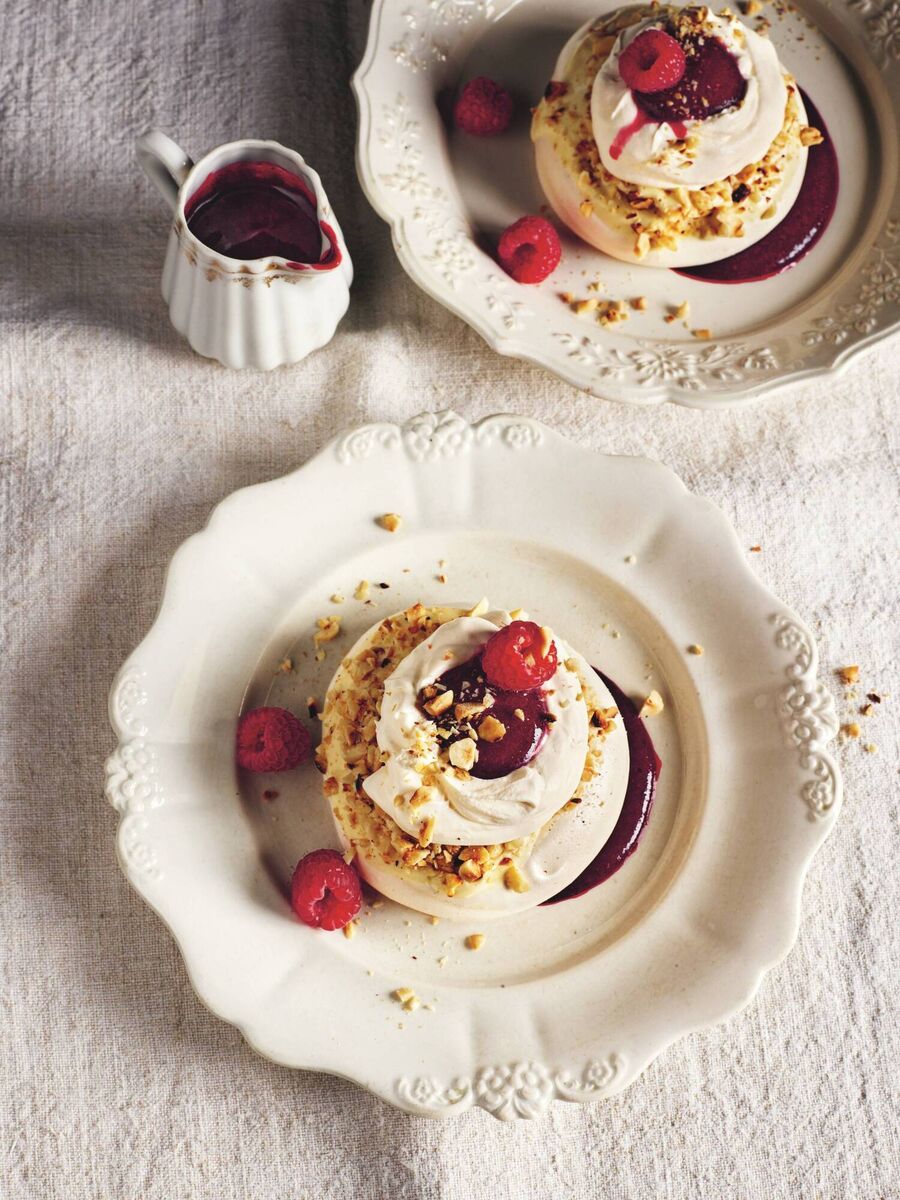
“I am a bit of a purist about pavlova,” says Rick Stein. “As it is one of Australia’s classic dishes, I feel it should be made with something exotic like passion fruit, but when Andrew Sullivan, pastry chef at The Seafood Restaurant [in Cornwall], made these I was very taken with them. I asked for the recipe, which was for about 50 portions of a lovely seasonal dish using cobnuts and damsons.
“I have cut it back to a more manageable eight servings and made it suitable for winter by using hazelnuts and frozen berries. Thanks, Andrew.”
For the meringues:
- 4 medium egg whites
- 220g caster sugar
- 2tsp cornflour
- 1/2tsp white wine vinegar
For the berry sauce:
- 500g frozen Black Forest berry mix, defrosted
- 2-3tbsp icing sugar
To serve:
- 75g blanched hazelnuts
- 150g white chocolate
- 500ml double cream
- Fresh raspberries or blueberries
Method
1. Preheat oven to 120C/Fan 100C. Line 2 baking sheets with baking paper.
2. In a clean, grease-free bowl, whisk egg whites until they form soft peaks. Gradually whisk in the caster sugar, cornflour and vinegar and continue to whisk until mixture is thick and glossy and the beaters leave a thick ribbon trail in the mixture.
3. Spoon meringue mixture on to the sheets to form 8 round nests about 10cm in diameter. Place in the oven and cook for about 11/2 hours or until the meringues are crisp and dried out. Leave them in the switched-off oven to cool completely.
4. For the berry sauce, blitz fruit and sugar in a food processor, then pass it through a sieve. Store in the fridge until ready to use. It will be fine for up to 2 days if you want to prepare ahead.
5. Add nuts to a hot dry pan and toast for a minute or so until they’ve taken on a little colour. Watch them carefully so they don’t burn. Chop the nuts and set them aside in a bowl.
6. Melt the white chocolate in a bowl over a pan of simmering water.
7. When meringues are completely cool, dip each into melted white chocolate then into the bowl of chopped nuts. Set aside to cool on a wire rack.
8. Whip cream until it holds its shape. Spoon a tablespoon of berry sauce on to each plate and top with a teaspoon of the cream, then place a meringue, nut side up, on top. Spoon some cream on to each meringue and use a clean measuring spoon to scoop a hollow in each dollop of cream. (Dip the spoon in water between each plate to get a clean scoop.) Spoon a little berry sauce into the hollow and top with a fresh berry and a few more nuts. Serve immediately.







 App?
App?


