Cork's Mary Crilly: 'How dare landlords take advantage of vulnerable people'
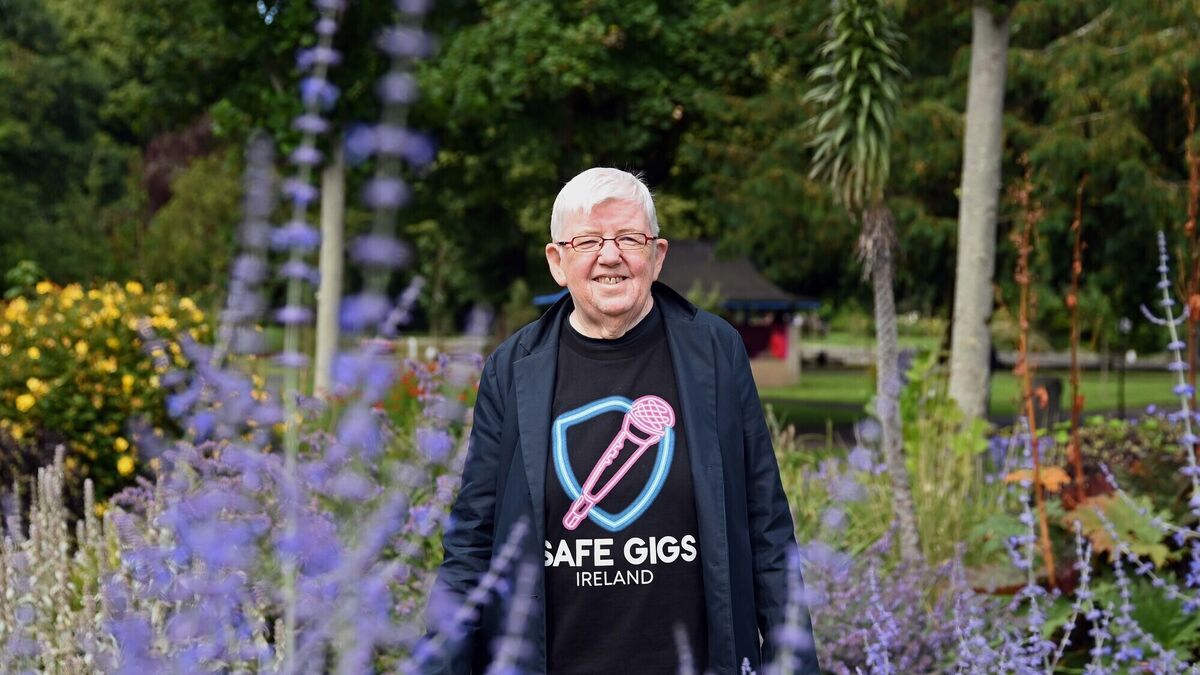
Mary Crilly, Cork Sexual Violence Centre. Picture Denis Minihane.
THE founder and chief executive of the Sexual Violence Centre in Cork, Mary Crilly, welcomes the release of the ‘Sex for Rent’ (SFR) report.
The National Women’s Council (NWC) report details the sexual exploitation and sexual harassment experienced by tenants in the rental market in Ireland.
Launched last week, it comprises both national and international research, alongside selected expert interviews, and unique data gathered through the monitoring of online sites. The expansive damage caused by this particular kind of abuse is detailed in the report.
Orla O’Connor, director of the NWC, describes sex for rent as “damaging, degrading, and dehumanising for women.”
“This is nothing new,” says Mary Crilly, speaking to The Echo in her office on St Patrick Quay.
“This has been going on for years. Prime Time did a great documentary a couple of years back in which you can see men blatantly suggesting a tenant pay them back for accommodation in certain ways – as if providing accommodation is doing someone a huge favour.
“I was glad to see (Irish Examiner) journalist Anne Murphy getting a mention in the report too as she is the only journalist in the country who really stuck with it and kept it in the public consciousness.”
Ann, previously of The Echo, was bestowed with a prestigious Justice Media Award from the Law Society of Ireland in 2020 for her work in relation to the SFR scandal.
A worsening problem
The report refers to the feminisation of homelessness, as it is mostly women who find themselves in the most precarious situations because, in Ireland, like in most EU countries, housing cost overburden is higher for women than men.
While the exploitation explored in the report is not new, and is most certainly widespread, what is new, according to Mary Crilly, is the prevalence of the problem.
“There are simply more and more people now who are very vulnerable. The situations people find themselves in, often people from outside Ireland, are awful…
People sharing rooms, renting a bed beneath a stair… Ultimately it comes down to a landlord’s accountability and what they get away with. That’s what we need to tackle.
The lack of security for the tenant is horrendous, she explains. The property market plays a part, as do the informal, unregulated agreements vulnerable people find themselves making out of desperation. And this is where most of the problems arise.
Precarity
The report places considerable emphasis on renters who are legally considered licensees as opposed to tenants.
Sex is suggested as recompense when renters seek to rent a room from a landlord under a license agreement, as opposed to a self-contained dwelling which would be covered by the Residential Tenancies Act (RTA). The tenant is thereby left without the usual protections. One recommendation is to bring these agreements under the umbrella of such legislation.
“The truth is that even if a tenant agrees to have relations, it is no guarantee that they will be able to stay. The landlord may very well decide to move on to someone else.
It makes me so angry that young women and young men are being taken advantage of by people with money and property. Those people could do the decent thing and help them out, instead they behave towards them in ways that are humiliating, degrading and abusive.
There is also a growing imbalance of power in the sector.
“More and more landlords have a huge amount of accommodation,” explains Crilly.
“We need far more regulation and legislation than we have currently. Landlords must police one another. They must get onto people who are being abusive and confront them. It is the culture that must change. It’s the same with the guy who will tell his pals about the drunk girl he took advantage of the night before. We know he will tell his pals. We need to work on their responses to him.”
Changing Culture
According to Ms Crilly, who has fought and campaigned against sexual abuse and harassment for decades, people know what’s going on.
“These tenants have no lease so they have no security. They are being offered a bed for a few hundred euro a week. It’s all word of mouth.
People know the difference between a private house and a rented property. People need to speak up about it.
“People will know in a community if someone is declaring two bedsits but is actually profiting from eight. We do plenty of monitoring for Air B&Bs; we need to do the same across the market.”
The stories
The stories Mary has heard over the years range from people being forced to field the unwanted attentions of landlords, to highly vulnerable tenants becoming confused about the nature of their relationship.
“Some of these people are extremely vulnerable and scared. They are also very lonely, and they might start to imagine they are in a type of relationship.
They might nearly welcome the attention. How dare landlords take advantage of these vulnerable people. Everyone deserves somewhere safe to sleep. The law must change to protect people.
This is at the core of why Mary welcomes the research released by the NWC. It details how women in extreme housing difficulty are being forced to make a choice between sexual exploitation and homelessness. People need to be aware of the problem to tackle it, she says.
Recommendations
The report recommends that landlords engaging in sex-for-rent exploitation, or indeed even suggesting it, should be criminalised. It calls for an extension of protections for renters and the need to place legal pressure on the online platforms to filter out ads with any suggestion of sex for rent.
Furthermore, it advises that women who are victim-survivors of SFR exploitation receive supports from frontline services who must be better-equipped and better-informed to tackle the issue.
For Mary Crilly, this research successfully combats any lack of belief that this is happening in Ireland. It raises awareness in a way that might contribute to changing the culture.
Feargha Ní Bhroin, NWC’s Violence Against Women Officer and author of the report, echoes much of what Mary has to say, and highlights the issues of women being affected by SFR.
“Sex for rent exploitation is gendered. It is overwhelmingly women who are impacted, and it is mostly men in privileged positions relative to the women – they have housing and the victims do not – who are carrying it out.
“At its root is the intersection of the housing crisis with a general context of gender-based violence.
It primarily affects women who are renting a room in a house, as opposed to own-door accommodation, so they enter a situation of living with their predator, and these renters do not have the protections granted to other tenants.
"The two-tier rental system. where some renters are protected by law, but others are not, must end.”







 App?
App?


