I am so grateful to have been there for Sinéad’s private funeral
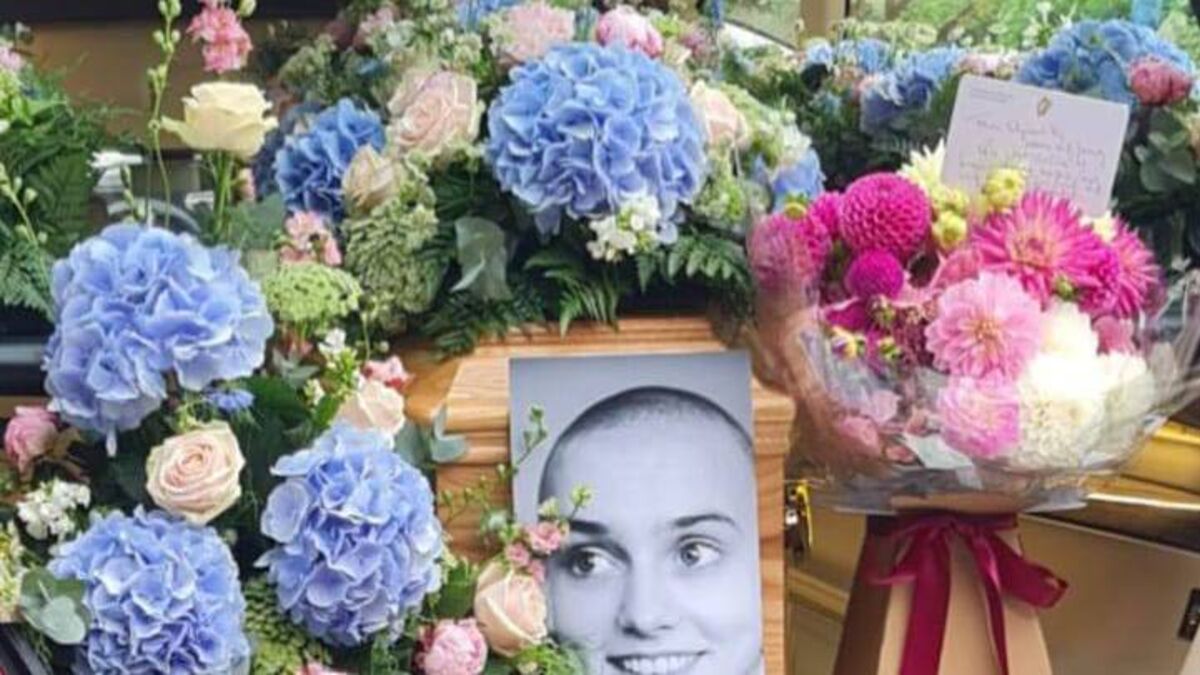
Flowers and tributes to Sinead O'Connor.
FAHMEDA Naheed, who lives in Blackpool in Cork city, has much in common with the recently deceased Shuhada Sadaquat, known to most of us as the iconic singer Sinéad O’Connor.
Like Sinéad, she is a Muslim woman, a mother, and a person committed to social justice.
Last week, she was invited to attend Sinead’s private funeral. She sat with me to share her experience of the special event and what it meant to the Muslim community here.
Fahmeda was deeply saddened by the death of her sister, she begins. She explains that when somebody enters the Muslim faith, everybody is ‘akhwa’, meaning brother or sister.
“The Muslim faith is like a connection as one body. When a fellow Muslim feels pain, the rest of the body feels it. Before I was invited to attend the funeral as a representative of the Muslim community in Ireland, I was deeply upset and teary. I couldn’t sleep. I spoke about Sinéad on my show, which I co-host with ex-Lord Mayor Chris O’Leary on Cork Community Radio.
I felt such a spiritual connection with her and her pain. And then the phone call came.
The choice of Fahmeda seems an obvious one in retrospect, given Sinéad O’Connor’s deep commitment to both her faith and her activism. Fahmeda currently works with Doras on the SALAAM (Sustainable Alliance Against Anti-Muslim Hate in Ireland) project. She is the founder of the Irish Pakistani Community of Cork Group, which is the winner of the Lord Mayor Community Award 2023 under the category of Social Inclusion, Advocacy and Integration.
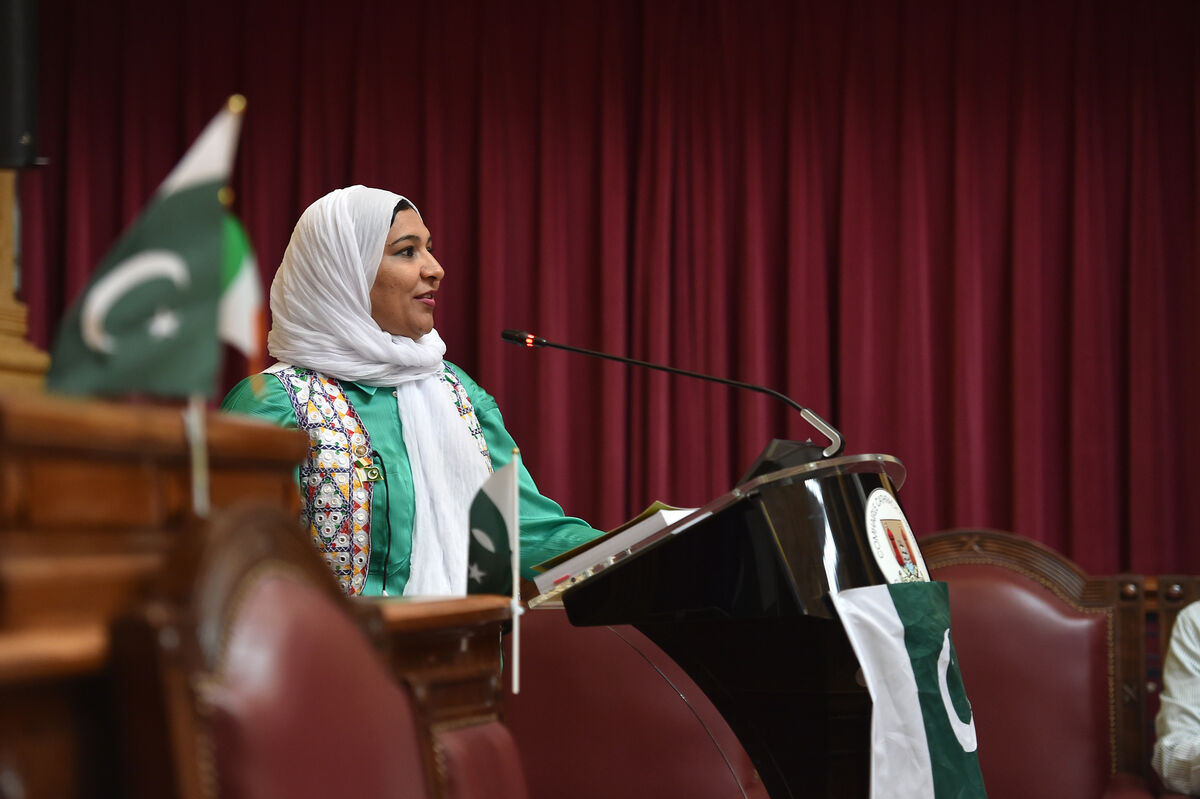
Making the Trip
“I had been following Sinéad ever since she converted to Islam in 2018. I have lived in Ireland for 14 years and I come across so many Muslim people who suffer discrimination here.
“Sinéad becoming a Muslim was really important and significant. The fact that she covered was also very important. She meant a great deal to us and I feel very privileged that I saw her and touched her beautiful hands.”
Initially, the Cork-based activist worried she might not be able to make the funeral when she got the call on Monday.
“I had never been to Wicklow before and I just couldn’t figure out how to get there, but I felt so disappointed when I imagined not attending that I eventually made a plan and found a route, travelling by bus to Dublin and then getting a bus to Bray.
I am so grateful to have been there. Her family were so lovely, her brother and sister, her father, her children.
"It was such a bright day. No rain. I had always had a spiritual connection with her but then I also got to have a physical one when I touched her hand.”
Fahmeda echoes the published eulogy of Dr Umar Al-Qadri, Chief Imam, who performed the funeral prayers. Like her, he praised the family of the deceased for their inclusion of members of the Muslim community in the private ceremony.
“Your remarkable openness,” he wrote, “your boundless magnanimity, and your genuine inclusivity have touched the lives of countless souls, uniting us all in this sacred farewell. As I stand here today, I am reminded of your profound wisdom and the profound impact of your inclusive spirit.”
Deep respect
A poet as well as an activist, Fahmeda shared her admiration and respect for the activist and singer through a poem she shared online, describing Sinéad as a “solo performer on the stage of oppression”. In the poem, she calls Sinéad a martyr and explains that in Islam martyrs never die. And that she will continue to exist in every positive change - “all revolutions, in lyrics, faiths and in the fragrance of flowers”.
Fahmeda said: “She was not afraid to say what was right and what was wrong. Her words and actions distinguished between them.
She was also a mother like me and showed how women need to be supported in their mothering.
That saying, it takes a village to raise a child, is so true, but what happens when the village doesn’t turn up? Sinéad asked for help and it didn’t come. She reminded us that it is everyone’s responsibility to help, not such services.”
Things have not improved since Sinéad ripped up the photo of the pope 40 years ago, she continues.
“If anything, they have disimproved. She was the voice of millions of people. Child abuse is a stigma in every community and even close family members avoid talking about it. She called people out for their judgementalism. Women suffer from negative classifications all the time and I see how Muslim women are affected by seeing the racism their children endure.”
This discrimination is partly why attending Sinéad’s funeral meant so much to her.
“There were thousands of people mourning in Bray and they saw me, a covered Muslim, being invited to the private ceremony.
People loved Sinéad so much. Perhaps they might also learn to love a non-white, covered woman like me too.
She noticed a change in people’s behaviour towards her on the day of the funeral.
“When I was coming back to Cork on the train, the ticket collector came up to me. I was rummaging around for my ticket but he wanted to talk to me about the funeral. He had seen me there.
“And on the bus from Bray two nuns approached me and said how happy they were that Sinéad finally got to where she needed to be in her journey of faith. It was so moving to feel their respect and I wanted to share the experience of it all with my community. That’s why I wrote the poem.”
Connection of faith
She explains that her connection with the deceased artist and activist goes beyond love as it is a connection of faith. She hopes that we all carry Sinéad’s messages with us into the future.
“She is our sister because of our religious bonds. She spoke openly about mental health and abuse. She reminds us to believe the victims of abuse, not to judge or silence them. She reminded us of the importance of an open dialogue in society about what matters. I will work 24/7 on these issues because I am self-motivated and Sinéad reminded us that every individual can make a difference. She is a symbol of intercultural harmony.
“Migration is a new thing in Ireland. The Irish people accepted her and my hope is that all Muslims will be accepted. We must all respect the boundaries of everyone else. Everyone has a role to play.
“We must all have a hearing ear. On the world stage, every little performance is important. Every tiny drop contributes to the river.
This is what Sinéad wanted. For every individual to take responsibility.
Both women, both Muslim, both mothers and activists.
Fahmeda Naheed’s parting words have the ring of a challenge to them.
The question hangs in the air: will we each play our part?




 App?
App?


