Cork centenarian: 'I have an iPad, and everything is on it – I hardly turn on the TV at all'
Joe Davis is one of 1,200 people in Ireland who lived to see their entries in the 1926 Census published earlier this year. He tells BARRY ROCHE about his memories of growing up in Cork, playing with the Barrs, and life at Dunlop.
Cork centenarian: 'I have an iPad, and everything is on it – I hardly turn on the TV at all'

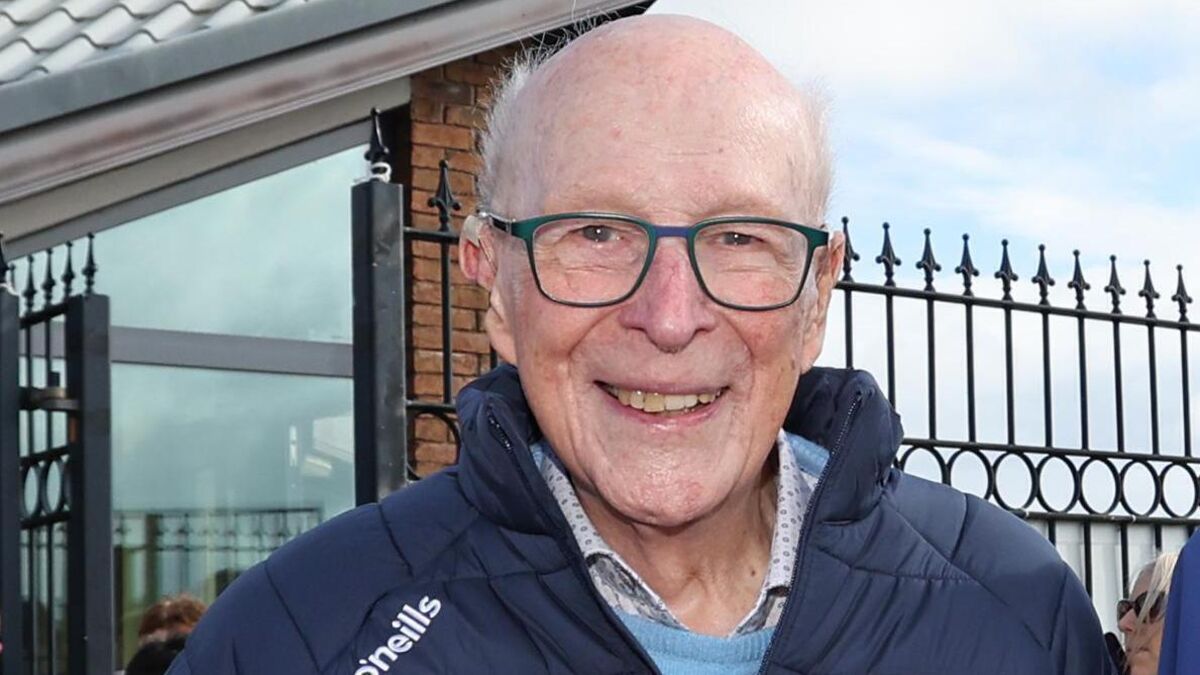
Joe Davis, St. Finbarr's GAA's oldest surviving player at 103 years old.  Picture: Jim Coughlan.

He may not quite remember his actual birth but, despite being almost as old as the Irish state, 103-year-old Joe Davis gives it a damn good shot as he recalls just when exactly he was born in a city that had borne the brunt of both the War of Independence and the Civil War.
But the fight that he uses as reference point for his entry into the world at his family home in Cork - “that was the style at the time” - was not a firefight during the Civil War, which was still raging, but rather a boxing match in Dublin that made headlines around the world.

“I was born on March 19, 1923 – it was a Monday, and I know it was a Monday because on Saturday, March 17, a boxer from Clare called Mike McTeague won the Light Heavyweight title in Dublin when he beat the world champion, the Battling Siki who was from Senegal.”

The intervening ten decades have not dimmed Joe’s recall as he tells how he grew up on The Crescent, off Gardiner’s Hill, in St Lukes with his parents, Frank, who was from Co Wicklow, and Anne, who was from Co Laois, and his older sister, Vera, and younger brother Frank.

Tragedy struck the family when Joe was just four and his father, who was a clerk, died suddenly, leaving his widowed mother to raise three young children. She became a seamstress to support herself and her children, even though times remained tough for the family.

“I remember my mother telling me later about the pressure on her as a single mother because there was no social welfare at the time, and she decided she had to earn a living herself and she became a dressmaker, and she became a very good one.

“And then when Frank was 12, he joined the Christian Brothers and we didn’t see him for six years but Frank going away saved us from being taken from my mother because we were at risk of being taken and sent to the poorhouse at St Finbarr’s Hospital if she couldn’t support us.”

Joe went to school in the North Mon and he recalls “the tidy step” he faced every day down the Fever Hospital steps onto Leitrim Street and up by Denny’s bacon factory on Watercourse Road before he later got a bicycle which shortened his journey considerably.

“Everything was done in Irish in the North Mon in my day, including Latin and chemistry and physics – it was a good school in terms of getting an education, but it was a tough environment for a young fellow because, of course, corporal punishment was allowed at the time.”

Describing himself as “a middle of the roader” who steered clear of trouble, Joe nonetheless took part in what must have been a remarkable event in Irish education at the time when he and his classmates went on strike over a pupil being suspended from the Mon.

“We were in third or fourth year, so I’d say we were about 15, and one of the Christian Brothers picked out one of the boys in the cloakroom for a punch, and the fellow, punched him back and he was suspended immediately for two weeks.

“We felt it was wrong because the brother was a sadist, so we went on strike – we went into class, but we didn’t do any work for any of the teachers, and I think it was later that same day, the Brother Superior knew the brother was out of order, and he allowed the lad back into school.”

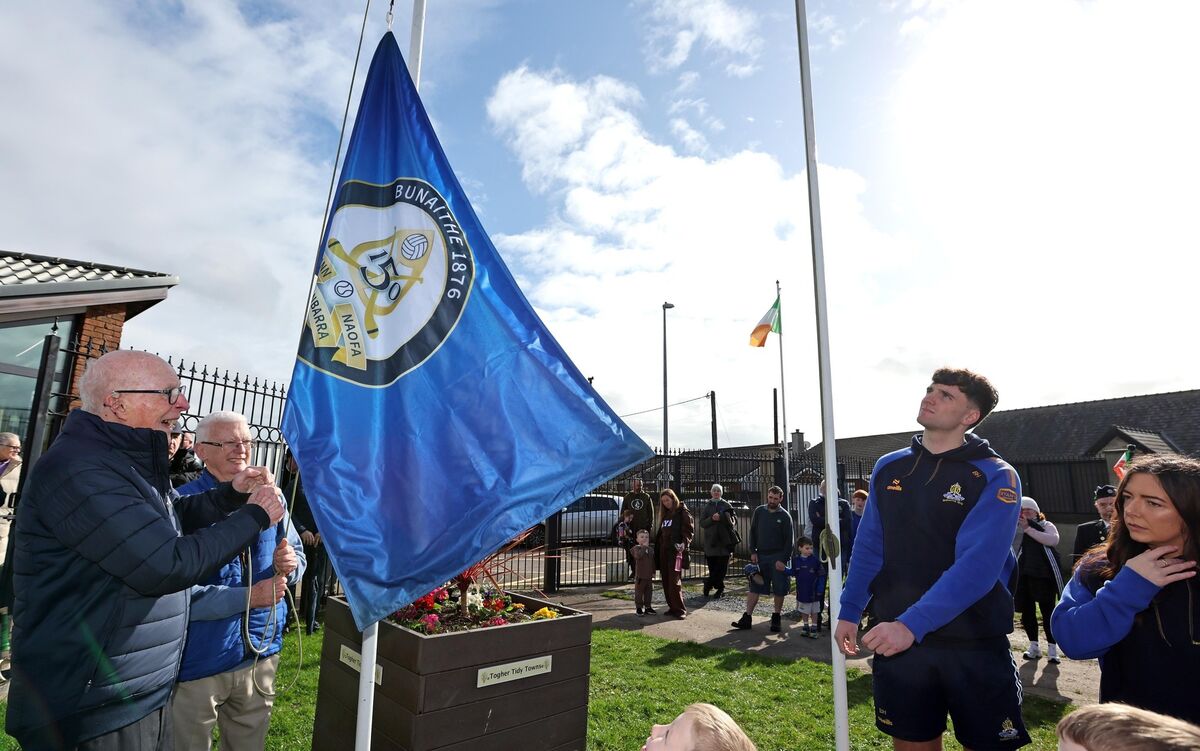
Raising the flag is Joe Davis, St. Finbarr's Gaa oldest surviving former player at 103 years old in the middle of March, with Brian Hayes and Stephanie Punch, St. Finbarr's Senior players.Picture: Jim Coughlan.

A keen sportsman, Joe played minor hurling with St Finbarr’s, lining out at right half back on a team that won three minor county championships in a row, and his love of hurling saw him attend the famous Thunder and Lightning All Ireland Final on September 3rd, 1939.
“I was in Croke Park that day – we had relatives in Kilkenny, and we had travelled up by train from Ballyraggett to Dublin and word came through that the British Prime Minister, Neville Chamberlain, had declared war after Germany invaded Poland – World War II had started.

“Croke Park wasn’t developed at all at that time – the Hogan Stand was there, but it was quite small. It was a terrible day with the thunder and lightning, and you could hardly see the players with all the rain, and we were soaked on the bank – the game would be abandoned today.

“Jack Lynch was captain and Cork got two 21-yard frees, and he went for a goal each time, and the shots were stopped – he should have taken his points – the match was a draw at the time, and Kilkenny went up the field and a fellow called Jimmy Kelly scored a point to win it for them.” Notwithstanding Lynch’s misses that day, Joe reckons Lynch, who was a few years ahead of him in the Mon, was one of the finest hurlers he has ever seen along with his Glen and Cork teammate Christy Ring while he also singles out a few other Cork men for notable mention.

“The Glen won eight counties in a row, 1934 to 1941, and Ring was on the 1941 team – he was a great hurler because he wasn’t afraid to mix it – he didn’t protect himself – Mick Mackey was the same, he never protected himself on a solo run and fellows coming at him from all angles.

“There were some marvellous hurlers in Kilkenny too – Cork and Kilkenny ruled the roost at the time with Tipperary occasionally featuring, but I saw Lowry Meagher of Kilkenny play down the Mardyke around 1936 and he was a magnificent hurler.

“I played minor with the Barrs with Mick Kennefick and Sean Condon, who both captained Cork during their Four in a Row from 1941 to 1944 – I was at those games - Mick Kennefick was a tremendous hurler and Sean Condon – he was poetry in motion and a lovely lad as well.”

The oldest member of St Finbarr’s GAA club, Joe remembers a time when the club had no permanent pitch and used to train by the Lough before later playing matches near the Society of the African Missions in Wilton while their clubhouse was a cottage on the Bandon Road.

Joe was honoured to be asked to raise the flag on February 1, 2026, to mark the 150th anniversary of St Finbarr’s at a ceremony at Neenan Park, named after Connie Neenan, who persuaded Joe to join the club’s hurlers after he saw him playing football for Lees.

Part of the Barrs’ 1939-1941 minor winning championship team, Joe never played senior for the club as life intervened, when, after serving in the Local Defence Force, he joined Dunlop at the age of 20 to become a tyre builder, and the shift work hindered his ability to train with the team.

“I never played senior with the Barrs even though I was asked to, but it would have been impossible with the shift work – you did eight-hour shifts over three weeks, so you did mornings, afternoons and evenings, and then nights, and I joined there in 1943 so it was the war years.

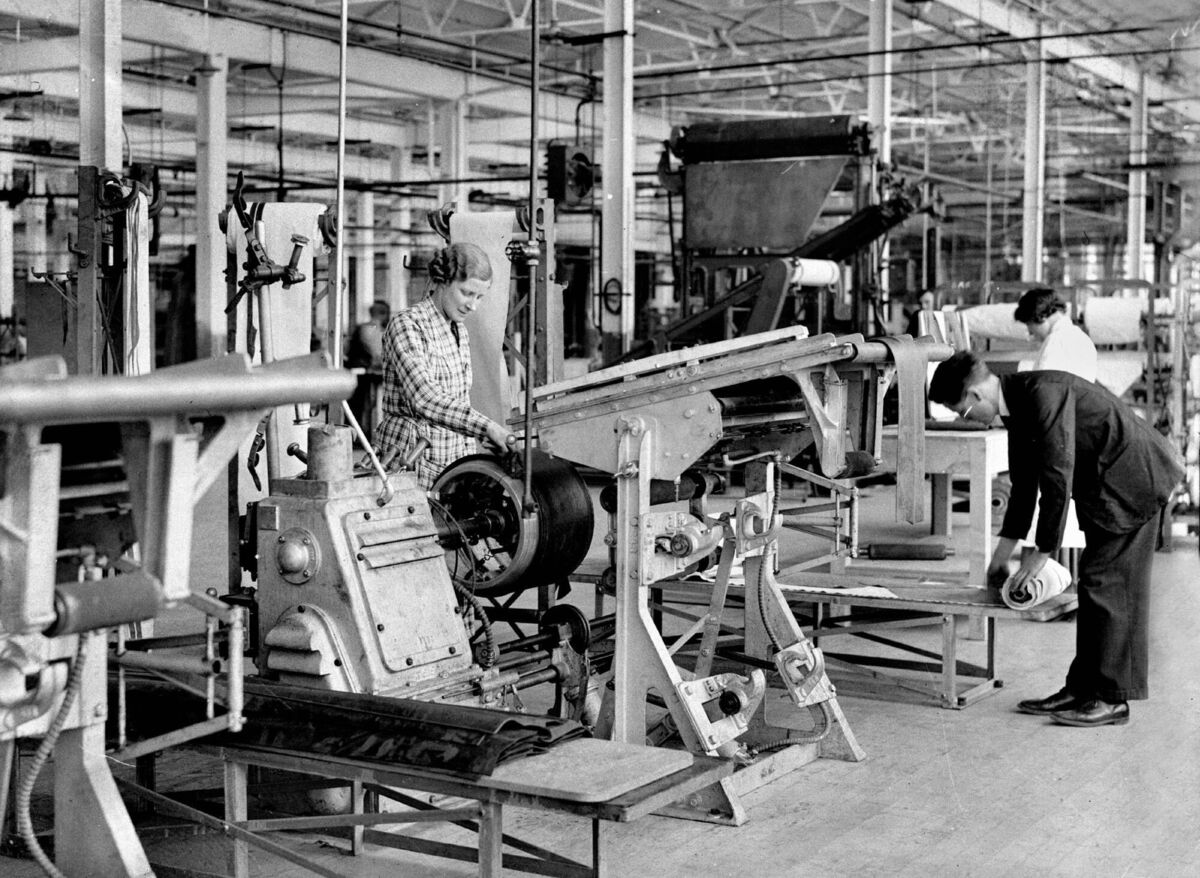
“I went in on the factory floor as a tyre builder – I was making truck tyres for moulding for the British army during the war – you were paid by productivity – I used to make 21 tyres every shift, which was good going – it was hard work, but I was fit and strong from all the hurling.”

After two and a half years on the factory floor, Joe impressed management so much that he was promoted – the first in a series of promotions that saw him rise all the way to the top in the Cork plant, becoming managing director before he retired from the company in 1984.

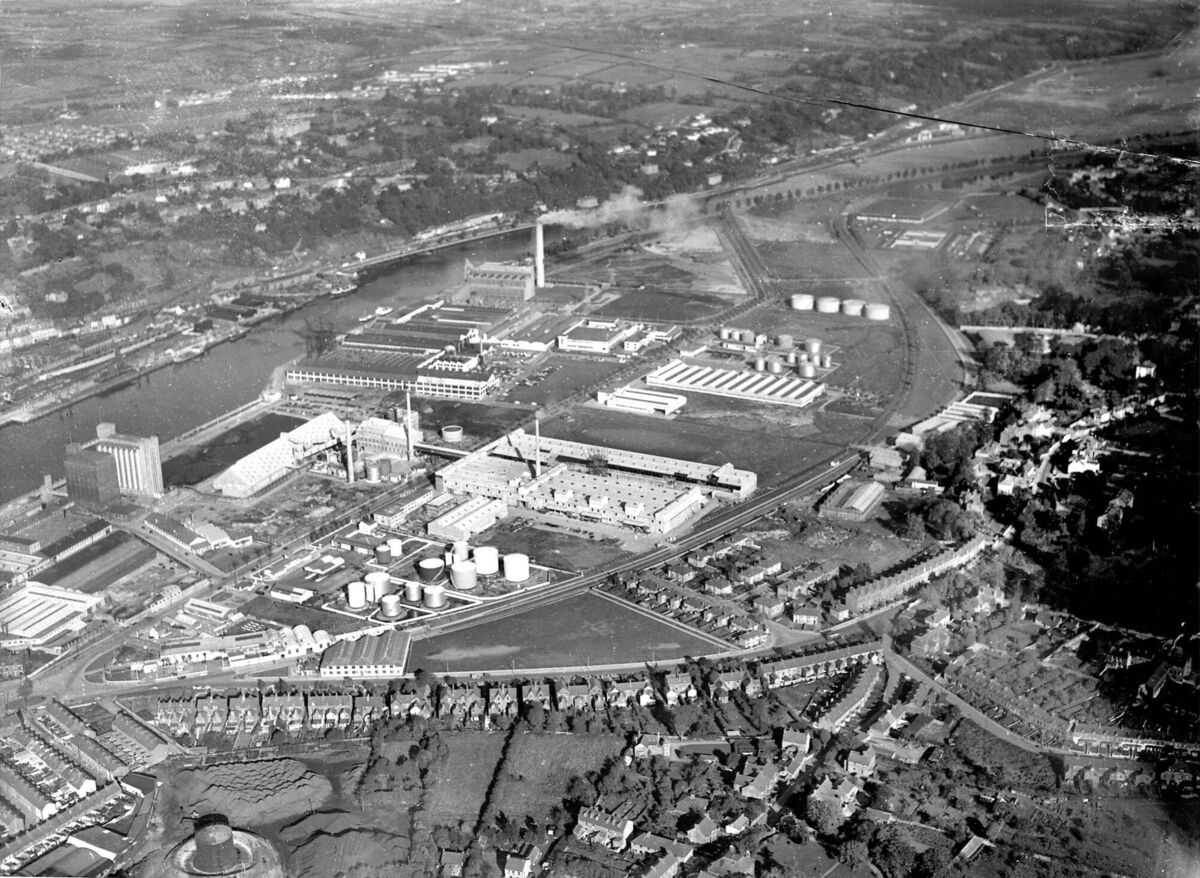
An aerial view of Cork showing the Marina, Monahan Road and Ford and Dunlop factories in 1960. 

Joe’s memories of his years at Dunlop are happy ones, as he recalls the plant, which opened in 1935, was a significant employer on Leeside as they manufactured not just tyres for cars, bikes, trucks and tractors but also Wellington boots, hot water bottles, and golf and tennis balls.

“There’s no doubt, but Dunlops was a very unique place – it was a marvellous place to work – at one point, there were the best part of 1,000 men and 1,000 women working there because we made footwear and Wellingtons as well as tyres.

“Because I had worked on the factory floor, I knew nearly all the men and most of the women too – they were fantastic people - we had people from all over the city working there, but we had people coming in from the county too, from Macroom and Fermoy and Midleton and Youghal.”

Joe’s career with Dunlop saw him leave Cork for a period, working for a time in the UK and also in India in the early 1960s, where he managed a plant for Dunlop, in a town called Sahaganj, just north of Kolkata, and later another plant in Ambattur, a town near the former city of Madras.

“It was very humid and clammy in Sahaganj because you are in the delta of the Ganges – I was dressed in whites, but if I went through the factory, I would have to go home and change from the sweat – Madras, it’s now called Chennai, was even warmer but dry, and the Madras people were lovely.”

Employees of the Dunlop rubber factory, the Marina, in 1935. 

At this stage, Joe was married with children, having met his wife, Pat Murphy, from the Old Blackrock Road, in 1947 while on a day trip to Gougane Barra in West Cork with some friends. Romance blossomed, and they enjoyed almost 60 years of married life together.
“We were going to Gougane Barra – a friend of mine, John Hayes, organised two taxis – there were about ten of us altogether and we went into Cronin’s Hotel, and John was doing a line with Pat’s sister – it was Pat’s 21st birthday, and he introduced me to Pat.

“I remember there was a ceilí on in a barn, a tin shed there, and we went to the dance and got on well and we took it from there – we got married in the South Parish Church on September 6, 1955, and we had our wedding breakfast in the Maryland in Crosshaven with just 30 guests.”

After returning to Cork from India, Joe, now father to Carl, Jean and Ruth, was in the UK in 1983 when Dunlop closed, and he admits he was glad not to have witnessed the gates shut on the plant for the final time given it had been such a vital part of Cork’s economic life for almost 50 years.

“Dunlops had five plants between Ireland the UK – one in Scotland, one in Liverpool, one in Durham, a headquarters in Birmingham and Cork and they shut three of the five. I wasn’t in Cork when they closed the Marina, thank God, because I had spent most of my working life there.”

A founder member of Belvedere hockey club in 1945 and a keen golfer playing off 12 at Douglas Golf Club, Joe remained active after retirement and, encouraged by Pat, who was always hugely supportive, he obtained a BA in Economics and Archaeology from UCC in the early 1990s.

“Pat insisted I go to university after I retired because I had no degree –I was in my 60s at that stage, and the economics was no bother to me because I was always a numbers man, but I loved the archaeology, but it was Pat should have got the degree because she was a fantastic help.”

Widowed since Pat died in 2014, Joe was a smoker until his 40s with two packets of Churchman cigarettes in his pockets, but he doesn’t offer any secret for his longevity, though he reveals that while he only drank tonic water for years, he now enjoys a glass of red wine every evening.

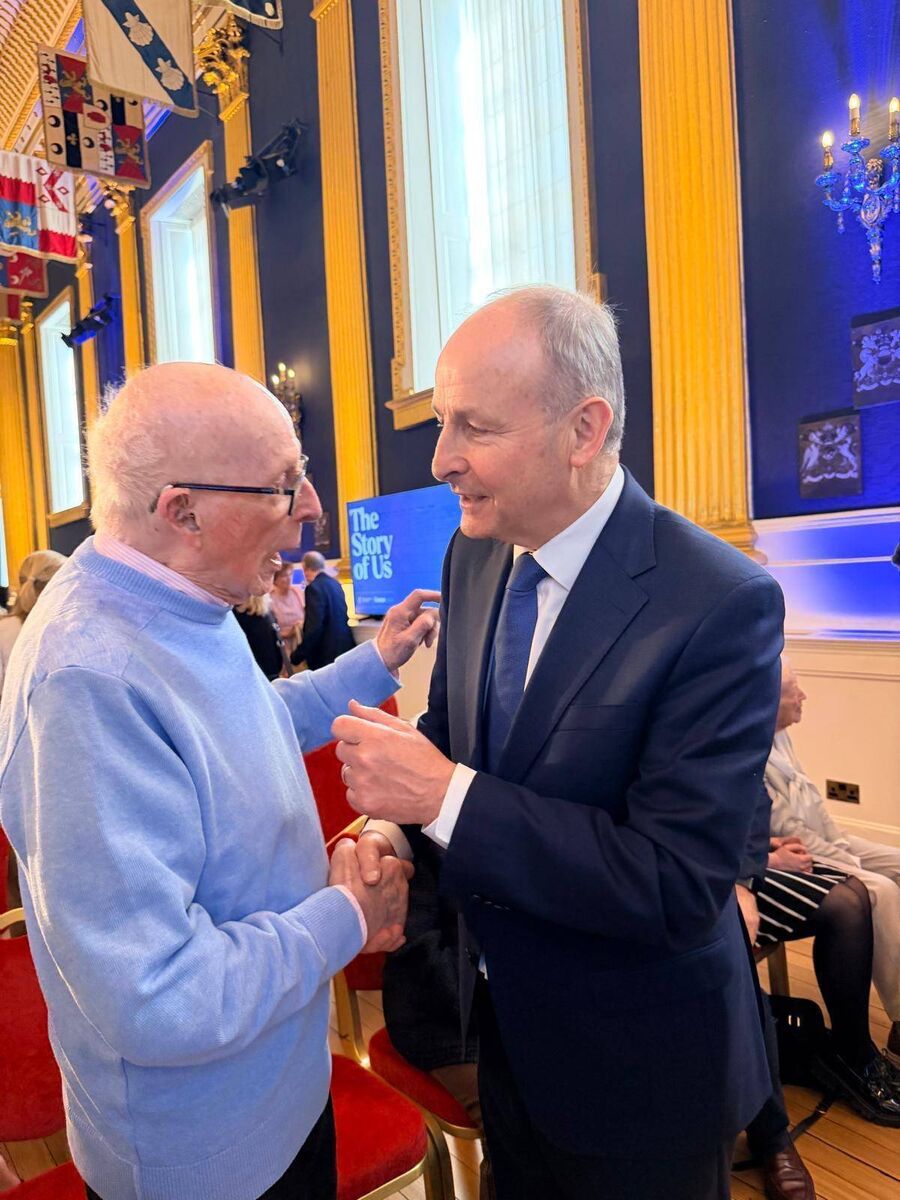
Joe Davis met Taoiseach Micheál Martin at Dublin Castle recently to mark the 1926 Census being made public. Joe went to North Mon at the same time as previous Cork Taoiseach, Jack Lynch

So what are the greatest changes he has seen – has Cork changed hugely from his youth?

“Obviously the city has expanded hugely in all directions and the green fields that surrounded the city on all sides are now given over to housing, but the city centre in many ways is the same – Patrick Street and the Mall are still the same even though the shops have changed.

“There were some great shops in Patrick St long ’go – Roches Stores and the Munster Arcade; they were fantastic shops and there was a very posh ladies’ clothes shop, Dowdens and of course, we had Thompsons and Barry’s Tea started off as a grocery store, but they’re all gone.”

As he relaxes at his home in Rochestown and surveys the many changes that he has seen over his 103 years on the planet, Joe has no hesitation in naming the area of human experience and endeavour that he believes he has changed most – communications.

“I have an iPad, and everything is on it – I hardly turn on the TV at all except maybe for a match, but when you look at the changes – when I was growing up, you would send a letter to someone abroad and wait weeks for a reply - today I was on my mobile to my grandson in Australia.”

Possessed of extraordinary recall, Joe is also a remarkably humble and modest man, who still seems to be somewhat puzzled by the fuss made over him earlier this year as one of just 1,200 people who lived long enough to see their entry in the 1926 census when it was published. “You know that census was supposed to be conducted in 1921, but with the War of Independence and then the Civil War, they had to postpone it so it wasn’t held until 1926 – they put it back just long enough for me to get into it!” he said with a smile and a twinkle in his eye.

This article appeared in the 2026 Holly Bough. 
more Holly Bough articles

Meet the 2026 Holly Bough fiction section artists Meet the 2026 Holly Bough fiction section artists
Cork's Long Valley: 'While many come for a pint, most come at lunch for the famous sandwich' Cork's Long Valley: 'While many come for a pint, most come at lunch for the famous sandwich'
'It's like being a part of the history of Cork': Meet the Holly Bough cover artist 'It's like being a part of the history of Cork': Meet the Holly Bough cover artist

More in this section

Cork's Long Valley: 'While many come for a pint, most come at lunch for the famous sandwich' Cork's Long Valley: 'While many come for a pint, most come at lunch for the famous sandwich'
Mini-skirts staying shorter for longer Throwback Thursday: 'I loved London, but I liked coming back to Cork too'
Throwback Thursday: Grandad built me my very own steerin’-ah Throwback Thursday: Grandad built me my very own steerin’-ah

Sponsored Content

 Why great makeup begins with great skin, plus the foundation that improves skin radiance Why great makeup begins with great skin, plus the foundation that improves skin radiance
Balanced leadership vital to strengthening competitiveness of Irish business Balanced leadership vital to strengthening competitiveness of Irish business
Investing in people, planning for the future Investing in people, planning for the future
Contact Us Cookie Policy Privacy Policy Terms and Conditions

© Examiner Echo Group Limited

Add Echolive.ie to your home screen - easy access to Cork news, views, sport and more