Throwback Thursday: The rise and fall of a North Cork dance hall
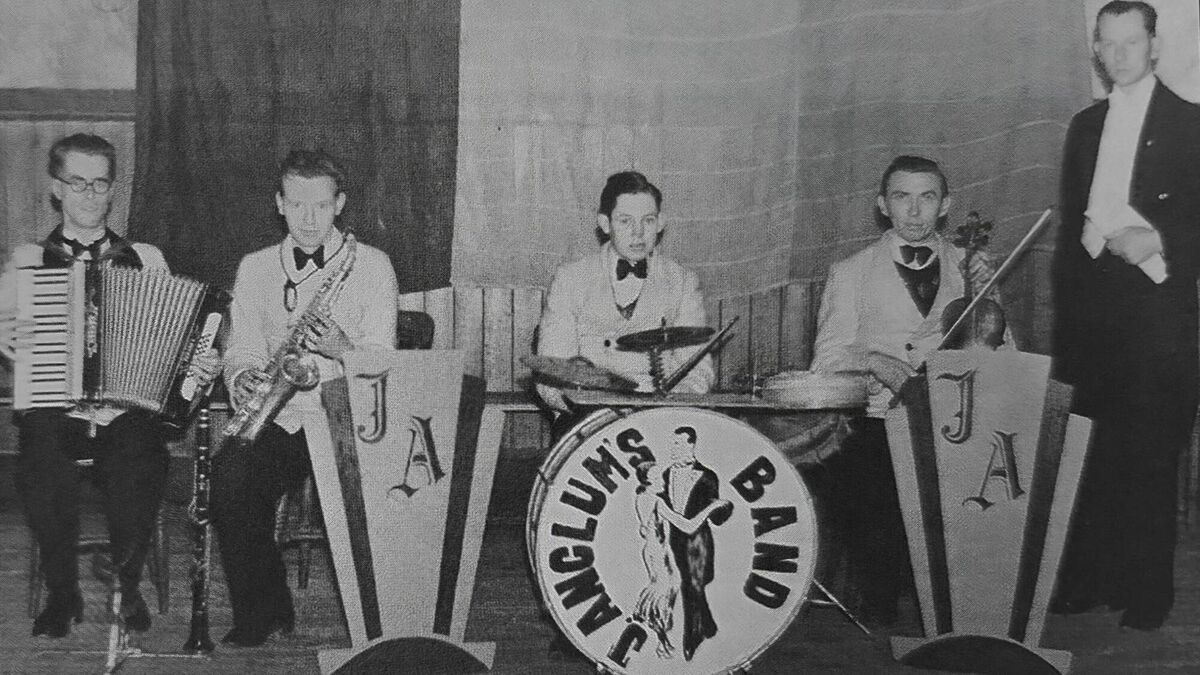
The Anglum’s Band, from left, Steve Ahern, accordion, Billy Anglum, alto sax, Brendan Guerin, drums, Tommy Courtney, violin, Jerry Anglum, leader /piano
This weekend, they are remembering the great Showband Nights and Dancehall Days down in Fermoy.
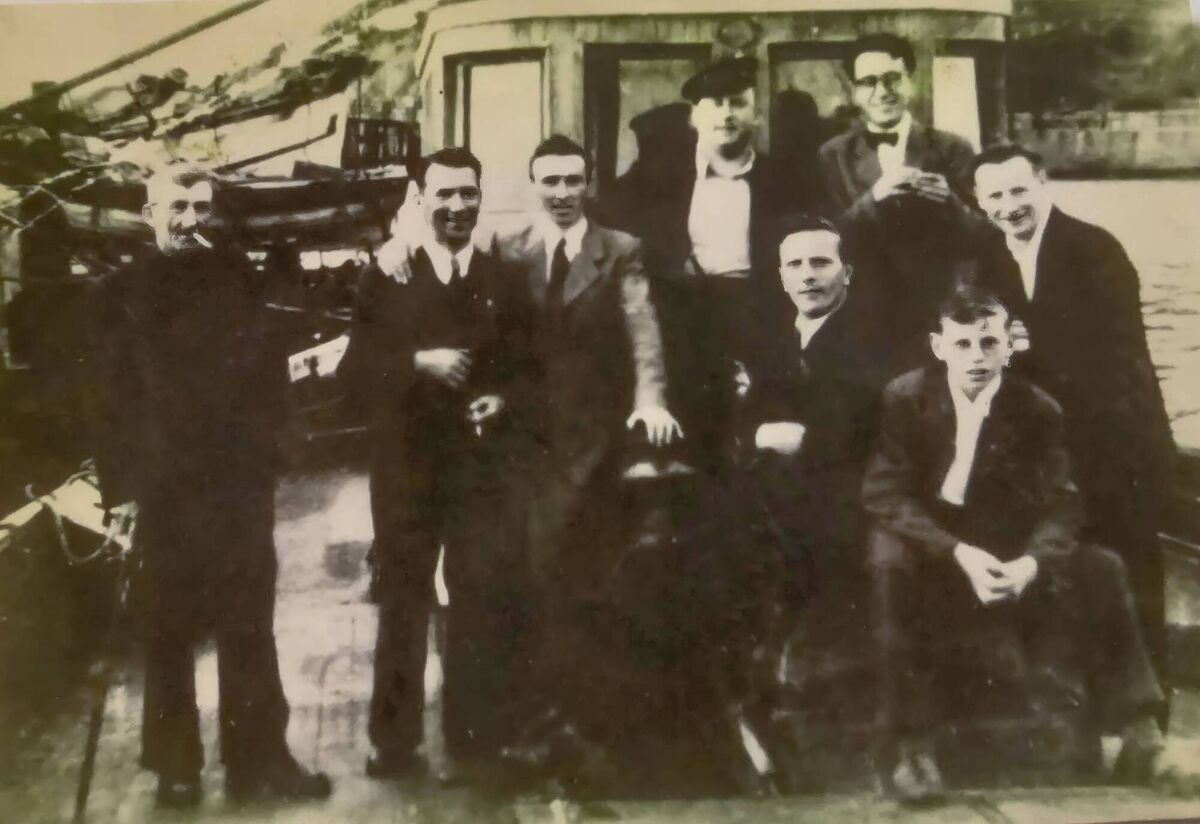
There is an exhibition and book launch on Friday night, a concert with Art Supple, Paddy O’Brien, and many more on Saturday night, and a great tea dance on Sunday afternoon.
Aisling Cotter, who was much involved in the organisation of this event, has her own interest in the showband era through her research on the history of the Anglum Hall in Glanworth. Did you know that was a great place to go dancing back in the day? Well, if you didn’t, here’s a chance to find out, as Aisling graciously shared her research with us.
“Anglum’s Hall was in operation from 1924 to the early 1970s and served as a central social hub for the local community of Glanworth and surrounding villages,” explains Aisling.
“Initially opened by Jerry Anglum, band leader of Anglum’s Orchestra, it was later taken over by his brother William, and subsequently, in the 1960s by William’s son, Jer, who completely refurbished the old hall.”
In its day, it was considered one of the best dance halls in Cork, she says.
“The building has always been known as Anglum’s Hall amongst young and old in the locality and it has become a site of community memory within the Glanworth region.”
Aisling herself grew up immersed in the music of a slightly later era, attending many concerts by popular groups, and admits that it was only during the celebrations to mark the 30th anniversary of Rory Gallagher’s death last year that she became aware of the fact that he had started his career in a showband called The Fontana, having links to Fermoy.
Well, those of us who frequented the Arcadia back in the 1960s knew Rory’s bands well, Aisling, first the Fontana, and then the Impact. In fact, we would exchange phone calls to try and find out if he was playing warm-up to one of the bigger bands like the Dixies or the Royal. (Or we would stop him and ask if we saw him on the street.)
Back then, before he moved into his own, newer kind of music, he did great versions of Chuck Berry numbers that had the old Arcadia rocking!
“There were so many memories I found associated with Anglums,” continues Aisling.
“No taxis back then, and walking home five to 15 miles wasn’t unusual. In rural areas, travel by foot or bicycle was taken for granted.
“It was a time when people travelled miles on bikes. I talked to someone who recalled cycling from Kilworth to dances in Glanworth, carefully choosing where to leave his bicycle in order to avoid disturbing courting couples on his way home!
“After all, the amount needed for both bus and dance could come to ten bob, which was a lot at that time, so the crowds came by bicycle, hitchhiking, or shared lifts to attend dances. So many met their future partners at these events.”
From the point of view of the owner/operators, reliability and hospitality were central to building a good reputation within the dance hall circuit.
Bands travelling long distances were often provided with meals and accommodation, while some venue owners showed considerable thoughtfulness and flexibility during poor trading periods.

Jer Anglum recalled an occasion when a travelling act, unable to pay the hall rental after a bad week, offered their piano instead. It was an offer Jer’s father refused because he knew the act would not be able to keep going if he accepted this as payment.
“It was a different time in society,” she emphasises. “When the showband era arrived in Ireland in the 1960s, it brought with it many changes.
“Soon, there were more than 450 ballrooms nationwide and the industry gave employment to 10,000 people, of which 4,000 were singers and musicians.
“During the 1960s and 1970s, Ireland underwent economic modernisation under Seán Lemass while television, youth culture and changing leisure activities slowly transformed traditional rural social spaces such as dance halls. The church, though, still maintained a lot of influence.”
The Hall fulfilled many functions throughout its years of operation, including cinema and a venue for visiting shows or drama ‘fit ups’ as well as being a dance hall.
“Many famous names graced the stage at Anglum’s,” says Aisling. “Bridie Gallagher, who once filled the Royal Albert Hall, and who is considered Ireland’s first international pop star, performed there.
“Eileen Reid also graced the stage in Glanworth, one local having a very vivid memory of the occasion: ‘The sun was beating down... owners opened doors to allow as many as possible to see and hear her sing a famous song about the day she gave her wedding dress away.”
Anglum’s own orchestra would have performed here regularly, as well as the Michael O’Callaghan Big Band.
Liam Howard, MD of The Avondhu newspaper, recalls that Bill Haley’s Rock Around The Clock and Chubby Checker’s The Twist would have been hugely popular floor-fillers of the time.
The Graduates, The Clipper Carltons, The Freshmen, all performed at the hall as well as local band The Cymbals.
Jer Anglum told Aisling that the dance hall was ‘a boom to the publicans’, adding: “I’ll always remember the first night The Freshmen played. Every bar in Glanworth was full at half past eight.”
Songs like The Candy Store can transport people back to that place and time, Aisling found, and the fondly-remembered music can evoke strong emotions and recollections.
One gentleman at least met his future wife while dancing to The Candy Store there. And Vincent Power’s classic book on that showband era, Send ’Em Home Sweatin’, was absolutely accurate at Anglums, Liam Howard observing how “you couldn’t move – there was water coming down the walls!”
Read More
A great reference to earlier days is recorded with a memory of Vic Loving, a female theatrical impresario who toured Ireland from the 1930s to the early 1960s with her variety show, Flash Parade, which combined music, dance, comedy and drama and featured a chorus line of dancers as part of its performance.
Many locals recalled this travelling show and Vic’s many wagons stretching down Mill Road, which housed the dancers and stored the many costumes.
In the 1930s and 1940s, it was common for acts to take the hall for a week to ten days at a time, including people who would later star in TV shows like The Riordans; also, acts like the De Gabriels who were serious classical musicians.
Sometimes, the Abbey Players came with shows like The Year Of The Hiker, and other drama companies to visit included The Shannon Players.
You could even go to the pictures at Anglums, although, Ms Cotter points out that these were mainly westerns, in black and white.
“To see newer films, you had to go to Fermoy where the likes of Disney movies were shown or modern movies with Jayne Mansfield and other famous names.”
There was no dancing (of course) during Lent, but the movies continued.
Gradually, as the ’60s wore on in to the ’70s, the whole dancing/entertainment scene began to change, shifting to more cabaret style in places like The Grand Hotel in Fermoy, where more comfortable surrounds and luxurious seating were available, and people could order alcoholic drinks. (We must not forget that ‘a mineral’ was the limit in any dance hall before then.)
“It would seem that society had moved on to the next big thing,” muses Aisling sadly, “and unfortunately for Anglum’s Hall, it was left behind.
“It would keep going for a while, but eventually conceded defeat as crowds dwindled. It was the end of an era for the dancing.”
The memories of those days and the rules they imposed are still in people’s memories though, she says.
“Dance halls were places that people learned social norms. They learned how to dress appropriately. Men wore suits and polished their shoes, ladies wore their Sunday best.”
Rules with regard to how to behave with the opposite sex were also learned. For instance, it was definitely not done to refuse a man a dance if he asked. (One woman remembered vividly: “There was plenty of times we would duck into the cloakrooms to avoid them!”
There was always one “ladies choice” dance, but before things got going, men would always crowd to one side of the hall, and the women to the other. Mingling beforehand was simply not done.
And, as was inevitable back then, the Catholic church was ever on the watch, with dance hall attendees even being “called out from the altar” if their behaviour the night before had been unseemly.
It was not unusual, either, for a local priest to go round with a torch after the dance ended, to interrupt or discourage any loitering for tender moments on the dark laneways nearby.
Aisling emphasises that her research barely scratched the surface of Anglum’s Hall as a site of community memory.
Summing up, she says that though the hall has been closed since the early 1970s, it is very apparent that it played an integral role in both the community and surrounding hinterland both from a social and from a romantic point of view.
“After all, where else would young people meet? Most pubs in the ’50s and ’60s did not have ladies’ toilets, nor indeed would ladies have been permitted beyond the lounge or snug.”
Thank you so much for sharing that, Aisling. It will make many readers of Throwback Thursday remember their own dance hall days.
Where do you remember seeing The Royal, The Freshmen, our very own Cork-grown Dixies? What songs still resonate in your mind and make your foot tap?
And here is a promise of more great recollections from one of our regular contributors, Joe Terry.
This Saturday, October 3, Ráiméising, Joe’s reminiscences of a long and adventurous life, will be launched by Echo features editor John Dolan at the Inniscarra Community Centre in Ballyanly at 10am.
“I have called it Ráiméising, because that evokes wandering, roaming, and travelling without always knowing where the road will lead,” Joe explained.
“That is how much of my life felt during those years.
“I left East Cork as a young emigrant; what began as a decision to gain experience became a ten-year adventure that took me far beyond anything I could have anticipated.”
Can’t wait to read the whole thing, Joe! The rest of you, tell us your own memories!
Email jokerrigan1@gmail.com, or leave a comment on our Facebook page: www.facebook.com/echolivecork