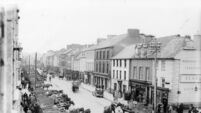
Remembering golden days when we all went to Youghal on holidays
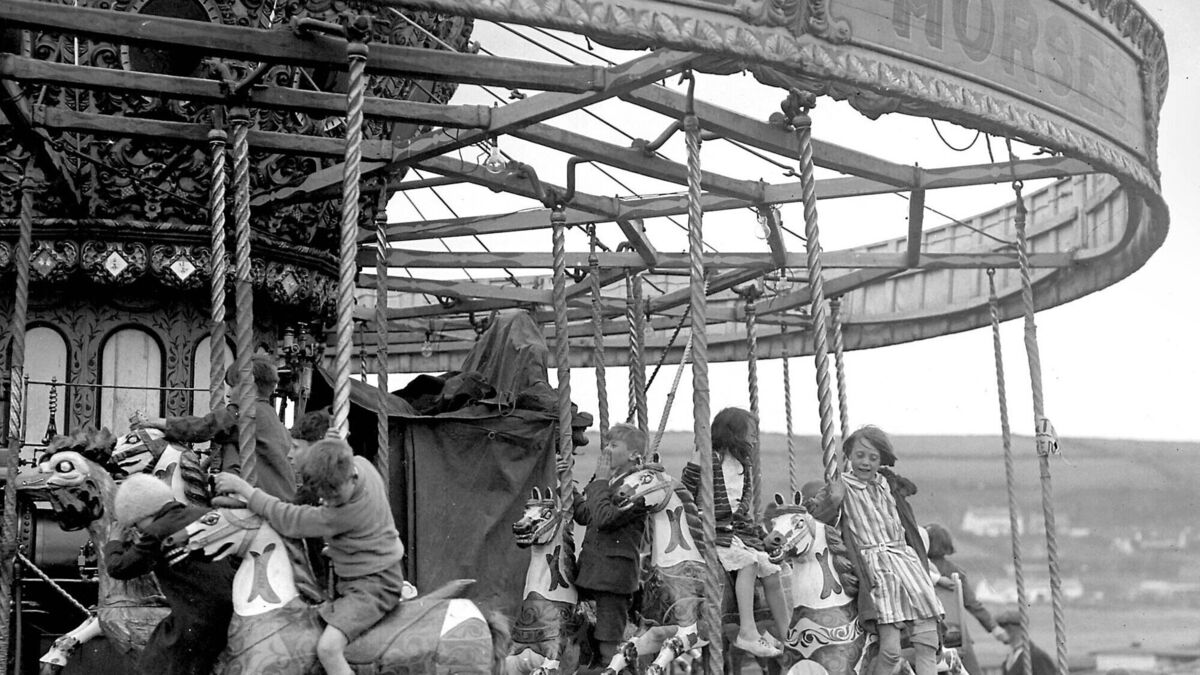
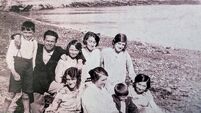
A Cork schoolchildren’s summer excursion to Youghal on July 1, 1931.
IT’S that time of year... summer is coming to an end, and both parents and shops are reminding young folk that the dreaded academic year is about to start.
Some shops, indeed, get in far too early, advertising Back To School posters as early as July, when the liberated child is only just getting into the swing of utter freedom and endless sunny days ahead.
We always had long summer holidays in Ireland. Traditionally, it was to do with the farming seasons, and that time when every hand was needed to gather in crops, help with haymaking, and generally make itself useful.
Over in England, where they lost the ability to feed themselves centuries ago, the holidays both started later and ended earlier.
(By the way, speaking of feeding themselves, has nobody else found it odd that a huge grain ship which finally managed to get out of Ukraine made its way to - not a starving Third World country, nor yet to one of its traditional destinations from ancient times, along the Greek coast, but to us, here, in Ireland? Since when have we had to import our foodstuffs for either animals or humans? Surely, surely this country above all others, with its gentle climate, has always been able to provide its own?)
But back to the long summer holidays. Where did you go for yours? Was the majority of the time spent in and around the city, with occasional trips to the outdoor baths or a nearby river?
Did you have the wherewithal to take a bus trip to Crosshaven or Roberts Cove for the day? Or were you one of the lucky ones who, early on a fine morning, rushed down to Glanmire Station and boarded the blackened and hissing steam train for the joys of Youghal?
Tim Cagney writes: “Just reading the latest from Throwback Thursday, which references Youghal. I think that my first-ever childhood holiday - with my parents, of course - was spent there. We travelled by steam-train, and stayed in a house directly across from where said train reached the end of the line.
“There was a water-tower there, and I used to watch, as the engine was replenished with water. There was also a turntable, which would be used to turn the steam-engine around, so that it could make the return trip to Glanmire Station. The actual turntable is still there, but the train itself - sadly - has been consigned to history. I wonder if there are any plans for its revival?”
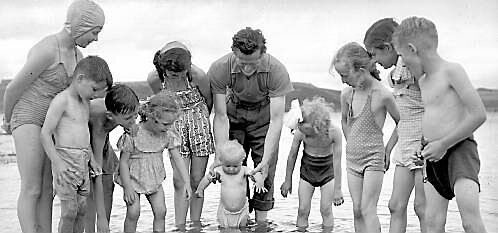
Sadly no, Tim, it breaks our heart to say, but there isn’t a chance. Midleton fought a good battle and won the right to a commuter line to the city, thus benefiting many residents, and incidentally providing the impetus for considerable future growth. Youghal didn’t, so it lost that link and in the process, the memories of thousands of Corkonians over the years.
However, a greenway is in the pipeline, so to speak, so it will at some point be possible to walk from Midleton through Mogeely and Killeagh to Youghal along that line of memories, and remember halcyon days gone by.
It had a long and successful career, that Cork-Youghal line, all the way from 1860 to 1963 - 50 years ago next year - when passenger services were withdrawn, as were those on so many of the West Cork routes around that time.
Gradually, between then and 1982, goods traffic was reduced. Interestingly, though, the line has never been legally closed, and this enabled Midleton to tackle the challenge of reinstating its important link to the city.
Finally, after more than three decades of campaigning, the line between that town and Glanmire (now Kent) Station was reopened in July, 2009, a triumph for all those who fought for it.
The line was first officially opened to passengers in May 1860, but the formalities had been observed the previous winter when the Lord Lieutenant himself came down from Dublin to give his blessing.
The Illustrated London News carried a full report with a very dramatic engraving picturing the glittering scene in the engine shed at Midleton.
“Opening of the First Section of the Cork and Youghal Railway. Thur 10th Nov last, was a busy day for the Lord Lieutenant of Ireland. In the morning his Excellency laid the foundation stone of a new bridge in the city of Cork, and conferred the honour of knighthood on Mr John Arnott, the Mayor...
“This work being completed, the Earl of Carlisle started for Dunkettle, about three miles from Cork, to superintend the opening of the Cork and Youghal line of railway. The line having been formally opened, the Viceroy and the whole party took their places in the train, which was in waiting, and were conveyed about two miles further, to Johnstown, where the proposed Queenstown branch will diverge. Here the Lord Lieutenant performed the ceremony of turning the first sod of the Queenstown branch.
“The party then proceeded to the Middleton terminus. A rapid inspection was made of the railway works, and then his Excellency and party were conducted to the engine-house, where a luncheon was prepared.
"The interior of the building was most tastefully fitted up and decorated for the occasion, and presented a very gay aspect. Nearly two hundred of the leading merchants, traders, etc, of the city of Cork and the adjoining districts of the county were present.”
The line became instantly popular, particularly with the introduction of special excursion fares. The Cork Examiner of August 19, 1863, announced that a train would leave Glanmire Station at 8am on the following Sunday, Aug 23, with return fares of 3s for 1st class, 2s for 2nd class, and 1s 6d for 3rd class. Not exactly giveaway prices for back then, when a penny bought you quite a lot, so it was still evidently for the more well-to-do of the city.
Once you had got to Youghal, the added excitement was offered of a steamer trip up-river to Cappoquin and back. Gosh, wasn’t life fun for the rich in those days?
But groups could organise trips too, even if their annual income was low, according to reports in the Examiner. In July, 1868, the Cork Mechanics Society headed off for Cappoquin en masse.
“Some went by train to Youghal and were taken from thence to Cappoquin by the steamer Fairy; others left the city at four o’clock in the morning on long cars for the same destination, and disturbed the rest of the inhabitants of the streets through which they passed by the performance of a loud brass band which headed the procession. The weather was delightfully fine for such a trip, and the ‘Irish Rhine’ was seen in all its splendour.”
The Blackwater was frequently compared to the Rhine in those days, and indeed there are times when it richly deserves the comparison, with its wide waterway and lush tree-fringed banks.
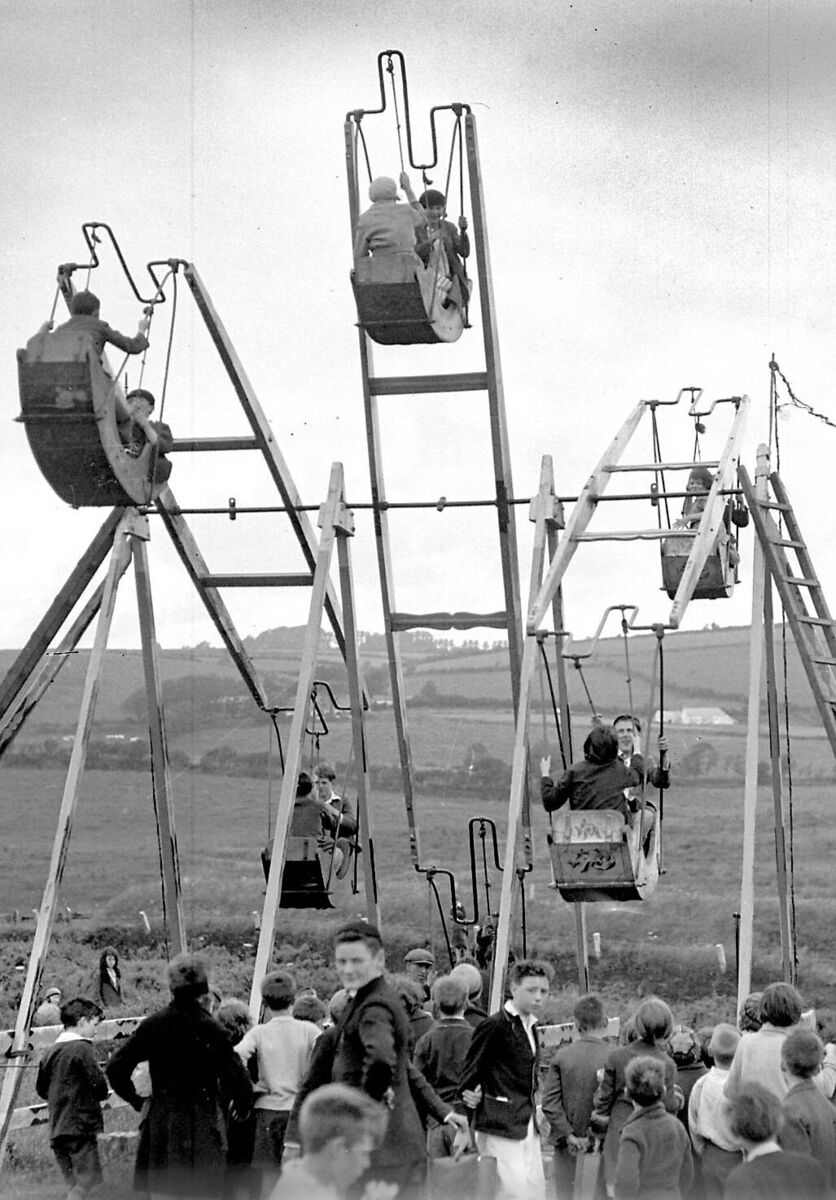
An advert in the Irish Independent of July 19, 1915, extolled the beauties of “Youghal and The Irish Rhine,” offering trips by charabanc, unrivalled sea bathing, golfing, and fishing, all only one hour by rail from Cork.” (You can still take boat trips up-river from Youghal, by the way, when the tides are right.)
Coming forward to the mid-20th century, things were getting more sophisticated, and travel further afield, be it by train, by bus, or by bicycle, was becoming more usual.
It was in 1958 when the Lucey family opened a holiday camp at Redbarn. Although it itself wasn’t quite ready yet to welcome occupants, the splendid ballroom there was finished ahead of time, and they decided to open it for a big inaugural dance. More than 1,000 eager folk made their way to Redbarn from all sides to enjoy an evening dancing to Johnny Butler and his All-Star Band. And the new facility was off and running, providing entertainment and memories to thousands of holidaymakers for years to come.
Back to Tim Cagney’s memories of that first holiday in the seaside town. Of course they headed to the beach, first, last, and always. That was what you were there for. The seashore was for buckets and spades, adventures in paddling, a whole new world of adventure. Did they bring a packed lunch?
“Oh definitely - no fancy restaurants for the impoverished denizens of Gardiners Hill! I once remember a large crowd of us being packed in under a canopy on the railway platform, to avoid the rain. From memory, it had a curved roof, and was made of black-painted metal.
“We opened our pack of ham sandwiches, and enthusiastically began to tuck in. You got a healthy appetite with all that sea air.
“My late Aunty Rose, a woman much given to critical comment, announced that the ham was ‘gone off’, but it didn’t deter us kids!”
Katie O’Brien remembers a similar wet day in Paradise.
“We had gone down to Youghal with our class from school, and the rain came down in sheets in the afternoon. Fortunately, one of our number had a family house close to the station, and her parents kindly opened it up for all of us dripping children and let us stay there until the time came to go home. I think we played games in the front room.”
Another vivid memory Tim has of Youghal were those long rows of wooden posts, driven into the beach, at intervals, and familiar to generations of holidaymakers.
“I never quite found out what function they served - initially, my childhood imagination thought they were to stop the tide coming in, but I rather think they served as windbreakers, to protect the sunbathers on the sands.”
They were, in fact, a form of breakwater, Tim, designed to deflect the full force of the incoming waves and prevent them from hitting the actual embankment above the shore with too much strength, which could well erode even the hardest concrete.
Tim has memories too of that boarding house where they stayed near the station.
“One sliver of memory sticks in my cranium, for some reason or another. One day, I spied a man at a table near us, eating a bowl of bananas and cream. We got none, and I’ve often wondered why?”
Now that reminds this writer of staying down in a similar boarding house, high above the road as it comes down into Youghal town, a very long time ago. There were six of us, including my parents. My mother had brought a big bag of oatmeal with her, and each morning she would descend to the kitchen to supervise its preparation for our breakfast porridge. So it is more than likely that the amount your hard-pressed parents paid for lodging was reflected in the rations you got!
Those boarding houses were the precursor of today’s B&Bs but rather stricter in their rules and their arrangements.
“I can remember my parents being warned that we all had to be in for ‘high tea’ at five o’clock and if we weren’t there, then we didn’t get any!” recalls Bill Thomas. “Can you imagine the fury of small children being hauled off the beach to go back up to that stern landlady and tea?”
The train to Youghal was part of Cork’s cultural heritage, with so many of us recalling vividly our first trip, the many we might have taken over the years, even the last one perhaps.
The fact that they still used the old steam engines added to the delights of the day. Did we know we were watching history passing? Of course not. That knowledge only comes in later years, when we can look back and actually measure change.
Tell us your memories. Email jokerrigan1@gmail.com or leave a comment on our Facebook page: https://www.facebook.com/echolivecork.