What is going on with the latest RTÉ payments scandal?
Ellen O'Donoghue
RTÉ have been in hot water again of late, with Derek Mooney's exclusion from the broadcaster's top-10 highest-paid presenter list.
The revelation is reminiscent of the scandal which rocked the national broadcaster almost three years ago, after it was revealed that RTÉ had underdeclared payments to former Late Late Show host Ryan Tubridy.
That crisis later widened out to other governance matters, and the controversy around financial mismanagement at the station was seen as a driver behind a fall in TV licence receipts.
It also prompted a series of heavyweight Oireachtas committees and resulted in the Government changing how the organisation is funded.
But, back to 2026.
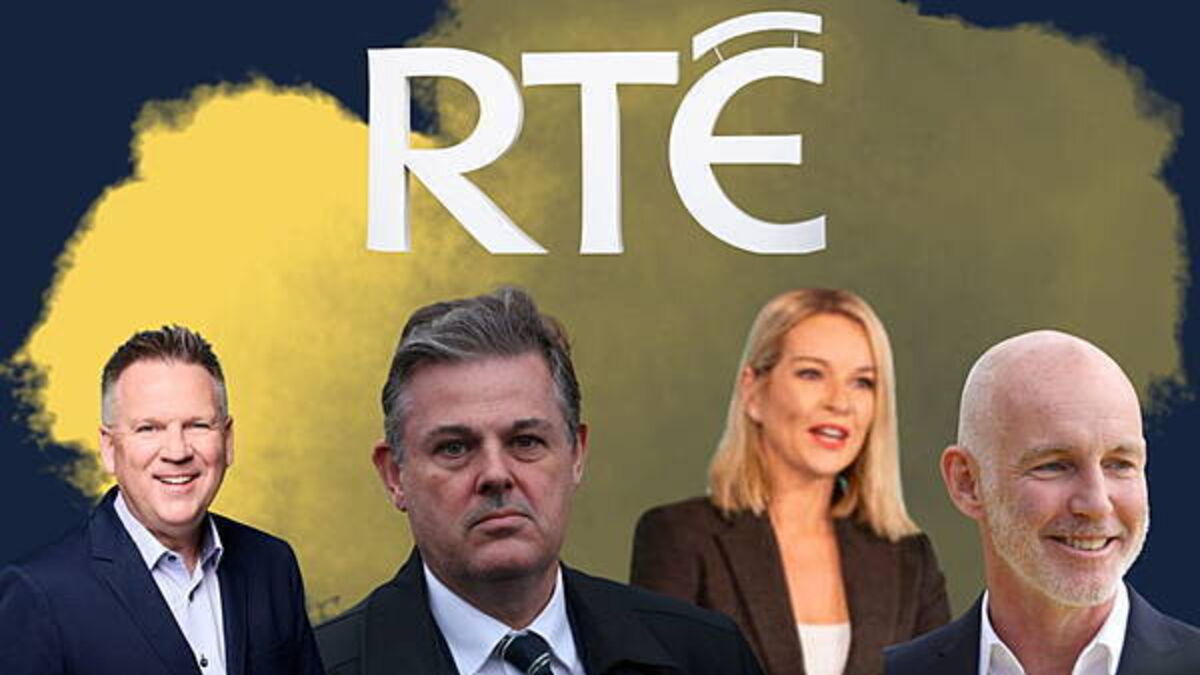
Between Derek Mooney's reclassification from presenter to producer, Claire Byrne and Ray D'Arcy receiving pay after they finished working, the Communications Minister calling for a presenter pay audit at the broadcaster and Patrick Kielty's published salary being more than he said it was, what is going on in RTÉ?
Derek Mooney - Presenter to producer, to presenter again?
It was revealed this past week that Derek Mooney was paid enough to feature among RTÉ's top 10 highest-paid presenters every year between 2020 and 2025.
But in 2020, Mooney was reclassified as a producer in his contract, and the station said he had not been considered for inclusion in the lists since then. He has been presenting programmes on RTÉ since 1994.
However, RTÉ said on Thursday that it had reconsidered what constitutes a presenter in line with the implementation of the Government’s Expert Advisory Committee’s recommendations following the previous financial management scandal.
It has therefore included Mooney in the 2025 list – and republished its 2024 list with his inclusion to allow for a year-on-year comparison.
He was therefore the seventh highest-paid presenter in the organisation last year, on €202,264, and 8th in 2024, on €197,151.
Mooney last appeared on top-10 earner lists in 2014. In 2019, RTÉ announced plans to reduce fees paid to top contracted on-air presenters by 15 per cent.
RTÉ director general Kevin Bakhurst said he does not think the reclassification was a side deal to avoid pay cuts from 2020, and when asked if Mooney had taken a pay cut that year, Bakhurst admitted "I don't think he got a pay cut."
After calls to publish his earnings back to 2020, RTÉ published the figures, which confirmed Mooney would have featured in the yearly lists if the same criteria had applied at the time.
He earned €195,079 in 2020, €187,854 in 2021, €188,885 in 2022, and €192,592 in 2023 – all of which would have placed him ninth on the list.
Where do Ray D'arcy and Claire Byrne come in?
This is where it gets interesting.
The 2025 figures also revealed that RTÉ continued to pay D'Arcy and Byrne, even after they left the broadcaster in October 2025.
For the remainder of the year, D'Arcy received €50,000, and Byrne received €47,000.
Bakhurst said on Friday that the €97,000 in payments was “totally the right decision”.
He said RTÉ wanted to take Byrne off air after she said she was leaving so it could launch its new Radio One schedule, while he characterised the timeline around D’Arcy as “effectively his notice period”.
While RTÉ board chair Terence O’Rourke said he was “happy” it was the “right decision”, adding: “They weren’t doing nothing – they were available.
“If anything happened, they would still have been under contract to present.”
He said it was “wise” for the organisation to continue to pay them as there could have been legal issues with not doing so.
Bakhurst added that the pair had employment rights and a legal fight would have cost a “shedload more”.
Byrne has said, however, she was “happy to stay on and work” at the organisation until the end of her contract.
Speaking on her Newstalk programme on Friday, Byrne said: “I resigned from RTÉ in the summer, my contract though, ran until the end of the year, December 2025.
“And I made it clear, I was happy to stay on and work there until the end of my contract.
“But RTÉ came to me and told me that they wanted me to finish up at the end of October.
“That was their right and their decision. So that’s how that happened, from my perspective.”
On his podcast, D’Arcy said Bakhurst had done a “good enough job” explaining the situation, but criticised RTÉ for what he said was a lack of transparency around the director-general’s own remuneration.
Payment audit and Government backlash
As a result of all of this, Communications Minister Patrick O'Donovan has called for an audit of payments to RTÉ presenters since 2020.
Station bosses have also been called to O'Donovan's department for a meeting on Tuesday.
Those invited include the chair and the director general.
The minister said on Friday that he wanted to "flesh out" more information on the payments to Byrne and D'Arcy.
He described the Mooney revelations as a "side issue.
"The greater issue here is payments in their entirety across the organisation in the period from 2020 onwards and which should have been subjected to an audit.”
He added: “I also don’t want to know monies without total packages, I think we’ve moved on way too far from that.
“And that’s why this morning I asked my officials to make it known to RTÉ that not going back to 2020 is not an option – and by the way, that does not just focus in on Derek Mooney.”
RTÉ is also due to appear before the Oireachtas Media Committee on Wednesday.
Media Committee chairman, Alan Kelly, and Public Accounts Committee member, Seamus McGrath, called for previous lists to be updated.
McGrath told Newstalk the revelations were “damaging” to public trust in RTÉ.
Also speaking on Friday, Taoiseach Micheál Martin described the latest RTÉ payments controversy as "difficult to comprehend."
Martin said “the right decision was taken” by RTÉ in clarifying pay of its presenters and added that it was important that confidence in the national broadcaster was retained.
Speaking to reporters at the Fianna Fáil Ard Fheis, he also defended the licence fee and proposals to increase the pay of station chief Kevin Bakhurst.
He added: “We don’t want to be micromanaging RTÉ either, or indeed micromanaging commercial semi-states, so obviously the formal decision has to come to government, but again, there’s a marketplace out there as well and one has to be sensible in how you go about things as well.”