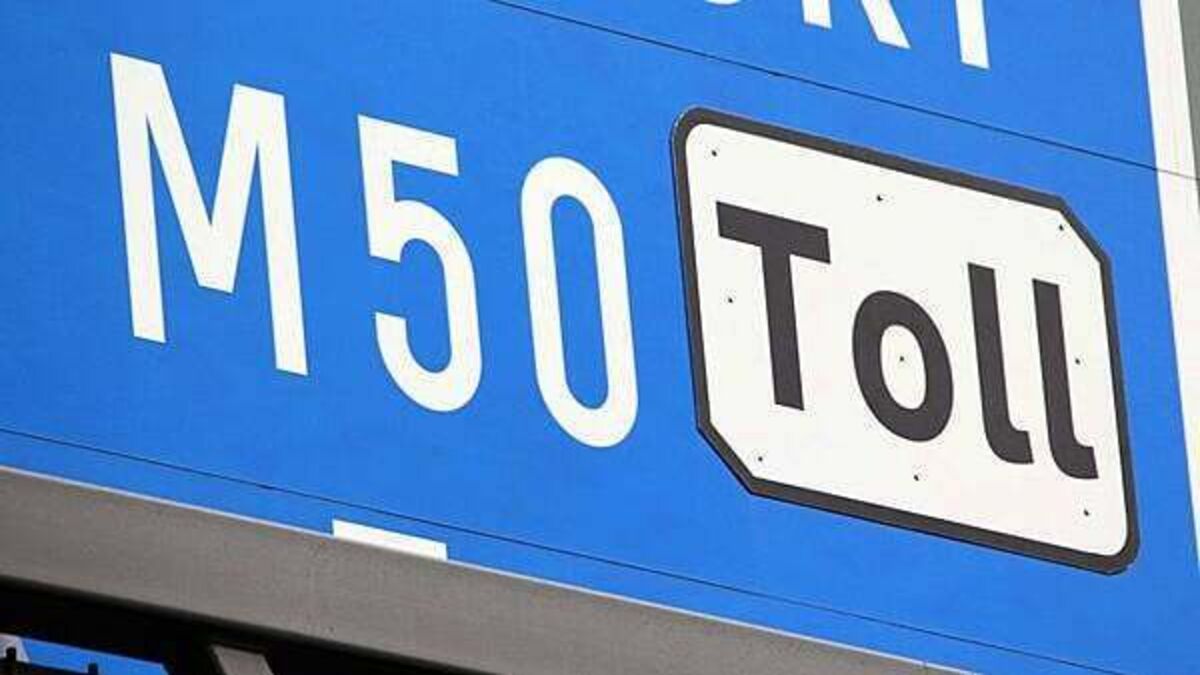
M50, Dublin Port Tunnel, and more to be affected by toll increases from January 1st
Eva Osborne
The M50, the Dublin Port Tunnel, and Public-Private Partnership (PPP) roads will be affected by toll charge increases from January 1st, 2026.
Following the application of the relevant CPI inflation figure for August 2024 to August 2025 of two per cent, the Board of Transport Infrastructure Ireland (TII) approved these increases in tolls for 2026.
On the M50, all categories of vehicles will experience an increase, except for unregistered motor cars without a tag or video account.
All other categories will increase by 10 cent. Heavy goods vehicles exceeding 10,000kg holding a video account will have 20 cent increase on M50.
On PPP toll roads most car tolls are unaffected, with only users of M4 Kilcock to Kinnegad and M3 Clonee to Kells motorway affected by 10 cent increase.
Goods vehicles on all toll concessions roads will be impacted by a 10 cent increase.
There is 20 cent increase on HGV’s of more than 3,500kg having 4 axels or more on the M4 Kilcock to Kinnegad motorway.
Cars on the M3 will now pay €1.80 instead of €1.70, and €3.60 instead of €3.50 on the M4.
Dublin Port Tunnel will see an increase of €1 for southbound traffic at AM peak (Monday to Friday, 6am to 10am) which will see the toll rise from €13 to €14.
The object of this toll increase is to preserve capacity for HGVs, as Non-HGV traffic continued to increase in 2025 during peak periods.
HGVs and buses are exempt from paying tolls at the Dublin Port Tunnel. All other tolls at Dublin Port Tunnel remain unchanged for 2026.
There are 10 toll roads on the National Road Network. Eight are operated under a PPP model and two are operated directly on behalf of TII, namely M50-eFLow barrier free toll, and the Dublin Port Tunnel.
The level of tolls charged on the National Road Network is regulated through an inflation (CPI) adjustment mechanism as set out in the Toll Bye-Laws, which means tolls can’t go above inflation, thus the terminology of “Maximum Allowable Toll”.
The tolling income collected by TII on M50 and Dublin Port Tunnel is combined with Exchequer funding to pay for TII’s annual protection and renewal of national roads. Operation, maintenance and lifecycle costs of the tolled sections of the motorway is funded by tolling income collected by eight PPP Co’s.