Lyrid meteor shower to peak on Saturday night
Nilima Marshall, PA Science Reporter
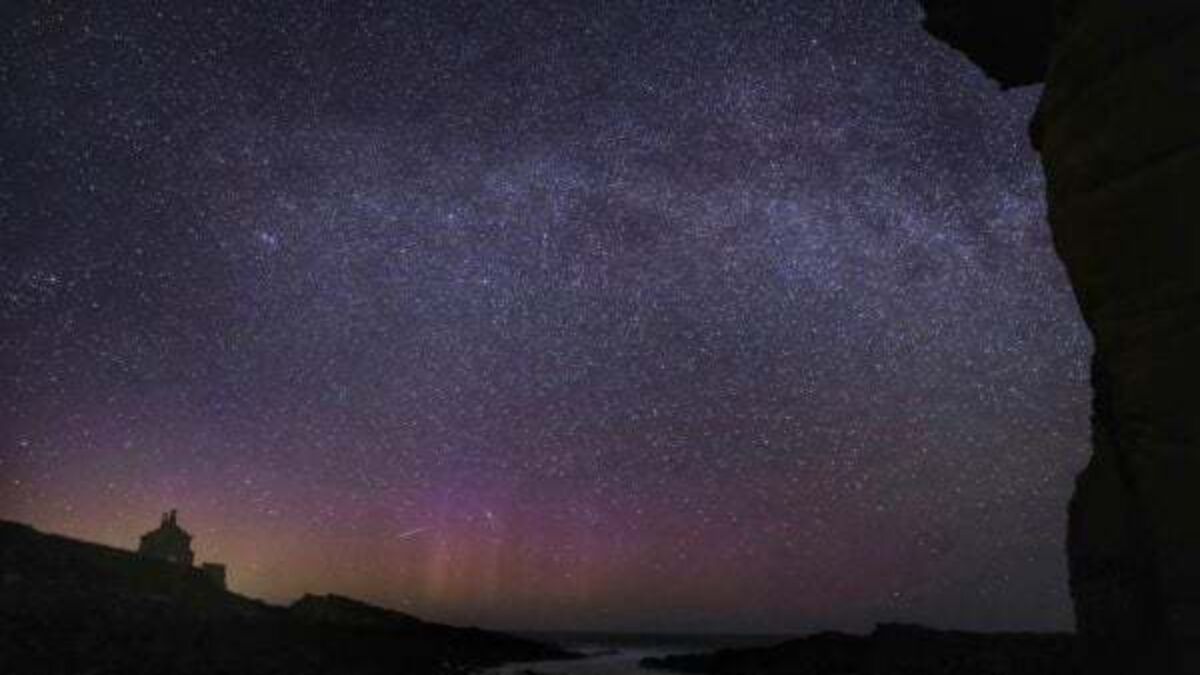
Skygazers can look forward to catching the Lyrid meteor shower this weekend, with up to 18 meteors per hour expected to light up the dawn skies.
The celestial display will peak in the early hours of April 23rd and will be visible until dawn.
There will be bright fast meteors, some with trains.
Also, the peak comes just after New Moon, which means views of the spectacle will not be impeded by moonlight.
The Lyrids takes its name from the constellation of Lyra the Harp, from which the shooting stars appear to originate.
Meteor showers, or shooting stars, are caused when pieces of debris, known as meteorites, enter Earth’s atmosphere at speeds of around 43 miles per second, burning up and causing streaks of light.

In this case, the debris comes from the Thatcher Comet, which is expected to return to the inner solar system in the year 2276, after an orbital period of 415 years.
Don Pollacco, professor of Physics at the University of Warwick, said: “As comets orbit the Sun, the action of the energy evaporates material from the cometary nucleus, which we see as a comet’s tail.
“The gas and dust created stay in the comet’s orbit, even long after the comet has moved along its orbit.
“If the Earth passes through the comet’s orbit any material deposited by the comet could become meteors or shooting stars in the sky.
“These bodies are usually the size of dust particles but when they fall into the Earth’s atmosphere, they are travelling so fast that they are vapourised.
“Along the path that the dust particle travels, the gas molecules are superheated and give out light – this is a meteor.
“We don’t actually see the dust, instead its vapourised effects on the molecules.”
For the best views, it is advised to find a dark site with an unobstructed view of the sky.
Prof Pollacco said: “The best time to see these is after midnight on a moonless night, with as little light pollution as possible.
“You’ll need a comfortable place to sit as this shower only produces about 20 meteors an hour – if you’re lucky!”
The Lyrids occur between April 16th-25th every year.