War and masterpiece: 5 stars for this new film that is sure to earn Oscar nods
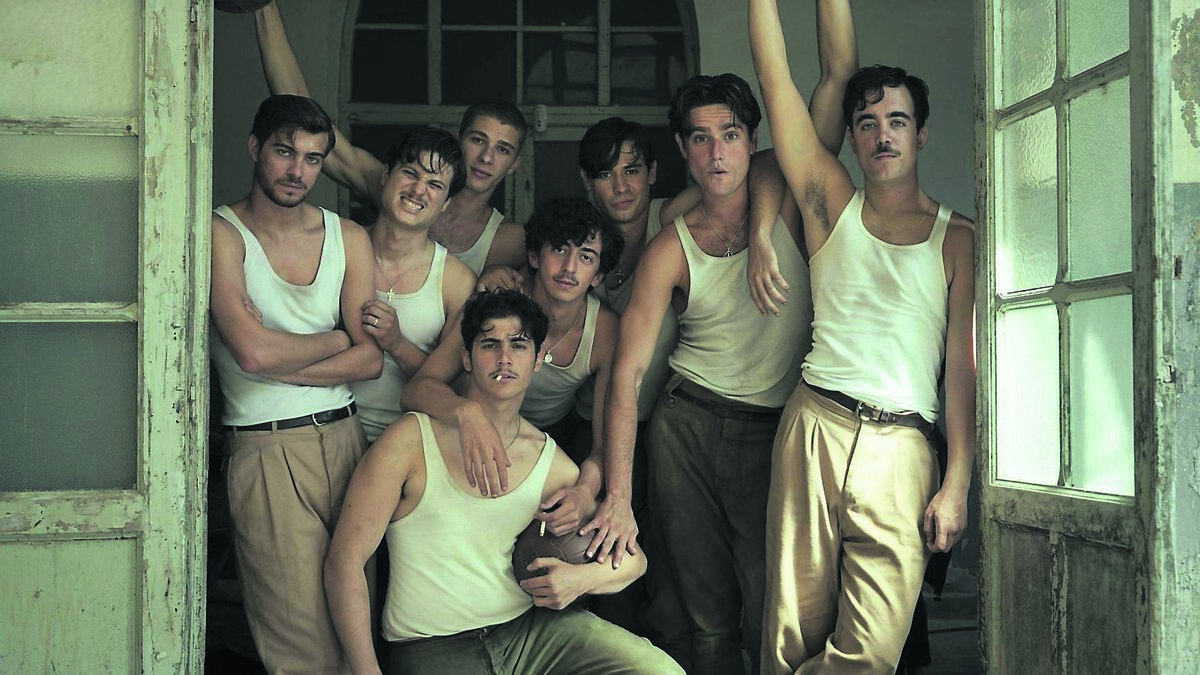
This tale of love and loss, told across three stories, is as ambitious as it is intimate, says Cara O'Doherty
Now and then, a film comes along with the power to move an audience member, body and soul. La Bola Negra, a Spanish drama directed by Javier Calvo and Javier Ambrossi, is one such film.
At the heart of it is the work of Federico García Lorca, the Spanish writer, poet, and playwright, who was executed during the Spanish Civil War. La Bola Negra was the title of an unfinished play by Lorca, centred on a gay love story, which he never had the opportunity to complete before his death. Only four pages of the manuscript survive.
The film imagines the story that might have emerged from those fragments, as well as the circumstances and events that brought the play into being.
It’s 1937, and the Spanish Civil War is raging. Sebastián’s (Álvaro Lafuente Calvo) village comes under attack, and he is picked up by soldiers and given little choice but to enlist in Franco’s Nationalist army. He has no desire to be there; he is neither a nationalist nor much of a soldier. He is assigned to guard a wounded Republican prisoner of war, Rafael (Miguel Bernardeau).
As Rafael recovers and awaits trial, he and Sebastián develop a connection that gradually blossoms into love, under the most desperate circumstances. In a world where homosexuality is neither accepted nor tolerated, falling in love is dangerous, but falling in love with a Republican prisoner is more treacherous. If their relationship were discovered, it could cost them both their lives.
In 1932, in Granada, the impeccably dressed Carlos (Milo Quifes) attends a meeting at the local casino, where he is applying for membership, following in his father’s footsteps. It is an exclusive establishment, and admission requires the approval of politicians and clergy. His application is rejected on the grounds of rumours surrounding his sexuality. Carlos is gay, of course, but he had no idea this was something others knew. He had to find a way to get accepted into the casino or risk disgracing his family.
In 2017, Alberto (Carlos González) is a struggling playwright and PhD student researching queer identities in 1920s music. Gay himself, he has become fascinated by the idea of people who used songs to tell their stories and express their sexuality at a time when homosexuality was neither widely accepted nor openly discussed.
He is particularly interested in how music offered a means of self-expression to those with little opportunity to live openly.
Alberto has a fraught relationship with his mother, Teresa (Lola Dueñas), who drinks heavily and uses drugs. When he discovers that his late grandfather, a man he never knew, has left something for him in his will, Alberto sets out to retrieve it, much to his mother’s anger.
What begins as a personal journey of discovery soon becomes the means by which his story intersects with Sebastián and Carlos, bringing the film’s three narratives closer together.
Beautifully shot and featuring superb and heartbreaking performances, this tale of love and loss, told across three stories, is as ambitious as it is intimate.
Featuring a wonderful cameo from Penélope Cruz, each period is shot in a distinct style, with its own visual aesthetic, yet the three blend seamlessly. The result is a film that feels like a living, throbbing beast of emotion, pain, and loss. Five stars for this Spanish beauty, which will surely feature in the Oscar conversation.