John Dolan: Plug-in solar panels will save us a fortune, but still we wait
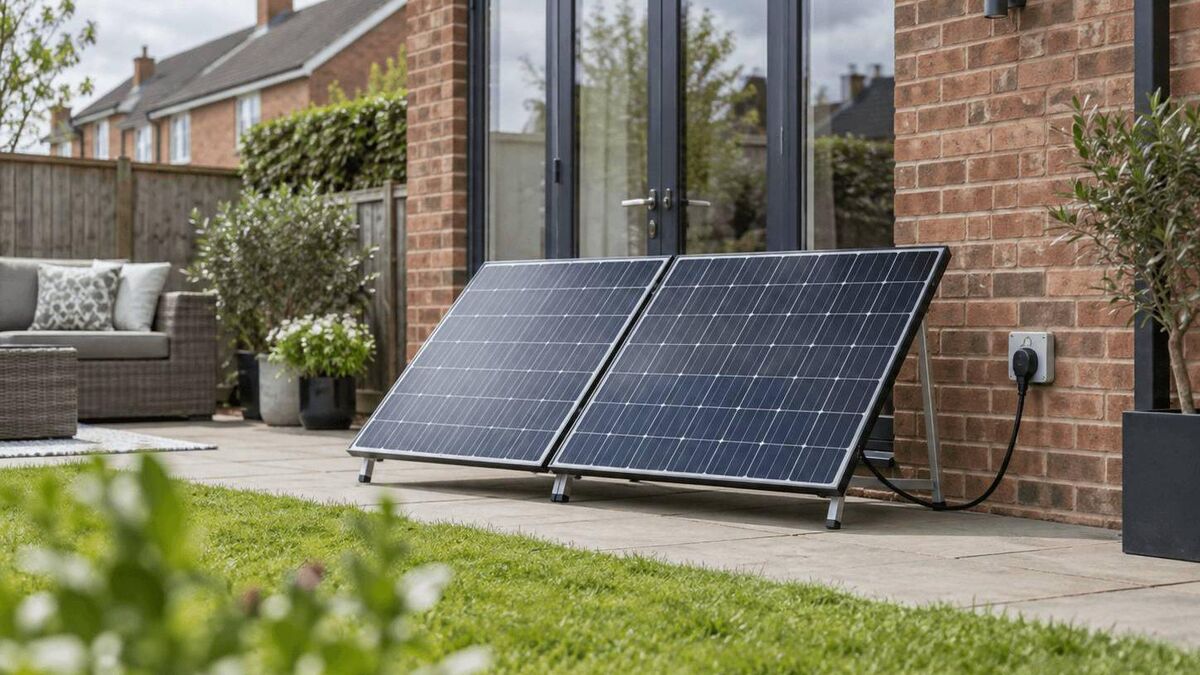
Portable plug-in solar panels cost around €500 each, and are more affordable than the rooftop options
Almost seven years after the National Broadband Ireland (NBI) roll-out was first announced, we were hooked up to its super-fast fibre-optic yokes.
Bye-bye forever, copper cables! And hello to a new internet speed of 133.8 mbps, whatever that means!
And bye-bye (hopefully) to teenagers wailing that their games were freezing and dropping.
However, as more and more homes were being connected around the country, and its progress was being trumpeted across the media, I was beginning to fear that the NBI plan had it in for me, or at least for our eircode. Neighbours were hooked up years ago while we remained firmly in the slow lane.
Quick recap for the townies: NBI was launched to provide excellent broadband coverage on a par with that of cities, in rural areas where telecom giants decided it was not financially viable to venture.
When the pandemic broke out within weeks of NBI launching, the need for a quick and reliable internet service all across the country became even more apparent.
And - get this: It’s been an example of a State scheme - albeit one run by a private operator - that has actually done what it said on the tin back in 2020.
NBI recently revealed it had passed more than 546,000 homes, farms, and businesses for its roll-out, surpassing the original target of 537,000. And all under budget.
This month, the company won a Special Achievement Award at the 2026 Esri User Conference in San Diego, California, for its work, selected ahead of hundreds of thousands of organisations globally.
This NBI success story had passed me by until this week, when we finally got the hi-tech link-up. Even then, it wasn’t straightforward.
It was a few months ago when I was told my home was finally ready to be connected to the NBI line, but when I called my broadband provider, they said it wasn’t showing up on their system.
I gave it a month and called back. System still said no.
So, I decided to play hardball, rang my provider back, and asked how much it would cost me to break my contract with them, so I could see if another operator would be able to connect us to NBI line.
Well, that did the trick. Suddenly, a ‘ticket’ was put on my request, and a few days later my operator said, yes, I could now get the NBI connected within days if I signed a new contract with them.
Funny that.
But enough of my minor gripes. I want to tip my hat to NBI for the job they have done. God knows we need a success story when it comes to our national infrastructure.
And it was a week when we learned the National Children’s Hospital - already five years late and horrifically over budget - may not now open until 2028, as nearly 500 of its rooms are reportedly still not completed.
Then, we learned that a possible solution to our sky-high energy bills had also been kicked down the road once again.
Many of us are facing into a winter of discontent given the global price rises for gas, oil, and electricity. A few weeks back, I forked out more than €800 for just half a tank of home heating oil, which might see us through to February.
Coincidentally, the same day, I got an electricity bill for almost half that amount (I used to pay monthly, but switched to a supplier who bills bimonthly - big mistake for my budgeting!)
These are vast sums for consumers to shoulder - yet one possible solution has been staring us in the faces for years: plug-in solar panels.
These would be an excellent, cheap, money-saving device that would also help the environment.
The panels cost around €500, but could save households between €130 and €150 a year as they generally provide up to 20% of an average home’s electricity use. The devices can be plugged into a standard wall socket to generate solar power from a balcony, shed roof or any other outdoor space.
They are especially good for people renting in flats, but really, are ideal for anyone like me who simply can’t afford to splash out thousands on rooftop solar panels.
Plug-in solar panels have been hugely popular in Germany for more than a decade, and up to four million have been sold. The UK just made them legal this year.
So, when can we buy one here?
Well, not this winter, as they are currently illegal. And I wouldn’t hold your breath on them being available for next winter either, given the speed of our government when it comes to such things.
This week, fresh from lambasting the world and the oil giants at COP31, our Minister for Climate, Energy and the Environment, Darragh O’Brien, did give us an update on progress regarding the plug-in devices.
He “welcomed” the publication of a report exploring pathways for the safe and standardised deployment of plug-in solar in Ireland.
This, we were told, sets out a range of exciting (my word) options to enable its introduction, “along with implementation pathways and recommendations”.
Are you getting a sense of urgency here, because I ain’t.
Minister O’Brien insisted: “We’re hitting the ground running with the Plug-in Solar Options Report. This has the potential to offer real benefits for Irish households, particularly those unable to install traditional rooftop solar. By lowering barriers to participation, this technology can help more people reduce their electricity bills and play an active role in Ireland’s energy transition.”
All of this was laid out in an Energy Affordability Action Plan “setting out short, medium and long-term actions to address the cost of energy”. The report didn’t say which of these actions applies to plug-in solar panels; I’m going to go with long-term.
Now, let me spell out. I appreciate there are various health and safety regulations involved in introducing a technology which may end up being purchased in the middle aisle of Aldi by ignoramuses like me, and we have to get that right.
But maybe our friends in Germany could give us a steer there?
Perhaps more pertinently, there are bound to be electricity suppliers and those in the solar panel trade worried about the repercussions of these plug-ins for their own business models.
But, ultimately, Darragh O’Brien and the rest of the Government are public servants, and their masters are spending far too much of their hard-earned cash keeping the lights on and the homes cosy.
The sooner this Action Plan is put into actual action, the better.







 App?


