Four friends complete ambitious 81km River Lee swim in just nine days
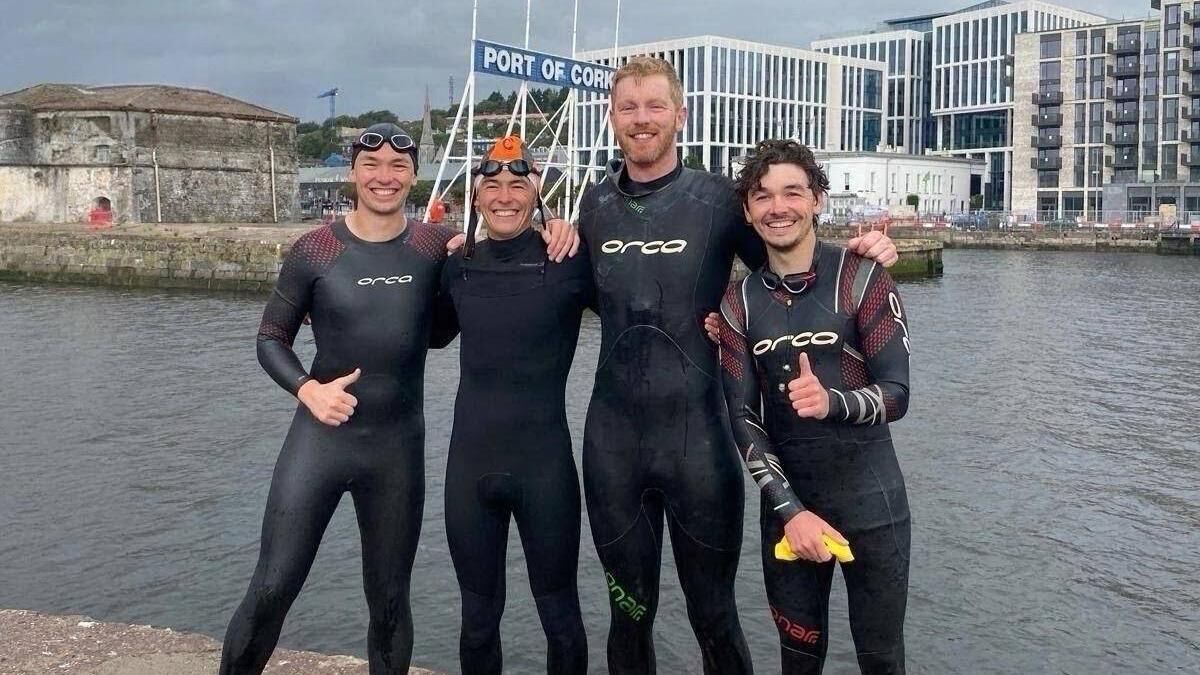
Seán Underwood, Eoin Underwood, Peter Shanahan, Ryan Underwood at the Port of Cork.
The four - brothers, Eoin, Seán and Ryan Underwood with friend and “honorary Underwood” Peter Shanahan - swam, scrambled, floated along the entire stretch of the Lee - immersing themselves in the beauty, culture, ecology and problems the river holds. They camped where they came ashore each night and got to know the river in a unique and visceral way.
Talking a few days later on Zoom, the four are fresh and smiling after catching up on sleep and showers! It started as “one of Seán’s bad ideas, he’s known to do these kinds of things,” said Eoin. (Back in 2018, Seán rowed across the Atlantic!)
The idea started with a swim on the morning of Seán’s wedding last year. “I put it to them that I had an adventure in mind — something in Cork, to do with water.”
Initially they simply wanted to follow the river from the source to the Port of Cork, but in their preparation and scouting trips they started to realise all the different issues facing the river. Poor water quality, the impacts of agriculture on the river, changes to the natural systems and the impact all that has on the creatures who call the Lee home.
“At the start it was more a challenge and an adventure, and once we realised all the issues going on, we thought we could actually put it towards a good cause,” said Eoin. “The Cork River Alliance Group (CRAG) seemed to be doing a lot of practical, actionable stuff - getting stuck in, organising river cleanups,” said Seán.
So, the lads decided to raise funds for a device you can put in the river that gives readings on phosphates, nitrates and all the runoff — which CRAG will use to put “hard facts in front of whoever needs to see them”.
They have a lot of swimming experience under their belts. Ryan and Eoin are surfers. Peter and Seán were into triathlons. They’ve done lifesaving courses in the past. An A-team of skills and experience – a doctor, ecologist, architect and chemical engineer - are keen to emphasise that a huge amount of preparation went into keeping themselves safe. They mapped out the course, went through the OS maps, and worked out how they would swim the river in nine days.
“We’d go tackle different sections of the river we thought would be more difficult or dangerous and scout them. We got lucky with how low the flow was. It made the swimming sections a bit tougher, but it helped with the more dynamic sections of the river with rapids and waterfalls,” said Ryan.
This experience isn’t for just anyone to undertake.
Plus, they had a fantastic support team of friends and families who helped with logistics and accompanied them by kayak when extra safety measures were needed.
Day one, they got off to an unintentionally long start. “When we got to Gougane Barra, we agreed the river was clearly coming from further up, so Ryan decided we should hike to find the actual source. Which resulted in a three-hour hike in full wetsuits up the mountain. We must have looked strange to the local walkers up there — four of us in wetsuits and goggles next to hikers,” said Seán. They didn’t finish their swim till 10.30pm with bats flying over them as they got out of the river.
One major impression they took from the experience is how the health, and taste, of the river changes depending on the landscape surrounding the river. Seán said, “You read how a tree-lined riverbank helps filter nutrients, but with your head in the water for hours, you learn to taste, smell, and anticipate it. Coming up to a field with no tree line you’d know the water was about to taste bad; then you’d see a lovely tree-lined field ahead and know it’d taste better.”
Thankfully nobody got sick – bar some skin irritation from spending nine days in a wetsuit. They were surprised they avoided an upset stomach but as Eoin said “the lack of rain meant less agricultural runoff than usual”.
The lack of salmon in the river was eye-opening and the trip drove home how iconic the salmon is in the Irish landscape and culture. “Even the top of Shandon has a salmon weathervane looking out over Cork said Ryan. “It’s one of Ireland’s genuinely important animals, and its spawning routes have been blocked.”
The team found it interesting talking to older generations who described the river “wriggling with salmon” but now only a tiny amount makes it up the fish pass on the dam. “The Lee used to have around 15,000 salmon at the peak of its run, but there has been a 90% decline in salmon runs over the last 50 years,” said Eoin.
“It was only once we got past Inishleena that we started seeing big fish jumping — coming into that was one of the highlights. On the final day we climbed the weir near the Kingsley hotel and could see the salmon jumping,” said Ryan.
Eoin’s highlight was seeing a night heron, “a rare vagrant species” around the Gearagh “it was a real privilege,” Peter said.
For Seán, “it was really nice to reconnect with my brothers and a lifelong friend. Being immersed in Cork and in that fraternity - that was the best bit for me.”
So, will there be a 2027 Lee Source to Port swim? They’re not sure. Seán said, “I think there probably will be another adventure, but we need a few more sleeps and warm showers before we recover.”
To find out more about the Lee source to Port swim see: https://www.gofundme.com/f/lee-source-to-port







 App?
App?


