We need housing in Cork, but should we be rezoning our green belt?
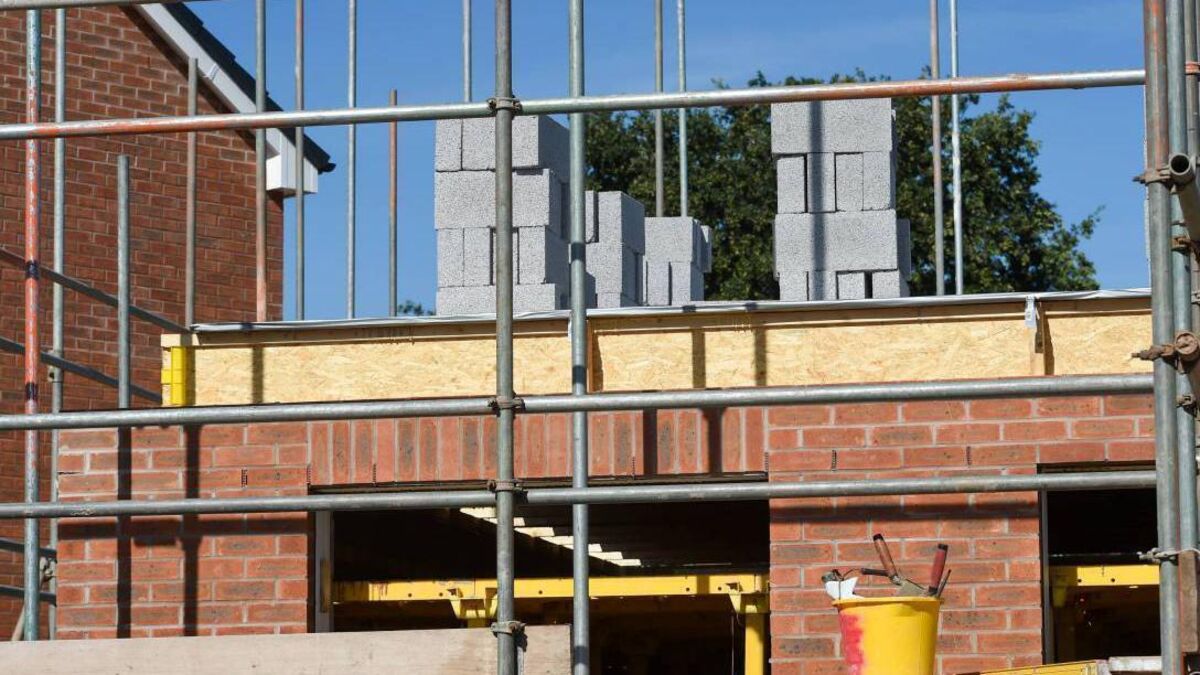
We shouldn’t compromise our planning principles for the sake of new housing, says Lucy Gaffney
Over the last few months, I’ve spent far more time than I ever expected reviewing planning policy.
The National Planning Framework. The Regional Spatial and Economic Strategy. The Cork Metropolitan Area Strategic Plan. The Cork City Development Plan. Climate action plans. The National Biodiversity Plan.
For someone who works in biodiversity and sustainability, it has been fascinating. But it has also left me with a simple question. If we have spent years developing these plans, why do we seem so willing to abandon them when pressure mounts?
Let’s be clear. Cork (Ireland!) needs more housing. Anyone paying attention can see that. Young people are struggling to buy homes. Families are struggling to find suitable accommodation. Rents are too high. Housing supply needs to increase.
Also, for clarity, this is not an argument against housing. It is an argument for planning.
The current proposal to rezone parts of Cork’s green belt, including significant lands at Moneygourney, raises important questions about how we are choosing to grow as a city. Not because housing is unnecessary, but because the proposal appears difficult to reconcile with many of the planning principles that Cork, the Southern Region, and the State itself have spent years promoting.
Again and again, our planning policies emphasise compact growth. They prioritise brownfield regeneration, infill development, city centre living, sustainable transport and the creation of connected, walkable communities.
The message is remarkably consistent. Grow inwards before growing outwards.
Yet here we are discussing the rezoning of protected hinterland on the edge of the city.
What makes this particularly difficult to understand is that several councillors and planning representatives have publicly acknowledged that Cork already has significant amounts of land zoned for residential development. The Cork City Development Plan itself identifies substantial opportunities for growth within the existing urban footprint.
At the same time, anyone walking through Cork city can see the scale of underutilised and derelict property that remains. Across the city, there are brownfield sites, infill opportunities and regeneration projects that have yet to be fully realised.
Of course, developing these sites is often more complicated. It is easier and cheaper to build on greenfield land at the edge of a city. Infrastructure is simpler. Development risks are lower. Returns are often greater.
But if convenience becomes the deciding factor, then what exactly was the purpose of all those planning strategies?
Surely the purpose of planning is to guide development towards the outcomes we collectively decided we wanted.
If the answer to every housing challenge is to expand further into the greenbelt, then concepts like compact growth, sustainable development, and strategic planning become little more than aspirations.
The question is not whether homes should be built. The question is where they should be built and why.
There is also a longer-term issue that deserves more attention. Once greenbelt land is gone, it is gone.
Housing estates can be redesigned. Transport systems can be upgraded. Town centres can be regenerated. But the gradual erosion of the countryside surrounding a city is effectively irreversible.
As someone who works in the biodiversity sector, I see this issue through a slightly different lens. Land is not simply vacant space awaiting development. It provides habitat, ecological connectivity, opportunities for recreation, climate resilience, ecosystem services and a sense of place. These values rarely appear on balance sheets, but they matter enormously to the quality of life of current and future generations.
This is especially important when we consider the future shape of Cork.
What is the long-term vision?
Do we continue expanding southwards until Douglas and Carrigaline become a continuous urban area? Do we progressively chip away at the remaining hinterland every time housing targets become politically urgent? Or do we hold ourselves accountable to the principles we have already agreed should guide the city’s growth?
These are not anti-development questions. They are planning questions.
And they deserve honest answers.
The irony is that many of the same policy documents that support housing delivery also recognise the importance of biodiversity, climate resilience, green infrastructure, community and access to nature. We are living through a period defined by climate change, biodiversity loss and growing social challenges. The solutions to these issues increasingly point towards integrated thinking rather than single-issue decision making.
When I think about the future of Cork, I don’t imagine endless outward expansion. I imagine a city that successfully regenerates its centre, reuses vacant and derelict sites, creates vibrant neighbourhoods connected by active travel routes, protects and connects green spaces, and leaves future generations with choices rather than fewer options.
Housing matters.
But so do the landscapes that make Cork a desirable place to live in the first place.
Perhaps the most important question is not whether this particular site should be rezoned.
Perhaps the bigger question is whether we still believe in plan-led development at all.
Because if we are willing to set aside our own strategies whenever a simpler option presents itself, then citizens are entitled to ask a very reasonable question: If we ignore our own plans, why have them?
- Lucy Gaffney is founder and Programme Director of Wild Plan, which supports organisations to deliver meaningful, measurable action for nature.



 App?
App?


