Road safety campaign sends a terrible message to our young
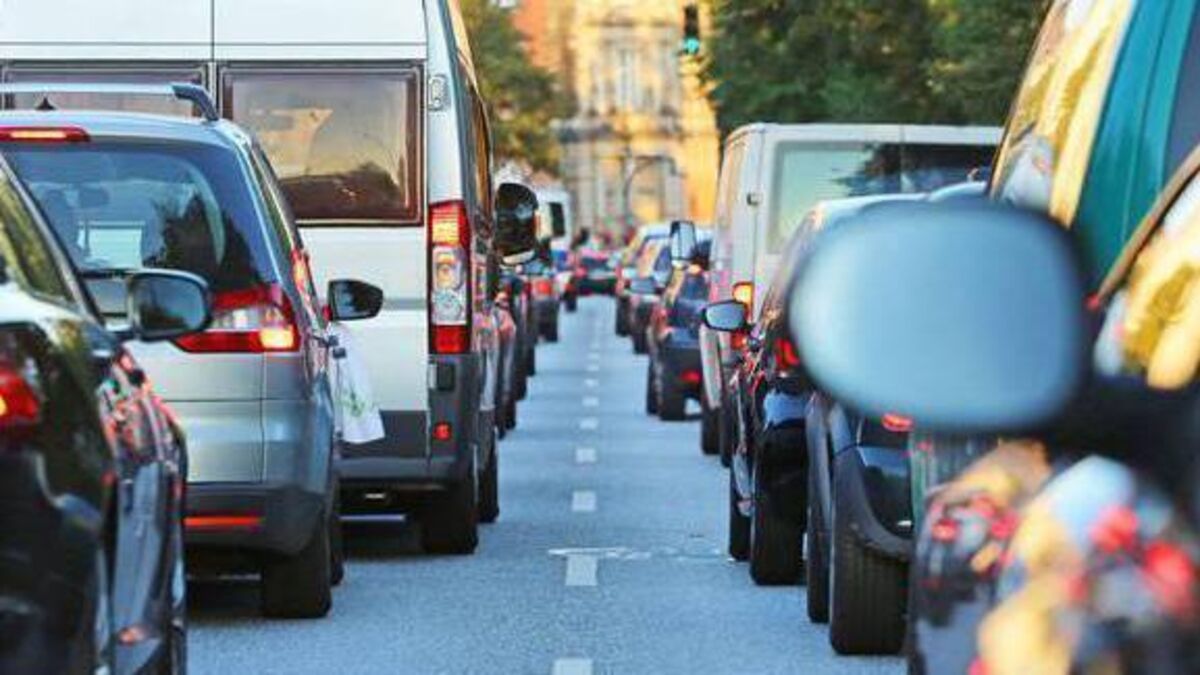
The campaign is targeted at young people, highlighting the consequences of losing a licence due to a drink/drug driving conviction as impacting on young people’s independence.
This campaign, linking independence for young people on access to a car, is completely missing the point.
Car ownership is scuppering the independence of both children and young adults, as well as contributing to the emerging climate emergency.
The 2023 Climate Action Plan specifies the need to bring a real, new focus on the requirement for systemic action, at all levels of Government, in order to better integrate our planning and transport systems so that we can achieve the 50% emissions abatement target for the sector.
The new ‘Avoid-Shift-Improve approach, that includes a focus on high-impact measures such as through road space reallocation, communication and engagement strategies and ‘the promotion of viable alternatives to private car use’, was informed by the OECD Report, commissioned by the Climate Change Advisory Council, on the Irish transport system.
The new RSA campaign, advocating the independence offered by holding a licence to drive a car, does not align with the objectives of the Climate Action Plan.
Meanwhile, youth mental health continues to deteriorate.
A new report by The Commission on Youth Mental Health, published in Lancet Psychiatry, states that the mental health of young people is now in ‘global crisis’ with the authors calling for the problem to be made an ‘international health priority’.
The study documented that mental illness now accounts for almost half (45%) of the overall burden of disease internationally in people between the age of 10 and 24.
One aspect of the urban childhood experience that has utterly changed over the last two decades is the ability to grow up on the streets.
As bigger, faster-moving and parked cars increased along streets, children’s playgrounds were lost. Play has become much more of an indoor activity, frequently involving an electronic screen.
Lia Karsten, associate professor of urban geography at the University of Amsterdam, writing in Children’s Geographies (2006) says children can be classified into “indoor children and children of the backseat generation”. She defines the latter as those who are escorted everywhere and ‘whose time space behaviour is characterised by adult-organised activities.’
But whether ‘indoors’ or ‘backseat’ the cause is the same - lack of safety and space due to a rise in the number and size of cars.
“Children and cars are competitors,” Karsten writes. “An age group that was once thought of as resilient is now treated as vulnerable, in need of constant management and supervision. Within a few generations, their ability to wander the streets has quickly diminished and for many, completely disappeared.”
No longer do children have the capacity to manage themselves. Street design prioritises cars over residents. Faded, unraised and poorly lit crossings make crossing the road a game of Russian roulette that no self-respecting parent would dream of allowing their child to negotiate unsupervised.
Karsten states that when getting outside becomes a much less spontaneous act, kids have fewer chances to create new bonds with those outside their scheduled lives and existing social circles, leading to greater levels of isolation and loneliness. This isolation is particularly devastating to childhood development.
By building cities in which freedom of movement for children is restricted, the resulting social isolation risks leaving lasting effects on physical as well as mental wellbeing.
Many of today’s children are so heavily supervised and thought of as so vulnerable, that virtually all risk is removed from their day to day lives. Dealing with risk is no longer seen as part of growing up.
The ‘bubble wrap’ generation is an indictment of the removal of the tasks that would otherwise improve children’s ability to assess and address risk. Lenore Skenazy, in Free Range Kids, wrote that “after a lifetime of overprotection, these young adults are overwhelmed by sudden independence” (when they reach college).
Many teenagers spend their prime years dependent on others for their transport needs, counting the days until they qualify for a driver’s licence. This RSA campaign compounds the impression that independent living is reliant on being in charge of a car.
Dutch teens, conversely, consider the independence to be based on the freedom and autonomy offered by being able to safely negotiate towns and cities by bike from an early age.
Adolescents in the Netherlands regularly rank among the happiest and the healthiest, with the lowest rates of obesity and antidepressant usage on Earth. They also cycle an impressive 2,000km per year.
This can be achieved by reorganising cities and towns with wide pavements, protected cycle paths, bus corridors and single lane traffic with 30kph speed limits. Towns and cities where the cars move from being the protagonist in the landscape to one part of a shared space, as we move towards healthier, sustainable, urban communities.
The latest city to embrace this active travel revolution - giving young people the freedom and independence to move safely in their home environment - is Paris. Its Mayor Anne Hidalgo has bold plans to revolutionise the capital to become a “100% bicycle city”. New bike lanes, financial incentives to buy a vélo, the pedestrianisation of the Seine banks in 2018, as well as the Rue de Rivoli in 2022, are all part of this ambitious project.
The evolution of Paris into a cycling city has not been smooth. Some bike lanes are confusing, some are shared with buses and taxis. Some of the one way streets are taking time to bed in with drivers.
But Paris and other European cities have embraced cycling and active travel with huge political ambition and political drive, to the benefit of citizens - particularly kids, teens and young adults who are beginning to regain independence that is critical to their wellbeing.
Dr Catherine Conlon is a public health doctor with the HSE and former director of human health and nutrition, safefood





 App?
App?


