Corkman's astounding River Lee rescue deserves bravery award, 18 years after he died
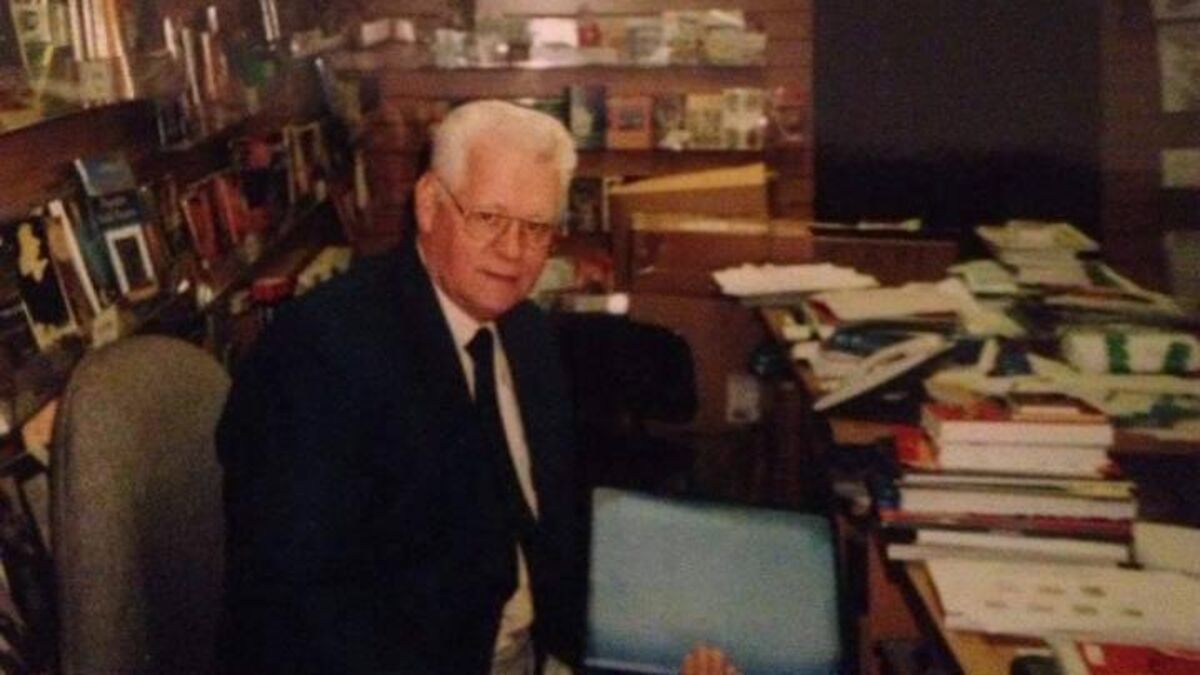
Ted Kelleher who rescued a woman from the River Lee back in 1990.
IF you saw someone falling into the River Lee in Cork city, how would you respond? Would you spring into action and try to rescue them?
Unless you are a hero who wears a cape for a living, it’s a question that is impossible to answer, until you find yourself in that scenario.
It was a situation that Corkman Ted Kelleher found himself in one spring evening 33 years ago - and he wasn’t found wanting.
It’s a remarkable story of a truly amazing and heroic act.
Ted, who was 50 at the time and a sales manager at Easons, was driving a van on the city quays by Michael Collins Bridge, heading in the direction of Penrose Quay, on Tuesday, March 28, 1990, when his passenger, Jo Martin, saw a woman fall into the Lee.
Ted sprang into action. He jumped from his van and ran across the bridge, but by this stage the woman was floating face down in the water.
He threw in a lifebuoy and called to her, and, on receiving no response, urged two passers-by to help him. What happened next is extraordinary.
These men held Ted’s ankles, while he hung suspended upside-down from the Michael Collins Bridge. He managed to grab the woman by the collar of her coat as she floated past.
“I held on for about 10 minutes till the Gardai arrived,” Ted, who was 6ft and about 16 stone, told a Cork Examiner reporter.
I have to congratulate the two fellas who held my ankles, I’m no lightweight by any manner of means!
Without a doubt, Ted saved the life of that woman with his quick-thinking and agility that day.
It was lucky for her too that the clocks had just gone forward an hour, meaning it was still just about daylight when she fell into the chilly Lee, otherwise she may never have been seen again.
“Ted is a very brave man, without him, the woman would have drowned,” Garda Michael Healy, who arrived at the scene with colleague Denis O’Mahony, told the Examiner.
The woman, who was said to be from Kanturk but living in Cork city, made a quick recovery and was only taken to the South Infirmary to be detained overnight for observation. She was released the next day.
At the time, in 1990, there was talk of a bravery award for Ted’s incredible life-saving act, but it never materialised. Sadly, he passed away in 2005, aged 65.
All these years later, you might think it is too late for his heroics to be recognised - but with a little bit of a push, perhaps we can still salute him posthumously.
******
Ted’s son, Barry Kelleher, contacted me this week out of the blue to see if we had any details of his father’s heroics. I was delighted to unearth for him the Examiner report in 1990, written by my fellow Saturday columnist in The Echo, Áilín Quinlan.
“The story of the river rescue is legendary in the family,” said Barry, of Cathedral Road in Cork city.
Dad was a real Corkman - born and reared under the bells of Shandon. He and my mother, Eily had six children.
Ted, like most heroes, was a modest chap.
“At the time of the rescue, he was in touch with local public representatives who were pushing him to receive some recognition for his feat,” recalls Barry.
“He was more concerned about the lady who he rescued than any publicity. Dad never met her, but he thought about her every day for months after.”
Ted, who worked for 40 years as a van salesman before getting the sales manager job with Easons, passed away in 2005 - “never sick a day in his life,” said Barry - 16 months after Eily.
“At the time of his death, he had six grandchildren. There are now 15, and three great grandchildren.
“The older of the kids are amazed that Ted never received or went about getting merit for his actions. They are now pushing for recognition.
It would be great if we could gain recognition for dad’s outstanding act of bravery.
******
Each year since 1947, courageous feats across Ireland have been recognised by Comhairle na Míre Gaile, the Deeds of Bravery Council, which was founded to enable State recognition of exceptional acts.
Over the years, it has awarded medals and certificates to deserving cases: people from all walks of life and all sections of society who have saved a life involving personal risk to them. People who never knew they were capable of heroic acts, until they were staring at life-or-death situations.
It is the only civilian awards programme of its kind in Ireland, and it is also in the Council’s remit to recognise people after their death.
A few weeks ago, James Nicholl, a former member of the Defences Forces, was awarded a posthumous gold medal, after he died while attempting to save a man drowning in the Liffey in April. He was among 26 people to be honoured for their selfless acts of bravery at a ceremony in Dublin.
In total, 14 gold medals have been awarded by the Comhairle since 1947, many of them posthumously. Could our man Ted Kelleher be recognised next year?
I can’t see why not. Under the rules, a “deed of bravery” means an effort to save human life “involving personal risk”. The deed must have been committed after July 4, 1945, in Ireland or on an Irish-registered ship.
The Council that adjudicates on who should receive an award is chaired by Ceann Comhairle Seán Ó Fearghaíl, TD, and within its ranks are the Lord Mayor of Cork, Cllr Kieran McCarthy, and Senator Jerry Buttimer, as well as Garda Commissioner Drew Harris.
I will be sending this article to the two Cork representatives of the Bravery Council, in the hope Ted Kelleher’s quick-thinking and bravery can finally be honoured. I will also be sending it to the Council’s nominations file via email - the deadline for next year’s awards is April 30.
After all, no good deed should go unrewarded - even 33 years after the event.


 App?
App?


